
The Earth is constantly changing, and it is impossible to say for certain what it will look like 1000 years from now. However, scientists can make some educated guesses based on the current state of the planet and the trends that are already underway.
One of the most significant challenges facing the Earth in the next 1000 years is climate change. The planet is already warming at an alarming rate, and this is causing a number of problems, including rising sea levels, more extreme weather events, and changes in plant and animal life. If we do not take action to reduce greenhouse gas emissions, the Earth could be uninhabitable by 1000 years from now.
Another major challenge facing the Earth is overpopulation. The world’s population is expected to reach 10 billion by 2050, and this will put a strain on resources such as food, water, and energy. We need to find ways to reduce our consumption and live more sustainably if we want to avoid a global catastrophe.
Despite these challenges, there are also some positive trends that could help to shape the future of the Earth. For example, renewable energy sources such as solar and wind power are becoming more affordable and efficient. This could help us to reduce our reliance on fossil fuels and mitigate climate change. In addition, advances in technology could lead to new ways to clean up pollution and protect the environment. For example, scientists are developing new methods to remove carbon dioxide from the atmosphere.
Ultimately, the future of the Earth depends on the choices that we make today. If we take action to address climate change, overpopulation, and other environmental challenges, we can create a sustainable future for generations to come. So in this particular article I am going to discuss all these important aspects.
The Planet Earth — In the last 250 years, humans have drastically and irreversibly transformed the Earth. Greenhouse gases emitted by human industries have changed the planet’s climate, presenting the single greatest threat humanity has ever faced. If humans can cause such incredible damage to the Earth in 250 years, what will our planet look like in 1000 years time?
The destructive relationship between humans and the Earth began in the late 18th century, during a boom of mechanization called the Industrial Revolution. Human industry grew rapidly with the widespread usage of oil, coal, and natural gas, all of which release large quantities of carbon dioxide, along with other greenhouse gases, like methane and nitrous oxide. These greenhouse gases to trap the sun’s energy in the atmosphere, warming the planet and altering the Earth’s climate. Between 1850 and 2020, greenhouse gas emissions warmed the Earth by roughly 1.2 degrees Celsius. Current projections estimate a devastating 2-degree increase in global temperatures by 2100, which may trigger extreme climate disruptions and irreversible ecological damage.
Climate Change and Earth –
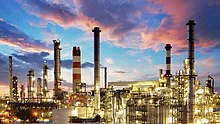
The global impact of human pollution is further exacerbated by extensive environmental destruction. Every year, humans destroy approximately 10 million hectares of trees, a land area roughly the size of Portugal. By destroying the world’s forests, humans are eradicating one of the planet’s primary carbon sinks. If these important ecosystems are destroyed, the Earth’s climate will become exponentially more radical during the next millennium. The destruction of the biosphere will also intensify the warming and acidification of the Earth’s oceans. The ocean is the world’s largest natural carbon sink, absorbing 30 to 35% of all CO2 emissions. But the overabundance of CO2 in the atmosphere has gradually decreased the pH value of the Earth’s oceans, foreshadowing a catastrophic loss of marine life and vital ocean ecosystems.
Over the next 1000 years, the loss of ecological diversity will trigger a cascade of radical changes to the natural world. Climate disruptions will alter storm patterns, causing record-breaking natural disasters. Sea levels will rise as ice around the Earth’s poles continues to melt. Island nations and coastal cities will drown under rising tides, while arid landscapes experience long droughts and devastating forest fires. 1000 years from now, human pollution may transform the Earth into a planet too volatile for our species to survive. But this represents only one vision of the Earth 1000 years into the future. If humans continue on our path toward ecological destruction, the planet will one day be uninhabitable for humans. But right now, we have an opportunity to alter the future of our planet, creating a global ecosystem capable of supporting life for thousands of years. First, we need to greatly reduce the current rate of anthropogenic pollution, specifically the release of greenhouse gases.
Why we need to adopt the Net Zero?
Humans must achieve Net Zero Carbon Emissions by at least 2050. The amount of greenhouse gases we release into the atmosphere cannot surpass the amount we remove from the atmosphere. Achieving Net Zero provides humanity with a critical window to reverse the ecological damage we’ve done. The technology to achieve Net Zero exists in the world today, but utilizing that technology will require decisive, global changes to environmental policies and many of the world’s most polluted industries.
Among those industries is the agricultural industry, which accounts for about 10% of the greenhouse gases emitted into the atmosphere and 70% of the fresh water used annually. To prevent further damage to the Earth, as well as global food shortages brought about by changes in the Earth’s climate, humans must understand the way we raise, harvest, and consume food. In the next 1000 years, our species must transition away from factory farms, which produce most of the world’s meat and dairy. Instead, we should prioritize ecologically sustainable sources of both meat and produce. Animal-based products can be replaced either by plant-based ingredients, like soy and pea proteins, or emerging artificial alternatives, like in-vitro meat products created from animal cell cultures. Hydroponics and genetically engineered crops can also lower the consumption of vital resources, like fresh water. However, these are short-term solutions to a long-term problem. Reducing the production of greenhouse gases would decrease future damage to the environment, but what about all the pollutive waste we’ve already created?
Many scientists believe nanotechnology will be the key to a long and sustainable future on Earth. Nanotechnology uses near-atomic scale matter to research and develop new materials and technologies with a wide range of applications, including the conservation and revitalization of the Earth. In 1000 years, nano-particle filters may be instrumental in the removal and disposal of human pollution. Fresh water supplies, poisoned by decades of garbage and toxic run-off, can be purified at an atomic level. Similar filters could capture or remove greenhouse gases from the atmosphere, therefore lowering global temperatures and decreasing the radicalization of the Earth’s climate. Renewable energy is another field potentially transformed by nanotechnology. Current renewables, like solar panels and wind turbines, are limited by outdated battery technology and inefficient power storage. But nanotechnology may generate new methods of storing renewable energy. In combination with lighter, nano-polymer materials, future nanotechnology could skyrocket the long-term efficiency of modern renewables. Nuclear energy is another low-carbon energy source with nano-scale applications. In the world today, nuclear power plants create tremendous amounts of energy by splitting the nuclei of large atoms, like uranium and plutonium. Nuclear technology emits far fewer green-house gases than burning fossil fuels, but it does create radioactive waste, which causes lasting damage to both humans and the environment. In the next 1000 years, humans could use nanomaterials to efficiently utilize nuclear fission technology and safely dispose of radioactive waste. If successful, humans may unlock a sustainable energy source more than capable of powering our entire civilization. These are only a handful of changes humanity should consider in the next millennium. Otherwise, the Earth, 1000 years from now, may have very few people on it. Climate destruction may force humanity to leave the Earth and settle on another planet. In other words, space colonization could be the only option humanity has left.
However, the Earth will survive, with or without us. Even if the planet becomes too volatile for humans to survive, life will persevere through evolutionary adaptation, as it has time and time again. Eventually, the laws of nature will right humanity’s wrongs, but if humanity wants a future on this planet, it’s time we treated the Earth… like our one and only home.
Thanks.
 Pratik Ghansham Salvi Assistant Professor of Economics | Banking & Finance | IMF Finance & Development Contributor

Leave a comment