
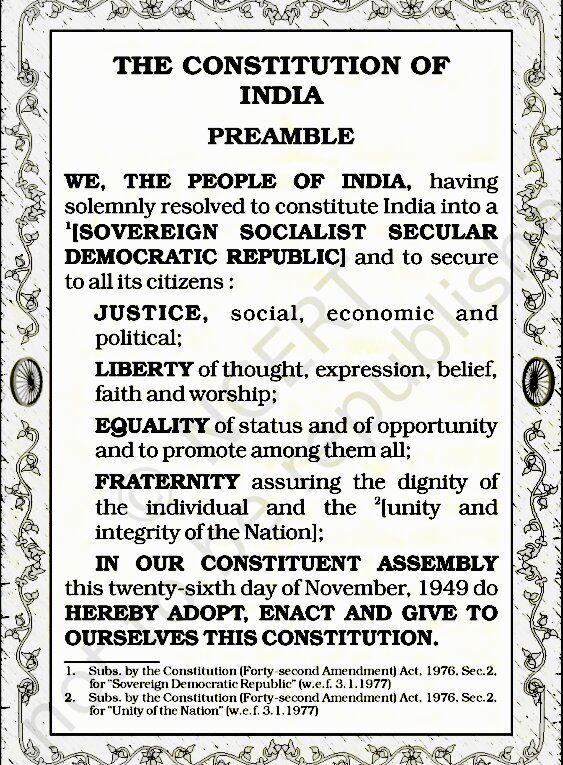
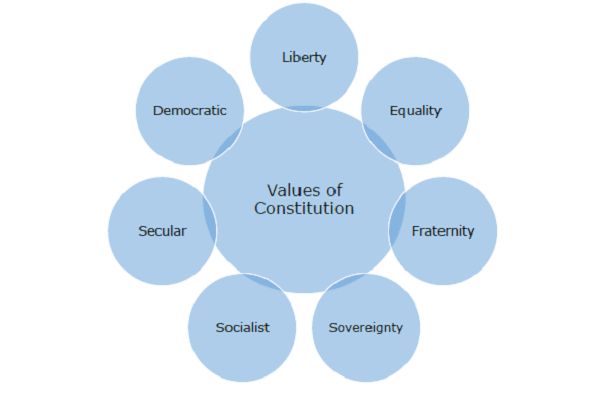
On January 26th 1950 the Indian Constitution is implemented and India became the Soverign, Socialist, Secular, Democratic and Republic State. The term republic is not a mere political independence but it involes a wide aspects of liberty, equality, justice,fraternity and universal brotherhood among all the citizens of India. Most of the times people confused or sometimes misconception regarding Independence Day and Republic Day. Independence day is to celebrate the India’s journey from freedom struggle to Independence where all starta of the Indian Society made contribution to getting freedom from external rule and achieve the Independence. On the other hand, Republic day is the day when our Constitution came into effect in 26th Jaunuary 1950 making India a democratic and sovereign republic state. Moreover we cherish our constitutional values and spirit as well.
To making the Indian constitution various intellectuals participated for India’s better future, however, among them Dr. B. R. Ambedkar played a significant role to making and drafting the constitution. DR. Ambedkar was the chairman of the drafting committee. He was considered as the chief architect of the Indian Constitution.
In this article, I will be disscussing the importantce of republic day, important constitutional values and principles and the crucial role of DR. Ambedkar in making Indian Constitution
Republic Day – A Constitutional Legacy -
As the term “Republic” suggests is complete independence from external authority or more specifically contries has its own constitution where both the head of the state and head of the government is elected either directly or indirectly. It is important to note that the constitutional makers adopted British Parliamentary form of governmant however there is slightly diffrence in the two democracies – where in the case Britain’s parliamentary decocracy the head of the state is not elected representative either directly or indirectly but it is the hereditary position. On the other hand, India’s head of the state is elected indirectly by the method of proportinal representation by menas of single transferable vote. And henceforth the Indian polity is considered to be as the Republican Polity.
The important point is to note that most of the features of Indian Constitution is dervied from constitutions of other countries. But DR. Ambedkar only derives those principles or features which is most important for India’s Development as the modern democratic state.
Features borrowed from diffrent sources –
| SR NO | Countries | Borrowed Features of the Indian Constitution |
| 1 | Australia | Concurrent listFreedom of trade, commerce and intercourseJoint-sitting of the two Houses of Parliament |
| 2 | Canada | Federation with a strong CentreVesting of residuary powers in the CentreAppointment of state governors by the CentreAdvisory jurisdiction of the Supreme Court |
| 3 | Ireland | Directive Principles of State PolicyNomination of members to Rajya SabhaMethod of election of the president |
| 4 | Japan | Procedure Established by law |
| 5 | Soviet Union (Russia) | Fundamental dutiesIdeals of justice (social, economic and political) in the Preamble |
| 6 | United Kingdom | Parliamentary government Rule of Law Legislative procedureSingle CitizenshipCabinet system Prerogative writs Parliamentary privileges Bicameralism |
| 7 | United States | Fundamental rightsIndependence of judiciaryJudicial reviewImpeachment of the presidentRemoval of Supreme Court and High Court judgesPost of vice-president |
| 8 | Germany | Suspension of Fundamental Rights during emergency |
| 9 | France | RepublicIdeals of liberty, equality and fraternity in the Preamble |
| 10 | The GOI Act of 1935 | Three Lists: The Act introduced a federal system with three lists of powers: Federal, Provincial, and Concurrent. This concept was carried over to the Indian Constitution, although with a revised distribution of powers and a stronger center.Federal Court: The Act established the Federal Court, which served as the highest judicial body for federal disputes. The Indian Constitution inherited this concept, establishing the Supreme Court with similar functions.Parliamentary System:Bicameral Legislature: The Act established a bicameral legislature with the Federal Legislature consisting of the Council of States and the Federal Assembly. This concept was adopted by the Indian Constitution with the Rajya Sabha and the Lok Sabha.Responsible Government: The Act introduced a system of provincial autonomy with Ministers responsible to the legislature. This principle of a responsible government with a Prime Minister and Council of Ministers was adopted by the Indian Constitution at both the Central and State levels.Fundamental Rights:Limited Rights: The Act included limited and non-justiciable Fundamental Rights. While not directly adopted, the Indian Constitution expanded upon these rights, making them comprehensive and justiciable, further emphasizing individual freedoms and equality.Other Features:Election Commission: The Act established the Election Commission, an independent body for conducting elections. This concept was adopted by the Indian Constitution, ensuring fair and independent elections.Public Service Commission: The Act established the Public Service Commission for recruitment to government jobs. This system was retained in the Indian Constitution with safeguards for merit and impartiality in public service. |
To quote DR. BR Ambedkar, “One likes to ask whether there can be anything new in a constitution framed at this hour in the histroy of the world. More than hundred years have rolled over when first written constitution was drafted. It has been followed by many countries reducing thier constitutions to writting. What the scope of the constitution should be as long been setlled. Similarly what are the fundamentals of a constitution are recognized all over the world. Given these facts, all constitutions in thier main provisions must look similar. The only new things, if there can be any, in the constitution framed so late in the day are the variations made to remove the faults and accomodate it to needs of the country. The charge of producing a blind copy of the constitutions of other countries is based, I am sure, on an inadequate study of the Constitution”.
Dr. Ambedkar’s Key Contributions to the Indian Constitution: Building a Modern Republic
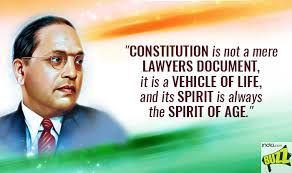
Dr. B.R. Ambedkar, the “Father of the Indian Constitution,” left an indelible mark on the document that shaped the soul of modern India. His contributions went far beyond mere drafting; he was the architect of principles that laid the foundation for a just, equitable, and democratic republic. Let’s delve into some of his key contributions and analyze their impact:
1. Fundamental Rights:
- Ambedkar championed the inclusion of comprehensive and justiciable Fundamental Rights, guaranteeing basic freedoms and liberties to all citizens regardless of caste, religion, or gender. This was a crucial step in breaking down centuries of social hierarchy and discrimination.
- He played a pivotal role in drafting Articles 14-17, ensuring equality before the law, abolition of untouchability, and freedom of religion. These rights paved the way for a society where every individual could claim their rightful place, fostering dignity and individual empowerment.
2. Abolition of Untouchability:
- Ambedkar, himself facing the brunt of caste discrimination, led the fight against the barbaric practice of untouchability. He ensured the inclusion of Article 17, explicitly outlawing untouchability and promoting social integration.
- This transformative provision challenged age-old societal norms and paved the way for a more just and inclusive India. While challenges remain, Article 17 continues to be a powerful symbol of progress and a reminder of Ambedkar’s unwavering commitment to social justice.
3. Parliamentary Democracy:
- Ambedkar advocated for a robust parliamentary system with a responsible government, ensuring accountability and responsiveness to the needs of the people. He played a key role in shaping the structure and powers of the legislature and executive.
- This system, adapted from the Government of India Act 1935, allowed for peaceful transitions of power, fostered political debate and engagement, and laid the foundation for a thriving democracy.
4. Federalism:
- Ambedkar recognized the diversity of India and argued for a federal system that balanced national unity with regional autonomy. He helped determine the distribution of powers between the center and states, ensuring efficient governance while respecting the unique needs of different regions.
- This federal structure allowed for local decision-making, cultural expression, and regional development, while maintaining national unity and coherence. It proved crucial in accommodating the aspirations of diverse groups within the Indian nation.
Legacy of a Modern Republic:
Dr. Ambedkar’s contributions to the Indian Constitution were fundamental in shaping a modern republic. By championing fundamental rights, abolishing untouchability, establishing a robust parliamentary system, and crafting a federal structure, he created a framework that emphasized equality, justice, and democratic participation. These principles continue to guide India’s journey towards a truly inclusive and progressive nation.
The Meticulous Crafting of a Nation: Dr. Ambedkar and the Drafting of the Indian Constitution
The drafting of the Indian Constitution wasn’t just a technical exercise; it was a grand theater of negotiations, debates, and compromises that ultimately gave birth to a modern republic. At the heart of this intricate process stood Dr. B.R. Ambedkar, the Chairman of the Drafting Committee, whose leadership and vision left an indelible mark on the final document.
The Stage is Set:
Following India’s independence in 1947, a Constituent Assembly was formed to draft a Constitution. In August, a seven-member Drafting Committee with Dr. Ambedkar at the helm was created to meticulously craft the legal framework for the nascent nation.
Leading the Orchestra:
Dr. Ambedkar’s unique combination of sharp intellect, legal expertise, and deep understanding of India’s social realities proved invaluable. He navigated the diverse voices within the committee, ensuring fair representation of different ideologies and regional aspirations.
Harmonizing Melodies:
The drafting process was marked by extensive debates and discussions. Key issues like federalism, fundamental rights, the nature of the executive, and the role of religion sparked lively debates. Dr. Ambedkar, through his calm demeanor and masterful negotiation skills, facilitated compromise and consensus-building.
The Notes of Dissent:
While the majority accepted Dr. Ambedkar’s vision, not all agreed. He faced opposition on issues like the special rights granted to minorities and the reservation system for marginalized communities. However, he passionately defended his principles, arguing for a Constitution that enshrined equality and justice for all.
The Final Symphony:
After two years and eleven sessions, the final draft was presented to the Assembly in November 1949. After further deliberations and amendments, the Constitution was adopted on 26th January 1950, marking the birth of the Republic of India.
A Testament to Collaboration:
Dr. Ambedkar’s leadership was only one part of the equation. The success of the drafting process hinged on the collective effort of the committee members, who despite their differences, came together to forge a common vision for the nation.
Echoes of Compromise:
The Indian Constitution reflects the spirit of compromise. Some argue that compromises on certain issues like the nature of the judiciary and the special status of Jammu and Kashmir later led to challenges. However, these compromises also ensured a smooth transition from a colonial past to a democratic present.
Beyond the Pen:
The drafting process wasn’t just about legal clauses; it was about shaping the soul of a nation. Dr. Ambedkar’s vision ensured that the Constitution became more than a rulebook; it became a beacon of hope for a just and equitable society.
Republic Day: A Celebration of Progress, Embracing Challenges for a Brighter Future
Every year on January 26th, India bursts into vibrant hues, celebrating Republic Day. But beyond the joyous parades and cultural extravaganzas lies a profound significance, a deep-rooted connection to the nation’s fight for freedom and its unwavering commitment to the ideals of democracy, secularism, and social justice.
A Day Etched in History:
The date itself carries immense historical weight. It was on January 26th, 1930, that the Indian National Congress declared Purna Swaraj, the complete independence of India, from British rule. This audacious declaration ignited a nationwide movement, galvanizing millions and setting the stage for the long and arduous struggle for freedom.
Opens in a new windowen.wikipedia.org
Indian National Congress leaders hoisting the Indian flag in 1930
Two decades later, on the same date in 1950, a newly independent India took its first steps as a sovereign republic. The Indian Constitution, meticulously crafted by Dr. B.R. Ambedkar and the Drafting Committee, came into effect, marking a momentous transition from a colonial dominion to a vibrant democracy.
More than Fireworks:
Republic Day celebrations are not just about pomp and circumstance; they are a reaffirmation of the values enshrined in the Constitution. The unfurling of the national flag symbolizes pride in India’s democratic spirit, its tolerance for diverse faiths and cultures, and its unwavering commitment to social justice.
The day resonates with the echoes of Dr. Ambedkar’s words: “We must build up a machinery which will ensure that there is social and economic equality in the country.” It’s a reminder that the journey towards a truly inclusive and just India is still ongoing, with persistent challenges like poverty, inequality, and discrimination demanding constant attention and action.
Challenges and Hope:
Social inequalities, gender disparities, and religious intolerance continue to cast shadows on India’s aspirations. The ideals of the Constitution are constantly tested by these realities, demanding renewed efforts to bridge the gap between aspirations and achievements.
People protesting against social inequality in India
However, Republic Day is also a day of hope, a call to action to rekindle the spirit of Dr. Ambedkar and the freedom fighters. It’s a reminder that the progress made, however incremental, is a testament to the collective strength and resilience of the Indian people.
Through education, inclusivity, and unwavering commitment to the values of the Constitution, India can continue to strive towards a more just and equitable future. Each Republic Day is not just a celebration, but a renewed commitment to build a nation where every individual, regardless of background or circumstances, can truly claim their rightful place under the sun.
Let the vibrant colors of Republic Day not just adorn the streets, but also color the dreams and aspirations of every citizen. Let the echoes of freedom not just reverberate in the air, but also guide our actions towards a more inclusive and just tomorrow.
Diffrent Challenges faced by India Today –
As India celebrates Republic Day on January 26th, it’s not just a time for festivity and national pride, but also a moment to reflect on the challenges that the country faces in its ongoing journey towards a truly inclusive and just society. Here are some of the key challenges that India needs to address:
1. Poverty and Inequality: Despite significant economic progress in recent years, India still has a large population living below the poverty line. This economic disparity is further exacerbated by social inequalities based on caste, gender, and religion.family living in poverty in India
2. Education and Skill Development: While India has made strides in improving literacy rates, the quality of education remains a concern, particularly in rural areas. Additionally, there is a need to bridge the gap between education and skill development to ensure that graduates have the necessary skills to compete in the modern workforce.
3. Healthcare and Sanitation: India’s healthcare system faces challenges in terms of accessibility, affordability, and quality of care. Additionally, inadequate sanitation facilities in many parts of the country pose a major health risk.
4. Environmental Degradation: Pollution, deforestation, and climate change are pressing concerns for India. The country needs to invest in sustainable development practices to protect its environment for future generations.
5. Gender Inequality: Despite legal protections, women in India still face discrimination and violence. Bridging the gender gap in education, employment, and political participation is crucial for India’s progress.
6. Religious Intolerance: Communal tensions and violence remain a challenge in India. Promoting tolerance and respect for diversity is essential for creating a harmonious society.
7. Corruption: Corruption remains a major obstacle to India’s development. Strengthening institutions and fostering transparency are essential for tackling this issue.
8. Terrorism and Internal Security: India faces threats from both internal and external terrorist groups. Strengthening security measures and addressing the root causes of terrorism are crucial for ensuring national security.
9. Urbanization and Infrastructure: Rapid urbanization is putting pressure on India’s infrastructure, leading to problems like traffic congestion, housing shortages, and pollution. Sustainable urban planning and development are essential to address these challenges.
10. Food Security: Ensuring food security for a growing population remains a challenge for India. Improving agricultural productivity and distribution systems are crucial to address this issue.
These are just some of the many challenges that India faces on its journey towards becoming a truly inclusive and prosperous nation. Addressing these challenges will require sustained efforts from the government, civil society, and the private sector. However, despite the challenges, India has also made significant progress in recent years. The country’s economic growth, rising literacy rates, and improving healthcare indicators are all reasons for optimism.
Republic Day is a reminder of the ideals of democracy, justice, and equality that India aspires to. By acknowledging the challenges and working together to overcome them, India can continue to move closer to its full potential.
Tackling India’s Challenges through Dr. Ambedkar’s Vision: A Republic Day Reflection
As India celebrates Republic Day, the spirit of Dr. B.R. Ambedkar, the architect of the Constitution, resonates strongly. His vision of a just, equitable, and inclusive society offers invaluable insights into addressing the challenges that impede India’s progress. Here’s how we can draw from Dr. Ambedkar’s thoughts to tackle some of the pressing issues:
1. Poverty and Inequality:
- Education for All: Ambedkar championed universal education as the key to dismantling social hierarchies and enabling upward mobility. Expanding access to quality education, particularly for marginalized communities, will break the cycle of poverty and empower individuals.
- Economic Equity: Ambedkar advocated for an economic system that distributes resources fairly. Implementing land reforms, promoting inclusive entrepreneurship, and strengthening social safety nets can bridge the economic gap and empower the underprivileged.
2. Healthcare and Sanitation:
- Public Health Infrastructure: Investing in accessible, affordable healthcare for all, especially in rural areas, aligns with Ambedkar’s vision of social justice. Improving sanitation facilities and hygiene awareness can significantly enhance public health.
- Community Participation: Encouraging community-led initiatives, driven by local knowledge and needs, can effectively complement government efforts in improving healthcare and sanitation.
3. Education and Skill Development:
- Quality Education Focus: Beyond merely increasing literacy rates, focusing on quality education with relevant skills training will ensure graduates are equipped for the modern job market, as Ambedkar emphasized.
- Breaking Silos: Bridging the gap between vocational and academic education, as envisioned by Ambedkar, can equip individuals with both theoretical and practical knowledge, enhancing their employability.
4. Environmental Degradation:
- Sustainable Development: Dr. Ambedkar’s concern for social justice extended to environmental justice. Promoting sustainable practices in agriculture, industry, and resource management can ensure environmental protection for future generations.
- Community-based conservation: Engaging local communities in environmental protection efforts, as Dr. Ambedkar advocated for inclusive governance, can foster a sense of ownership and lead to better outcomes.
5. Gender Inequality:
- Education and Empowerment: Ensuring equal access to education and economic opportunities for women, as Dr. Ambedkar championed, is crucial for gender equality.
- Challenging Social Norms: Addressing the root causes of gender discrimination through awareness campaigns and legal reforms can dismantle harmful social constructs and empower women.
6. Religious Intolerance:
- Secularism and Tolerance: Upholding the Constitution’s principle of secularism, as envisioned by Dr. Ambedkar, requires promoting interfaith dialogue and respect for diverse religious beliefs.
- Education and Dialogue: Fostering an education system that celebrates India’s diverse cultural heritage and promotes social harmony can break down barriers and build bridges between communities.
These are just a few examples of how Dr. Ambedkar’s vision can guide India in tackling its challenges. Importantly, remembering him solely on Republic Day isn’t enough. His principles of social justice, inclusivity, and democratic values must be translated into concrete actions every day.
Call to Action:
- Engage in dialogues: Discuss Dr. Ambedkar’s thoughts and apply them to contemporary issues in your community or academic circles.
- Support initiatives: Volunteer or contribute to organizations working towards social justice, education, and environmental protection, embodying Dr. Ambedkar’s commitment to social upliftment.
- Hold power accountable: Demand transparency and ethical governance from elected officials, upholding Dr. Ambedkar’s vision of a fair and just society.
Conclusion –
As the vibrant hues of Republic Day fade, a profound echo remains. In the meticulous lines of the Indian Constitution, in the echoes of Dr. B.R. Ambedkar’s unwavering voice, and in the spirit of a nation still striving towards its ideals, lies a promise – a promise of a modern republic, grounded in justice, equality, and the boundless potential of its diverse people.
In today’s situation some politicians use religion, caste, and other imperatives only for winning elections. However, what is more impotant is devlepment of the people and it ultimately creates development of the nation.
The journey since the drafting of the Constitution has been far from smooth. Challenges continue to cast shadows, demanding constant vigilance and renewed commitment. Yet, the spirit of Dr. Ambedkar remains a guiding light, illuminating the path towards a more just and inclusive India.
His vision wasn’t merely an intricate legal document; it was a revolutionary blueprint for a nation where every individual, regardless of their background or circumstance, could claim their rightful place under the sun. His fight for fundamental rights, his passion for social justice, and his unwavering belief in the power of democracy continue to inspire generations.
Dr. Ambedkar’s legacy demands more than just remembrance; it demands action. It demands that we, the inheritors of his vision, actively strive to dismantle the walls of inequality, bridge the gaps of privilege, and empower every voice to be heard.
Education remains the cornerstone of this endeavor. When every child, regardless of caste, religion, or gender, has access to quality education, the chains of ignorance and social barriers begin to loosen. When skill development complements academic knowledge, opportunities blossom, empowering individuals to break free from the shackles of poverty and become architects of their own destinies.
Dr. Ambedkar’s fight for social justice extended beyond education. He championed economic reforms that ensured a fairer distribution of resources, advocated for land redistribution to empower marginalized communities, and challenged discriminatory practices that held millions back. Today, his vision continues to guide ongoing efforts to bridge the economic gap, dismantle exploitation, and create a society where prosperity is shared by all.
The Constitution, Dr. Ambedkar’s magnum opus, remains a dynamic document, evolving with the times. As India faces new challenges – environmental degradation, climate change, technological advancements – Dr. Ambedkar’s spirit of inclusivity and social responsibility provides valuable guidance. His call for sustainable development, his emphasis on community participation, and his belief in the power of collective action offer inspiration for building a future that protects our planet and its people.
Dr. Ambedkar’s vision for India wasn’t a static utopia; it was a dynamic journey, a continuous struggle for progress. On Republic Day, we celebrate not just the birth of a nation, but the ongoing commitment to his ideals. We celebrate the milestones achieved, acknowledge the challenges faced, and rekindle the spirit of action.
Let this Republic Day be more than just a day of parades and festivities. Let it be a day of reflection, a day of renewed commitment to Dr. Ambedkar’s vision, a day where we pledge to work towards a republic where every individual, irrespective of their background, can truly claim their rightful place under the sun.
Dr. Ambedkar’s legacy is not a monument to be admired from afar; it’s a torch that demands to be carried forward. Let us, the citizens of this vibrant republic, become the collective light, illuminating the path towards a more just, equitable, and prosperous India – a tribute to the man who dared to dream a nation into existence.
Thanks.

 Pratik Ghansham Salvi Assistant Professor of Economics | Banking & Finance | IMF Finance & Development Contributor
Leave a comment