“Four Pillars, One Ruler: The Crushing Grip of Power on Indian Democracy”
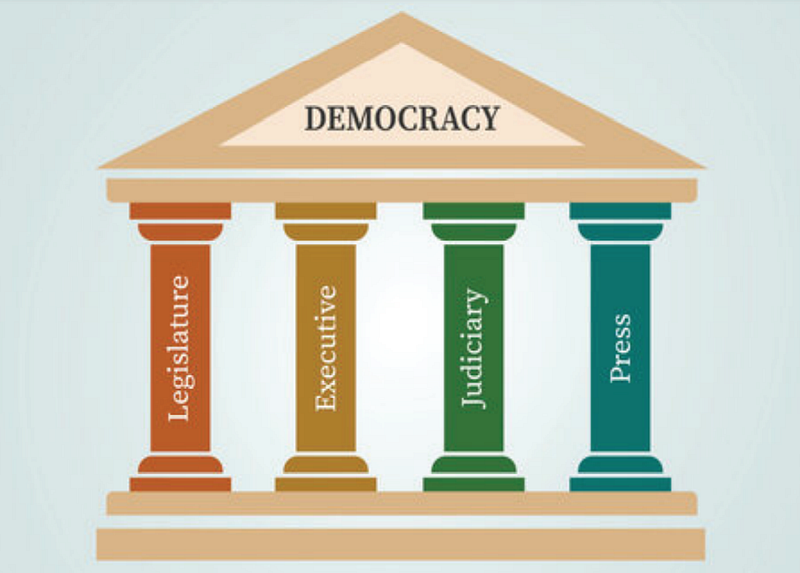
Four Pillars, One Grip: A Stark Portrait of Indian Democracy’s Erosion
India, the world’s largest democracy, stands upon four pillars: a vibrant citizenry, a free press, an independent judiciary, and a robust system of checks and balances. These pillars, once heralded as testaments to India’s commitment to liberty and equality, now tremble under the crushing grip of an increasingly centralized power. This is no subtle tremor, but a violent quake threatening to topple the very edifice of Indian democracy.
In “Four Pillars, One Ruler: The Crushing Grip of Power on Indian Democracy,” we embark on a sobering journey through the fissures appearing in India’s democratic landscape. We grapple with the brazen silencing of dissent, the muzzling of a once-ferocious media, and the systematic weakening of institutions meant to act as guardians against tyranny. We delve into the rise of majoritarianism, where the rights of minorities are eroded in the name of a dominant narrative, and where dissent is branded as disloyalty.
This is not merely a tale of political machinations, but a human drama played out on the vast canvas of a nation grappling with its identity. We meet the marginalized voices, the journalists facing intimidation, the activists hounded by draconian laws, and the ordinary citizens witnessing the chilling narrowing of their fundamental freedoms. Their stories paint a stark picture of a democracy slowly suffocating under the weight of unchecked power.
But this is not a eulogy for Indian democracy. Throughout the narrative, we also encounter the flickering flames of resistance. We meet the students taking to the streets, the lawyers fighting for justice, and the citizens refusing to be silenced. Their courage ignites a glimmer of hope, a testament to the enduring spirit of a nation built on the ideals of liberty and justice.
“Four Pillars, One Ruler” is more than just an exposé; it is a call to action. It is a stark reminder that democracies, however robust, are not impregnable fortresses. They require constant vigilance, unwavering commitment to constitutional principles, and the unflinching courage of its citizens to stand against the tide of authoritarianism. In the twilight of India’s democratic experiment, a question echoes: will the four pillars crumble under the crushing grip of power, or will the people rise to restore their rightful place as the rulers of their own destiny?
Four Pillers of the Democracy —
- Judiciary: The wise judge, ensuring fair play and interpreting the rules (the Constitution) everyone must follow. They keep the other pillars in check through rulings and uphold justice.
- Legislature: The lively crowd, debating and creating laws (the rules of the house) that guide everyone’s actions. They represent the voices of the people and shape the direction of the nation.
- Executive: The efficient manager, putting the laws into action (running the household). They implement policies, manage resources, and make decisions that impact daily life.
- Media: The watchful watchdog, keeping everyone informed and exposing any problems (shining a light on any cracks in the house). They hold power accountable and give the public a voice to question and participate.
Each pillar needs the others to stand strong. A shaky judiciary weakens the foundation, an overbearing legislature stifles debate, a sluggish executive hinders progress, and a silent media allows darkness to creep in. Only when all four pillars work together can a true democratic house thrive.
India’s Four Pillars Under Pressure: Concerns of Erosion by the Ruling Party
India’s vibrant democracy, once seen as a beacon of hope, faces increasing concerns about the erosion of its four key pillars: the judiciary, legislature, executive, and media. The ruling party, under Prime Minister Narendra Modi, has faced accusations of undermining these institutions, raising fears about the future of India’s democratic fabric.
Judiciary:
- Appointments and Challenges: The appointment of judges perceived as close to the ruling party has raised concerns about judicial independence. Critics argue that this could lead to rulings favoring the government and undermining the impartiality of the courts.
- Questionable Judgments: Some recent judgments, like the scrapping of Article 370 granting special status to Jammu and Kashmir, have been criticized for being rushed and lacking proper consultation, raising concerns about judicial overreach and political influence.
Legislature:
- Dominant Majority: The ruling party’s strong majority in Parliament has led to accusations of bypassing proper debate and scrutiny of bills. Critics argue that important legislation is being passed without adequate consideration for alternative viewpoints or potential consequences.
- Erosion of Dissent: Opposition voices within the legislature are often drowned out or sidelined, limiting healthy debate and checks and balances within the system. This can lead to one-sided decision-making and a lack of accountability.
Executive:
- Increased Centralization: The central government’s growing reach over states and institutions has raised concerns about federalism being undermined. Critics argue that this centralization of power creates an environment where dissent is stifled and local voices are ignored.
- Erosion of Autonomy: Institutions like the Election Commission and the Central Bureau of Investigation, crucial for maintaining checks and balances, have faced accusations of being pressured by the ruling party, raising concerns about their independence and ability to function effectively.
Media:
- Self-Censorship and Pressure: Journalists critical of the government often face harassment, intimidation, and even physical attacks. This creates an environment of self-censorship and fear, leading to less critical reporting and a shrinking space for dissent.
- Concentration of Ownership: The increasing control of media outlets by corporations with close ties to the ruling party has raised concerns about media bias and a lack of diversity in viewpoints presented.
These are just some of the concerns being raised about the erosion of India’s democratic pillars. While the situation is complex and nuanced, it is undeniable that these institutions face increasing pressure and challenges. It is crucial for India’s democracy to ensure the independence and robustness of these pillars to safeguard the fundamental rights and freedoms of its citizens.
The Crumbling Pillars and India’s Unfulfilled Dreams —
The erosion of democracy’s pillars in India casts a long shadow on the aspirations of its common people and the vision of Dr. B.R. Ambedkar, the architect of the Indian Constitution. While the nation boasts impressive economic growth and rising global stature, the weakening of these vital institutions threatens the very ideals of liberty, equality, and justice that Ambedkar championed.
For the common Indian, this erosion translates to:
- Diminished Voice: With a shrinking space for dissent and a media landscape tilted towards the powerful, ordinary citizens find it harder to raise their concerns and hold those in power accountable. This stifles their ability to participate in shaping their own destiny.
- Unequal Justice: A compromised judiciary raises fears of discriminatory laws and biased rulings, jeopardizing the fundamental right to equal protection under the law. This can particularly disadvantage marginalized communities, whom Ambedkar tirelessly fought to uplift.
- Eroded Security: A weakened legislature and executive, susceptible to capture by powerful interests, can fail to safeguard basic rights and security. This leaves the common citizen vulnerable to exploitation and injustice, betraying Ambedkar’s vision of a society free from social and economic inequalities.
The impact goes beyond individual experiences, jeopardizing the very fabric of Indian democracy. Ambedkar envisioned a robust system of checks and balances, where independent institutions protected the rights of all citizens, especially the most vulnerable. The current erosion threatens this delicate equilibrium, potentially tilting the power dynamics towards the elite, leaving the aspirations of the common man unfulfilled.
This is not to say that India’s democratic journey is doomed. The recent upsurge of activism and the unwavering spirit of its people offer a glimmer of hope. However, addressing the concerns over the erosion of these pillars is crucial to upholding the legacy of Dr. Ambedkar and ensuring that India’s democracy truly lives up to its promise of a just and equitable society for all.
The erosion of democracy can indeed lead to a multitude of issues that negatively impact the rights and protections of ordinary citizens. Here’s how:
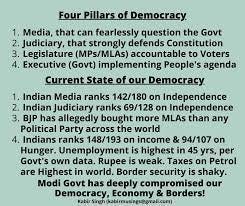
- Increased Inequality and Discrimination: Democracy, by its very nature, promotes equality by giving every citizen a voice. However, when democracy erodes, power often becomes concentrated in the hands of a few. This can lead to policies that favor these individuals or groups, leading to increased social and economic inequality. Furthermore, those in power may discriminate against certain groups, further exacerbating inequality.
- Suppression of Dissent and Freedom of Expression: One of the cornerstones of a healthy democracy is the right to freedom of expression. This includes the right to voice dissent or criticism against the government. However, in an eroding democracy, these rights may be suppressed to maintain control and quell opposition. This suppression can take many forms, including censorship, intimidation, or even violence.
- Corruption and Misuse of Power: In a functioning democracy, checks and balances help prevent corruption and misuse of power. However, as democracy erodes, these checks and balances may weaken or disappear, allowing those in power to act in their own interests rather than the interests of the citizens. This can lead to widespread corruption, misuse of public funds, and a lack of accountability.
- Erosion of Trust in Institutions: As the issues above manifest, citizens’ trust in their institutions can significantly erode. This lack of trust can lead to a vicious cycle, as disillusionment with the government can lead to lower civic participation, which in turn can further erode democracy.
The erosion of democracy can have serious implications for the rights and protections of ordinary citizens, leading to increased inequality, suppression of freedoms, corruption, and a loss of trust in institutions. It’s important to safeguard democratic values and institutions to prevent these outcomes.
Dr. Ambedkar’s Vision and the Cracks in India’s Democracy —
Dr. B.R. Ambedkar, the architect of the Indian Constitution, was a fierce advocate for a democracy rooted in equality, social justice, and the protection of minority rights. He envisioned a vibrant public sphere where dissent flourished and institutions functioned independently, safeguarding the freedoms of all citizens.
Ambedkar’s Pillars of Democracy:
- Equality and Social Justice: He tirelessly fought against caste-based discrimination and advocated for affirmative action to uplift marginalized communities. His vision encompassed not just political, but also social and economic equality.
- Protection of Minority Rights: Ambedkar, himself a member of a disadvantaged community, understood the vulnerability of minorities. He emphasized safeguards against discrimination based on religion, caste, or any other social marker.
- A Vibrant and Independent Public Sphere: He saw a free and robust press, open discourse, and active citizen participation as vital for a healthy democracy. This public sphere would scrutinize power and give voice to dissent.
Erosion of the Vision:
The current scenario in India presents a worrying deviation from Ambedkar’s vision:
- Rising Inequality: Despite economic growth, the gap between the rich and poor widens. Affirmative action faces challenges, and marginalized communities continue to grapple with discrimination and limited opportunities.
- Vulnerability of Minorities: Increased communal tensions, attacks on religious minorities, and the Citizenship Amendment Act (CAA) raise concerns about the erosion of minority rights and security.
- Shrinking Public Sphere: Government pressure on the media, restrictions on protests, and online censorship create a chilling effect on dissent and public discourse. The space for independent voices is shrinking.
Consequences for Marginalized Communities and Democracy:
This deviation carries dire consequences:
- Marginalization Deepens: The weakening of safeguards leaves marginalized communities vulnerable to further discrimination and exclusion, hindering their upward mobility and perpetuating social inequalities.
- Eroded Democratic Values: The stifling of dissent and criticism undermines the principles of accountability and transparency, which are crucial for a healthy democracy. This can lead to authoritarian tendencies and a decline in public trust in institutions.
- Unfulfilled Promise: India’s democracy falls short of Ambedkar’s vision when it fails to ensure equal rights, opportunities, and security for all its citizens. This unfulfilled promise threatens the very foundation of a just and equitable society.
Moving Forward:
Ambedkar’s vision remains a beacon of hope, reminding us of the fight for a truly inclusive and democratic India. Reclaiming his vision requires:
- Renewed commitment to constitutional principles: Upholding equality, justice, and minority rights as enshrined in the Constitution.
- Strengthening independent institutions: Ensuring the judiciary, media, and other institutions function freely and hold power accountable.
- Empowering marginalized communities: Addressing systemic inequalities through effective affirmative action and social welfare programs.
- Open public discourse: Encouraging free speech, dissent, and active citizen participation to strengthen the public sphere.
By returning to Dr. Ambedkar’s vision and working towards its fulfillment, India can bridge the gap between its democratic ideals and its lived realities, creating a brighter future for all its citizens.
The Myth of Prosperity under the Crushing Grip: Why Democratic Erosion Threatens Sustainable Growth
While proponents of a controlled democracy often tout its supposed efficiency in driving economic growth, a closer look reveals a fallacy. True, there may be periods of rapid economic expansion under such regimes. However, beneath the glittering surface lurks a dark underbelly — the seeds of long-term instability and unsustainable development. Let’s delve into the hidden costs of economic growth under the crushing grip of a controlled democracy, highlighting the crucial role of robust democratic institutions in fostering equitable and sustainable progress.
The Unsustainable Costs of Controlled Growth:
- Environmental Degradation: A focus on short-term gains often leads to rampant environmental exploitation. Controlled democracies prioritize rapid industrialization and infrastructure development, often disregarding environmental regulations and recklessly depleting natural resources. This ultimately undermines long-term economic potential as pollution, deforestation, and resource depletion stifle future growth.
- Social Unrest: Stifling dissent and suppressing the rights of minorities sows the seeds of social unrest. When citizens feel voiceless and marginalized, they become increasingly frustrated and susceptible to extremism, leading to social discord and instability. This disrupts economic activity and creates an unpredictable environment for investment and growth.
- Long-Term Instability: The lack of checks and balances inherent in controlled democracies fosters corruption and mismanagement. Power concentrated in the hands of a few leads to cronyism, opaque decision-making, and misallocation of resources. This eventually hinders efficiency, stifles innovation, and undermines long-term economic sustainability.
The Bastion of Equitable and Sustainable Development: Strong Democratic Institutions:
Robust democratic institutions, with their emphasis on:
- Transparency and Accountability: Open, transparent governance systems foster trust and encourage responsible resource management. Citizens can hold their leaders accountable, preventing mismanagement and corruption, leading to efficient utilization of resources for sustainable development.
- Checks and Balances: An independent judiciary, free media, and a vibrant civil society provide critical checks and balances against power abuse. This ensures that environmental concerns are addressed, minority rights are protected, and long-term sustainability considerations are factored into economic decisions.
- Inclusivity and Participation: When citizens have a say in shaping their destiny through free and fair elections, and can actively participate in public discourse, it leads to more equitable development. Marginalized communities feel empowered to voice their concerns and participate in economic opportunities, fostering a more inclusive and sustainable growth model.
The Indian case study serves as a stark reminder of these complexities. While India has witnessed impressive economic growth under the current government, concerns about the erosion of democratic institutions raise anxieties about its sustainability. The stifling of dissent, rising inequality, and environmental degradation point towards a precarious future.
By prioritizing strong democratic institutions, India can ensure that its economic growth is truly equitable and sustainable, leaving a legacy not just of rising GDP figures, but also of a just and inclusive society for generations to come.
Conclusion — Conclusion: Reclaiming the Pillars, Rekindling the Dream
India stands at a precipice. The four pillars that once held aloft the edifice of its democracy now tremble under the crushing grip of power. Yet, amidst the cracks and crevices, glimmers of hope remain. The voices of dissent, the unyielding spirit of the people, and the enduring dream of Dr. Ambedkar’s vision still flicker amidst the shadows.
Reclaiming the pillars requires a collective effort. The judiciary must assert its independence, the legislature must rediscover its voice, the executive must respect its boundaries, and the media must reclaim its courage. These institutions, nurtured by a vibrant public sphere, must re-establish the checks and balances that are the lifeblood of any healthy democracy.
But beyond institutions, it is the people who hold the real power. Their voices, their dissent, their participation in the public discourse — these are the weapons against the crushing grip. India’s citizens must rise, not just in protest, but in collective action, in demanding accountability, and in nurturing the values that Ambedkar championed.
The quest to reclaim the pillars is not easy. It will be met with resistance, with attempts to silence and divide. But the alternative — a democracy in name only, a hollow shell devoid of liberty and justice — is far worse. India’s people, heirs to a rich democratic legacy, must not surrender to this fate. They must fight, not just for themselves, but for future generations, for the dream of an India where the four pillars stand tall, where Dr. Ambedkar’s vision finds its fulfillment, and where every citizen can truly claim their rightful place under the vast sky of liberty and equality.
Thanks.
 Pratik Ghansham Salvi Assistant Professor of Economics | Banking & Finance | IMF Finance & Development Contributor
Leave a comment