In economic analysis the concept of opportunity cost has been widely used. In our daily lives, we are constantly faced with choices. From deciding what to eat for breakfast to choosing a career path, each decision entails a trade-off. However, economists go beyond the immediate costs and benefits of an option, introducing the concept of opportunity cost. This powerful concept reveals the true price of a decision, not just in terms of money, but also in terms of what you give up by choosing one option over another.
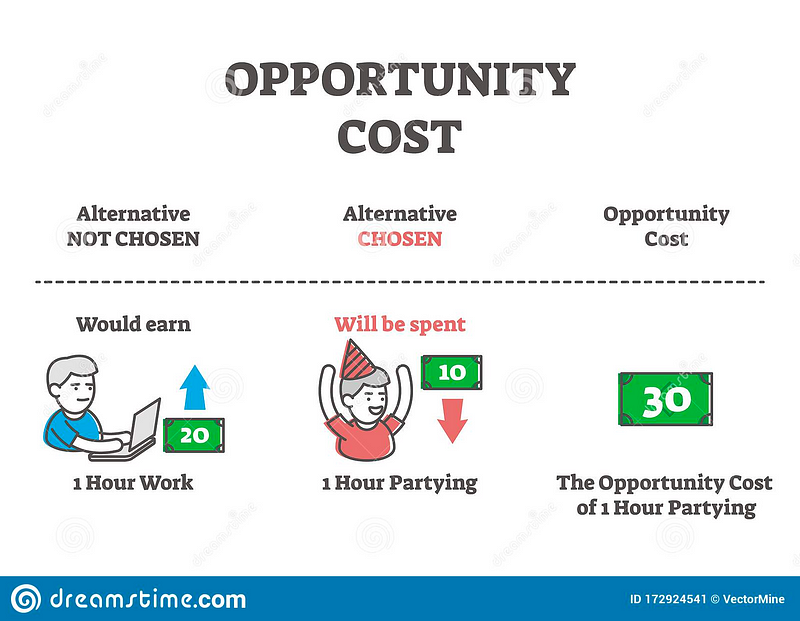
In economic analysis the concept of opportunity cost has been widely used. In our daily lives, we are constantly faced with choices. From deciding what to eat for breakfast to choosing a career path, each decision entails a trade-off. However, economists go beyond the immediate costs and benefits of an option, introducing the concept of opportunity cost. This powerful concept reveals the true price of a decision, not just in terms of money, but also in terms of what you give up by choosing one option over another.
Understanding opportunity cost is crucial for informed decision-making, not only in the realm of economics but also in personal and professional spheres. This article delves into the essence of opportunity cost, exploring its fundamental role in navigating the often-scarce resources at our disposal. We will discuss how considering opportunity costs empowers individuals and businesses to make optimal choices that maximize value and achieve their desired goals.
Throughout this article, I will provide real-world examples to illustrate the application of opportunity cost in various scenarios. Additionally, I will examine the limitations of this concept and discuss how it can be combined with other factors to make well-rounded decisions. By the end of this article, you will gain a deeper understanding of why opportunity cost is considered the cornerstone of sound economic decision-making and how it can guide you in making informed choices in any aspect of your life.
Opportunity Cost: The Sacrificed Value of “What If”?
In life, every decision involves a trade-off. We can’t have it all, and opportunity cost is the economic principle that helps us understand the true cost of our choices. It’s not just about the money spent, but also about the benefits sacrificed by choosing one option over another.
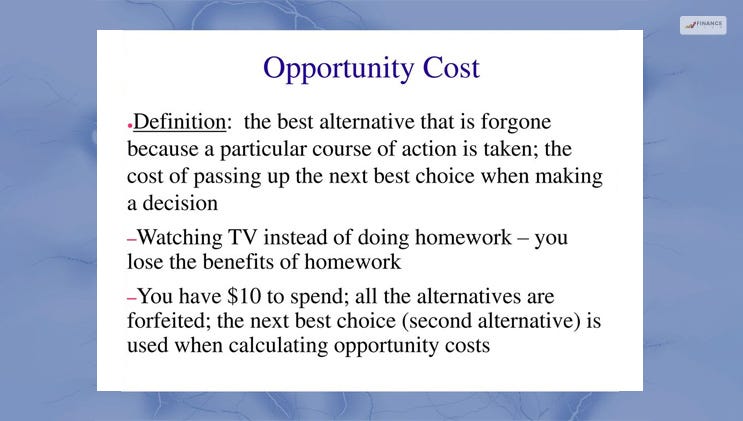
The essence of opportunity cost is the value of the next best alternative forgone. When you make a decision, you inevitably give up other potential options, each with its own set of benefits. The opportunity cost represents the value of the most attractive of these forgone options.
Here’s a breakdown of the key points:
- It’s not just about money: While financial cost is often a factor, opportunity cost goes beyond that. It encompasses all the benefits you give up by choosing one option.
- The “next best alternative”: This refers to the most valuable option you wouldn’t be able to pursue if you choose the current option. For example, if you decide to go to the movies, the “next best alternative” could be spending that time studying for an important exam.
- The forgone benefit: The opportunity cost is the value associated with the benefits of the forgone option. In the movie example, the forgone benefit could be the better exam grade you might have achieved if you had chosen to study.
Examples to illustrate:
- Taking a vacation: The cost of the trip is not just the money spent, but also the potential income you could have earned by working during that time.
- Going back to school: The opportunity cost includes not only the tuition fees, but also the lost income and career advancement opportunities you might have had if you continued working full-time.
- Choosing one investment: When you invest in one stock, the opportunity cost is the potential return you could have earned by investing in another, potentially higher-performing, stock.
Understanding opportunity cost helps us make informed and well-rounded decisions. By acknowledging the full spectrum of costs, including the benefits we sacrifice, we can weigh the different options more effectively and choose the path that best aligns with our priorities and goals.
Scarcity, Trade-Offs, and Opportunity Cost: The Intertwined Dance of Choice — Scarcity and trade-offs are fundamental concepts in economics and understanding them is crucial for making informed decisions in life. Scarcity simply means that resources are limited, while our desires and needs are often boundless. This fundamental imbalance forces us to make choices, and every choice comes with an implicit cost: the value of what we give up. This concept of the forgone benefit is captured by opportunity cost.
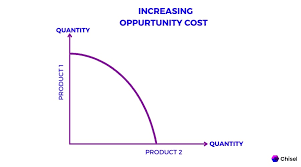
Scarcity is the driving force behind trade-offs:
- Because resources are limited, they cannot be used for everything at once. We cannot have all our wants and needs fulfilled simultaneously. This forces us to prioritize and make choices about how to allocate these resources.
- For example, you might have limited time. You can choose to spend it studying, exercising, socializing, or pursuing a hobby. Each choice you make leaves less time available for other activities.
Trade-offs inevitably lead to opportunity costs:
- Opportunity cost quantifies the value of the next best alternative forgone when we make a decision. In simpler terms, whenever you choose one option, you implicitly relinquish the benefits associated with the other options you could have chosen.
- When you choose to spend your limited time studying, the opportunity cost is the enjoyment and potential benefits (like improved health or social connection) from other activities you could have done.
Every decision, regardless of its nature, has an associated opportunity cost:
- It’s essential to remember that the concept of implicit costs applies to all decisions, not just those involving money. Even seemingly insignificant choices like what to wear or what to eat for breakfast involve trade-offs and opportunity costs.
- For example, choosing a comfortable outfit for a long day at work might mean sacrificing the chance to express yourself through fashion. Choosing a quick breakfast over a more elaborate one might mean sacrificing the potential health benefits and enjoyment of a more nutritious meal.
Understanding the interconnectedness of scarcity, trade-offs, and opportunity cost empowers us to make informed decisions:
- By acknowledging the inherent cost associated with every choice, we can become more conscious decision-makers.
- We can weigh the potential benefits of different options against their associated opportunity costs.
- This allows us to optimize our use of limited resources to achieve our desired outcomes and minimize the sacrifices we make along the way.
In essence, scarcity forces us to make trade-offs, and every trade-off comes with an implicit cost — the value of what we give up. Understanding this crucial link allows us to make informed decisions and navigate the inevitable choices we face in life.
Examples of Opportunity Cost — Understanding opportunity cost is not just an academic exercise; it’s a practical tool that can be applied to everyday decisions. Let’s explore some relatable examples that showcase the practical application of this concept:
1. The Coffee vs. Vacation Dilemma:
- Scenario: You’re craving a daily coffee, which costs $5. However, you’re also saving for your dream vacation that requires $5,000.
- Opportunity cost: The $5 coffee represents the opportunity cost of adding it to your daily routine. Each time you buy a coffee, you forgo the ability to save an additional $5 towards your vacation. Over time, these seemingly small daily purchases can significantly impact your savings goals.
2. Balancing Work and Life: Choosing Between High Pay and Free Time:
- Scenario: You receive two job offers: one with a higher salary but demanding long hours (leaving little time for personal life), and the other offering lower pay but flexible hours (allowing more free time).
- Opportunity cost: If you choose the high-paying job, the opportunity cost is the free time and personal life you would have with the other job. Conversely, choosing the job with more free time means sacrificing the higher income and potential career advancement opportunities associated with the first option.
3. Navigating the Investment World:
- Scenario: You have the opportunity to invest in two different ventures: one offering a potentially higher return but also a higher risk, and the other offering a more stable but lower return.
- Opportunity cost: Investing in the high-risk, high-reward venture means giving up the guaranteed, albeit lower, return from the safer investment. While the potential gain might be tempting, it’s crucial to consider the opportunity cost and weigh it against your risk tolerance and investment goals.
Why Opportunity Cost is important?
In the complex dance of decision-making, understanding opportunity cost is like having a secret weapon. It empowers us to make better choices by considering the full spectrum of consequences associated with each option. Here’s how factoring in the true cost of choices, as revealed by opportunity cost, leads to better decision-making:
1. Evaluating the “True Cost” of Options:
- Often, the initial cost of an option catches our attention, but opportunity cost goes beyond the price tag. It helps us uncover the hidden costs, which are the benefits we sacrifice by choosing one option over another.
- For example, focusing solely on the cost of pursuing a higher education might mask the opportunity cost of lost income during that time. By considering this cost, individuals can make a more informed decision about whether the long-term benefits outweigh the present sacrifices.
2. Informed Comparison of Alternatives:
- When faced with multiple options, opportunity cost helps us compare them more objectively. By understanding the benefits forgone for each choice, we can identify which option offers the greatest overall value, considering both the direct benefits and the implicit costs.
- For businesses, evaluating potential investments through the lens of opportunity cost allows them to compare the potential return of each option against the alternative uses of the resources they would invest. This helps them choose the investment that offers the greatest potential for maximizing their returns.
3. Maximizing Value and Achieving Goals:
- Ultimately, the goal of any decision is to extract the most value from our available resources, whether time, money, or effort. Opportunity cost awareness allows us to make choices that maximize the value we receive, both in the immediate and long term.
- By understanding the trade-offs involved in each option, individuals can make choices that align with their personal goals and priorities. Businesses can similarly make choices that maximize their profit-making potential or achieve their long-term strategic objectives.
Considering opportunity cost is not about making the “right” choice, but about making the most informed and well-rounded choice possible. By understanding the true costs and potential benefits of each option, we can navigate the inevitable trade-offs in life and make decisions that lead us closer to achieving our desired outcomes.
Opportunity Cost: A Powerful Tool with Cautions — While opportunity cost is a valuable tool for making informed decisions, it’s essential to acknowledge its limitations. Here’s a closer look at the aspects where considering opportunity cost can be challenging:
1. Difficulty in Quantifying “Missed Opportunities”:
- Opportunity cost often involves intangible benefits that are difficult to quantify. Not all “missed opportunities” can be easily measured in monetary terms or readily translated into a specific value.
- For example, choosing to spend time with family over attending a networking event might involve the opportunity cost of potential career connections. However, the value of those connections, and the potential future benefits they might bring, can be difficult to quantify with certainty.
2. Uncertainty of Future Outcomes:
- Predicting the future is inherently challenging, and opportunity cost relies heavily on predicting the potential outcomes of the options we don’t choose.
- If the chosen option underperforms or unforeseen circumstances arise, the true cost of choosing it might be higher than initially anticipated. Conversely, the “missed opportunity” might have yielded lower returns or faced setbacks, making its initial allure misleading.
Therefore, it’s crucial to approach opportunity cost with a nuanced understanding:
- Focus on relative values: While it might be difficult to assign a precise monetary value to all opportunity costs, try to compare the relative values of different options. This can help in understanding which option offers the greater potential benefit considering the sacrifices involved.
- Embrace uncertainty: Acknowledge that future outcomes are inherently uncertain. Use opportunity cost as a guide to make informed decisions based on available information, but be prepared to adapt your course of action as circumstances evolve.
Opportunity cost is a powerful tool for unveiling the hidden costs of choices and making informed decisions. However, acknowledging its limitations and applying it with a critical and nuanced perspective is crucial to avoid overreliance on calculations and unrealistic expectations of perfect foresight. By combining an understanding of opportunity cost with your own knowledge, insights, and adaptability, you can navigate the complexities of decision-making and strive towards achieving your desired outcomes.
Combining Opportunity Cost with Other Factors — While opportunity cost is a powerful tool for understanding the true cost of choices, it’s essential to remember that it’s not the only factor to consider when making decisions. A holistic approach that takes into account various aspects is crucial for making well-rounded and effective decisions.

Here’s why a symphonic combination of factors, including opportunity cost, leads to better decision-making:
1. Personal Preferences and Values:
- Opportunity cost focuses primarily on the economic trade-off between options, but personal preferences and values play a significant role in decision-making.
- For example, choosing a career path with a lower salary but more flexible hours might be the most attractive option for someone who highly values work-life balance. While the opportunity cost might be a higher income, the personal preference for flexibility outweighs the purely economic considerations.
2. Risk Tolerance:
- Individuals have varying risk tolerances. Some are comfortable taking risks for potentially higher rewards, while others prefer stability and predictability.
- When evaluating options with varying levels of risk, understanding your own risk tolerance is crucial. While an investment with a higher potential return might seem attractive based solely on opportunity cost, it might not be the best choice for someone with a low risk tolerance.
3. Long-Term Consequences:
- Opportunity cost often focuses on the immediate costs and benefits of different options. However, decisions often have long-term consequences that go beyond the initial trade-offs.
- For example, choosing a less prestigious university might have a lower opportunity cost in terms of immediate financial outlay. However, it might also have long-term implications for potential career opportunities and earning potential in the future.
Therefore, integrating opportunity cost within a broader framework of decision-making factors is essential:
- Consider your personal values and preferences: What is truly important to you beyond the immediate economic trade-off?
- Evaluate your risk tolerance: Are you comfortable taking risks, or do you prefer stability?
- Think about the long-term consequences: What are the potential long-term impacts of each option?
By combining opportunity cost with these additional factors, you can create a rich and nuanced understanding of the choices you face. This allows you to make more informed and well-rounded decisions that align with your personal values, risk tolerance, and long-term goals.
In essence, remember that opportunity cost is a piece of the puzzle, not the entire picture. By combining it with your personal insights, values, and a long-term perspective, you can navigate the complexities of decision-making and set yourself on a path towards achieving your desired outcomes.
Conclusion — While recognizing opportunity cost is essential for navigating the world of limited resources and making informed choices in both personal and professional realms. By understanding the true price of a decision, not just in terms of immediate costs, but also in terms of what we give up, we are empowered to make optimal choices that maximize value and achieve our desired goals. While opportunity cost may not always be easily quantifiable, considering it as a cornerstone of sound decision-making leads to a more strategic and deliberate approach to life’s choices. Remember, every decision carries an implicit cost, and recognizing this hidden factor can pave the way for a more better understanding of these concepts.
Thanks.
 Pratik Ghansham Salvi Assistant Professor of Economics | Banking & Finance | IMF Finance & Development Contributor
Leave a comment