How AI Can Unlock New Levels of Efficiency and Productivity

The world has been witnessing tremendous shift after the launch of ChatGPT in the year 2022 by OpenAI. Although chat bots and AI are not new technology for humans it is widely used in diffrent sectors by many firms and businesses. However, the distingushing feature of ChatGpt is that it provides us large scale data techniques tools along with widespread information. One more important thing is that it spread accross the globe rapidly and ultimately many of the business corporations like Google, Microsoft launched thier own Large Language Model ( LLM ) tools just like ChatGpt.
With anaylysing all these aspects we can understand after 2 years almost each and every filed the demand for its learning and understanding is crucial for everyone. It created many new opportunities as well as cretaes certain problems in diffrent sectors of the economy. The most important impact according to some anlysts will be on the labour market perspective. It is true that the new technologies like ChatGpt creates job opportunities in certain sectors but it also emerged unemplyment due to technological change and it sometimes termed as the frictional unemployment. Moreover, the governments in different countries promote the technologies like LLM the question is that is it viable for economic growth and development perspective?
So, in this article I will be covering all these questions and try to analyses the diffrent aspects of the ChatGpt and its beneficial impacts on growth and development perspective and how we can overcome different challenges associated with it.
Artificial Inteliigence and Economic Growth — So first start with AI and growth perspective. I know here comparing particular technology directly with the Economic Growth is not appropriate because as we all know economic growth is long term process. But it doesn’t mean that we’ll not able to comapre those thongs. As we study from last two year data we can say that there are certain changes in domestic as well as international labour market happened. So lets understand certain economic growth indicators with data analysis — -
- Artificial Inteliigience and GDP — The GDP, that is, gross domestric product is the important indicator of the country’s economic growth. It includes market value of all the final goods and services produced in the economy in one financial year.
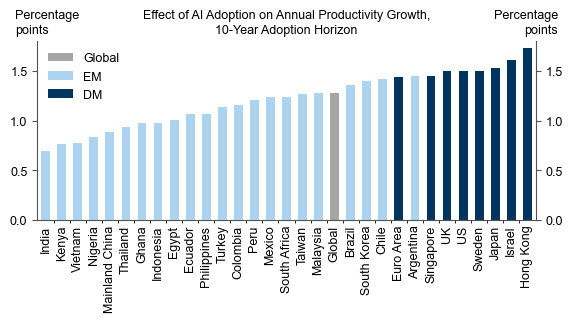
The data in the image shows the estimated effect of artificial intelligence (AI) adoption on annual productivity growth over a 10-year horizon, according to a report by Goldman Sachs. The y-axis shows the percentage point change in productivity growth, and the x-axis shows the countries included in the study.
- The blue line represents the global average effect of AI adoption, which is estimated to be an increase of 1.5 percentage points in annual productivity growth over 10 years.
- The gray lines for each country represent the estimated effect of AI adoption on that specific country’s productivity growth. The effects for individual countries vary considerably, ranging from a low of 0.5 percentage points to a high of 1.5 percentage points.
- Some of the countries expected to see the highest productivity gains from AI adoption include China, India, and Vietnam.
- The United States and many European countries are expected to see more modest gains.
It is important to note that these are just estimates, and the actual impact of AI adoption on productivity growth could be higher or lower. The report’s authors acknowledge that there is a significant degree of uncertainty surrounding the potential benefits of AI.
Here are some of the factors that could affect the impact of AI on productivity growth:
- The rate at which AI technologies are developed and adopted
- The extent to which AI is complementary to human labor, rather than a substitute for it
- The government policies that are put in place to support AI development and adoption
Artificial Intelligence and Manufacturing Sector — the manufacturing sector is the key component of achiving economic growth and devlopment. In this persprctive, as AI expanding in this sector it is enhancing efficiency, advenacements and economies of scale in the production. And certainly it will generate positive impacts on the country’s economic growth and dvelopment.
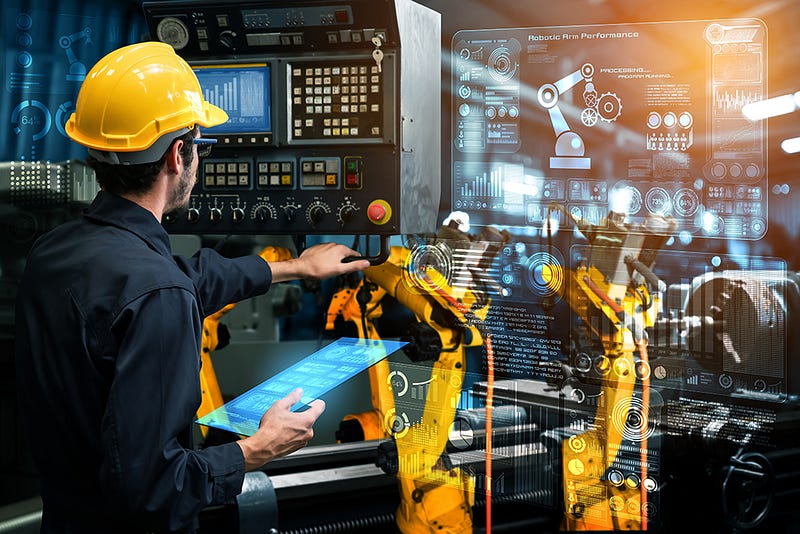
Artificial intelligence (AI) is rapidly transforming the manufacturing sector, ushering in an era of unprecedented efficiency, innovation, and productivity. This technology is not simply automating tasks; it’s fundamentally changing how manufacturers operate, bringing about a new industrial revolution. Let’s delve deeper into the multifaceted impact of AI on manufacturing:
1. Enhanced Efficiency and Productivity:
- Predictive Maintenance: AI algorithms analyze sensor data from machines to predict potential failures before they occur. This allows for preventative maintenance, minimizing downtime and maximizing production uptime. Studies suggest predictive maintenance powered by AI can save manufacturers up to $1 trillion globally.
- Optimized Production Processes: AI can analyze vast amounts of data from various sources like production lines and identify bottlenecks or inefficiencies. This allows for real-time optimization of processes, leading to smoother production flow and increased output.
- Intelligent Automation: AI-powered robots are becoming increasingly sophisticated, capable of handling complex tasks with greater precision and speed than ever before. This collaborative automation with human workers can significantly boost productivity.
2. Improved Quality Control:
- Machine Vision with AI: AI-powered vision systems can inspect products with unparalleled accuracy and speed. These systems can detect even the slightest defects, ensuring consistent high-quality products.
- Statistical Process Control (SPC) with AI: AI can analyze real-time production data to identify trends and predict potential quality issues. This proactive approach allows for adjustments to be made before defective products are produced.
3. Innovation and Product Development:
- Generative Design: AI algorithms can be used to generate innovative product designs that meet specific requirements and constraints. This can significantly reduce design time and lead to the development of entirely new product categories.
- Material Science Advancements: AI can be used to analyze vast datasets on materials science, accelerating the discovery of new materials with superior properties, leading to lighter, stronger, and more efficient products.
4. Supply Chain Management:
- Demand Forecasting: AI algorithms can analyze historical sales data, market trends, and social media sentiment to predict future demand for products. This allows manufacturers to optimize their inventory levels and production schedules, reducing costs and improving responsiveness to market changes.
- Logistics Optimization: AI can be used to optimize transportation routes, warehouse layouts, and delivery schedules within the supply chain. This leads to reduced transportation costs, faster delivery times, and improved overall supply chain efficiency.
5. The Human Factor:
- Collaboration, Not Replacement: AI is not meant to replace human workers, but rather to augment their capabilities. By handling repetitive tasks, AI frees up human workers to focus on higher-level cognitive tasks that require creativity, problem-solving, and strategic thinking.
- Upskilling the Workforce: As AI continues to integrate into manufacturing, there will be a need for workers with new skillsets. Manufacturers will need to invest in upskilling their workforce to ensure they can effectively collaborate with AI tools.
Challenges —
- Initial Investment Costs: Implementing AI solutions can require significant upfront investments in hardware, software, and data infrastructure.
- Data Security and Privacy: The increasing reliance on data in manufacturing raises concerns about data security and privacy. Manufacturers need robust measures to protect sensitive data.
- Ethical Considerations: As AI becomes more sophisticated, ethical considerations regarding bias and job displacement need to be addressed proactively.
AI is revolutionizing the manufacturing sector, creating a more efficient, productive, and innovative industry. By embracing AI and its potential, manufacturers can gain a significant competitive edge and ensure their long-term success in the global marketplace. However, navigating the challenges and ensuring responsible implementation of AI is crucial to maximize its benefits for both businesses and workers.
Artificial Intelligence in Agriculture Sector — Agriculture sector plays an important role in both developed and underdeveloped economies especially under the developing economies because large proportion of people are engaging in agriculture and allied activities. Hence AI based technologies helps the farmers to expand productivity of certain crops in the agricultural sector. For example India already launched certain teachnolies for example, e-NAM, PM-KISAN schemes etc. which is beneficial for the farmers in India.
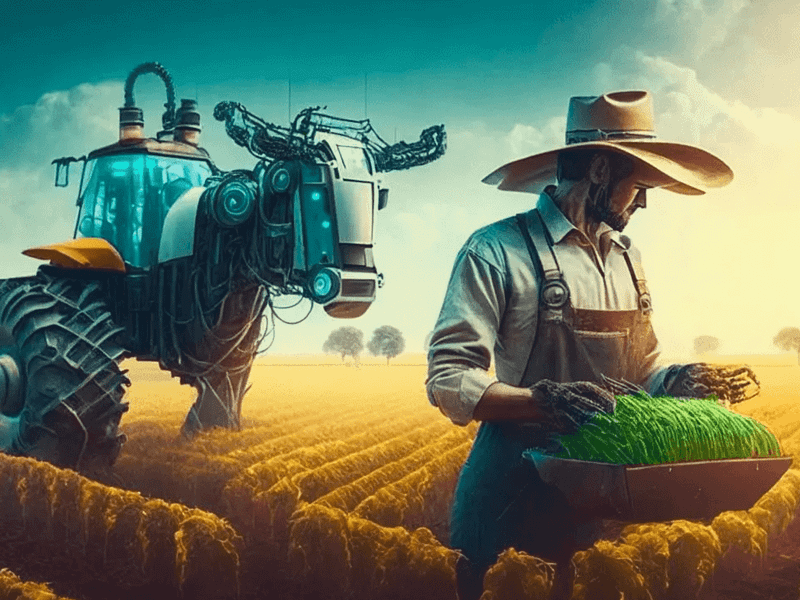
The agricultural sector is on the cusp of a significant transformation driven by artificial intelligence (AI). This powerful technology is poised to address some of the most pressing challenges faced by farmers today, leading to increased efficiency, sustainability, and overall agricultural output. Let’s explore the multifaceted ways AI is revolutionizing agriculture:
1. Enhanced Precision and Resource Management:
- Precision Agriculture: AI algorithms can analyze data from various sources like soil sensors, satellite imagery, and weather forecasts to create detailed field maps. This allows for targeted application of water, fertilizers, and pesticides, reducing waste and optimizing resource use.
- Yield Prediction: AI models can analyze historical data and current conditions to predict crop yields with greater accuracy. This empowers farmers to make informed decisions about resource allocation and planting strategies.
- Automated Irrigation Management: AI-powered irrigation systems can monitor soil moisture levels in real-time and adjust watering schedules accordingly. This ensures crops receive the optimal amount of water, reducing water waste and improving crop health.
2. Improved Disease and Pest Control:
- Early Disease Detection: AI-powered image recognition can analyze drone or satellite imagery to detect crop diseases at early stages. This allows for prompt intervention and minimizes crop losses.
- Targeted Pest Control: AI algorithms can analyze data on pest populations and weather conditions to predict outbreaks. This enables farmers to take preventive measures and apply targeted pesticides only when and where necessary.
3. Optimizing Farm Operations:
- Autonomous Farm Machinery: AI-powered tractors, harvesters, and other agricultural equipment are becoming a reality. These autonomous machines can perform tasks with greater precision and efficiency, freeing up farmers’ time and labor for other critical activities.
- Livestock Monitoring and Management: AI systems can monitor animal health through wearables and sensors, allowing for early detection of illness and improved animal welfare. Additionally, AI can optimize feed and medication usage for livestock.
4. Weather Forecasting and Risk Management:
- Hyperlocal Weather Prediction: AI can analyze vast amounts of data to provide hyperlocal weather forecasts, allowing farmers to make informed decisions about planting, harvesting, and resource management based on highly accurate weather predictions.
- Crop Insurance Optimization: AI can analyze historical weather patterns and crop yields to assess risk more accurately. This allows for the development of more efficient and personalized crop insurance plans for farmers.
Challenges —
- Accessibility and Affordability: AI-powered solutions can be expensive, and ensuring equitable access for small and medium-scale farmers is crucial.
- Data Privacy and Security: The use of farm data raises concerns about privacy and security. Robust data protection measures are essential.
- Digital Divide: Bridging the digital divide in rural areas is necessary to ensure all farmers can benefit from AI technologies.
AI presents a tremendous opportunity to revolutionize agriculture, making it more productive, sustainable, and resilient. By embracing AI and addressing the challenges associated with its implementation, we can cultivate a future where agriculture thrives and contributes to global food security.
AI Transformative role in Service Sector: From Banking to E-commerce and Beyond — Artificial intelligence (AI) is rapidly transforming the service sector, fundamentally changing how businesses operate and interact with customers. This technology is not just automating tasks; it’s creating a new era of personalized experiences, improved efficiency, and data-driven decision-making across various service industries. Let’s delve into how AI is impacting some key service sectors:
1. Banking and Insurance:
- Chatbots and Virtual Assistants: AI-powered chatbots and virtual assistants are revolutionizing customer service, providing 24/7 support, answering basic queries, and resolving simple issues.
- Fraud Detection and Risk Management: AI algorithms can analyze vast amounts of transaction data to identify fraudulent activities in real-time, protecting both banks and customers.
- Personalized Financial Advice: AI-powered tools can analyze a customer’s financial situation and goals to provide personalized investment and financial planning advice.
- Automated Underwriting: AI can streamline the insurance application process by analyzing data to assess risk and provide quicker insurance approvals.
2. E-commerce and Retail:
- Product Recommendations: AI algorithms analyze customer purchase history, browsing behavior, and search queries to recommend personalized products, enhancing the customer shopping experience and increasing sales.
- Demand Forecasting: AI can analyze sales data and market trends to predict future demand for products, allowing retailers to optimize inventory levels and prevent stockouts.
- Dynamic Pricing: AI can adjust prices in real-time based on factors like demand, competition, and customer behavior, maximizing profits for retailers.
- Chatbots for Customer Support: AI-powered chatbots can answer customer queries about products, orders, and track deliveries, improving customer satisfaction and reducing support costs.
3. Healthcare:
- Medical Diagnosis and Treatment: AI algorithms can analyze medical images (X-rays, MRIs) and patient data to assist doctors in diagnosing diseases and recommending treatment plans.
- Virtual Assistants and Chatbots for Patients: AI-powered virtual assistants can answer patients’ questions about their health, schedule appointments, and provide basic self-care guidance.
- Drug Discovery and Development: AI can accelerate drug discovery by analyzing vast datasets of scientific research and identifying potential drug candidates.
- Personalized Medicine: AI can analyze a patient’s genetic data and medical history to predict their risk of developing certain diseases and tailor treatment plans accordingly.
4. Other Service Sectors:
- Travel and Hospitality: AI-powered chatbots can assist travelers with booking flights, hotels, and activities, personalizing recommendations based on preferences.
- Customer Service: AI chatbots can handle basic customer inquiries across various service sectors, freeing up human agents for more complex issues.
- Legal Services: AI can analyze legal documents and case law to identify relevant precedents and support lawyers in preparing cases.
Challenges —
- Job Displacement: Automation through AI may lead to job losses in some service sectors. Reskilling and upskilling initiatives are crucial.
- Bias and Fairness: AI algorithms can perpetuate biases present in the data they are trained on. Ensuring fairness and mitigating bias in AI models is critical.
- Transparency and Explainability: In some cases, AI decision-making processes can be opaque. Ensuring transparency in how AI arrives at its conclusions is important.
AI is undeniably transforming the service sector, creating a more efficient, personalized, and data-driven service experience. By embracing AI responsibly and addressing the challenges, businesses can leverage its potential to enhance customer satisfaction, optimize operations, and gain a competitive edge in the marketplace.
AI’s Bright Future: Overcoming Challenges for Widespread Benefits — Artificial intelligence (AI) is rapidly transforming our world, but its journey isn’t without hurdles. Here’s a breakdown of some key challenges associated with AI and potential solutions to ensure its responsible and beneficial development:
Challenge 1: Data Bias and Fairness
- Problem: AI algorithms can perpetuate biases present in the data they’re trained on, leading to discriminatory outcomes. For example, an AI-powered hiring tool trained on historical data biased against certain genders or ethnicities could disadvantage qualified candidates.
- Solution: Implementing fairness checks during data collection and model development. Ensuring diverse datasets and auditing algorithms for bias can help mitigate these issues.
Challenge 2: Job Displacement and Workforce Disruption
- Problem: Automation through AI has the potential to replace jobs in some sectors, leading to unemployment and economic hardship.
- Solution: Investing in reskilling and upskilling initiatives to equip the workforce with the skills needed for AI-driven jobs. Lifelong learning programs and government support are crucial for a smooth transition.
Challenge 3: Explainability and Transparency
- Problem: In some cases, AI decision-making processes can be like a black box, making it difficult to understand how an AI system arrives at a particular conclusion. This lack of transparency can raise concerns about accountability and fairness.
- Solution: Developing “explainable AI” models that provide insights into the reasoning behind AI decisions. This can help build trust and ensure responsible implementation.
Challenge 4: Privacy and Security Concerns
- Problem: The increasing reliance on data for AI applications raises concerns about data privacy and security. Malicious actors could exploit vulnerabilities to steal sensitive information or manipulate AI systems.
- Solution: Implementing robust data security measures, enforcing data protection regulations, and fostering a culture of data privacy awareness are essential safeguards.
Challenge 5: Access and Inequality
- Problem: Unequal access to AI resources and expertise can exacerbate existing economic and social inequalities. Smaller businesses and developing countries may struggle to compete with larger players who have greater access to advanced AI technology.
- Solution: Promoting open-source AI development and initiatives that encourage knowledge sharing can help bridge the gap. Additionally, targeted government funding and support programs can ensure broader access to AI benefits.
The Road Ahead
By acknowledging these challenges and working towards solutions, we can ensure that AI is developed and implemented responsibly. Through collaboration between researchers, policymakers, businesses, and individuals, we can harness the immense potential of AI to create a more prosperous, equitable, and sustainable future for all.
Conclusion — Artificial Intelligence (AI) presents a double-edged sword for economic progress. While its potential to drive growth through innovation, efficiency gains, and entirely new industries is undeniable, the challenges of job displacement, inequality, and responsible development cannot be ignored. The answer to the question of whether AI is a growth driver or disruption lies not in the technology itself, but in how we choose to develop and implement it. By proactively addressing the challenges, fostering responsible innovation, and ensuring inclusive access to the benefits of AI, we can harness its power to propel economic progress and build a more prosperous future for all.
Thanks.
 Pratik Ghansham Salvi Assistant Professor of Economics | Banking & Finance | IMF Finance & Development Contributor
Leave a comment