Why Oligopoly Theory’s Understanding important in Today’s Business Landscape?

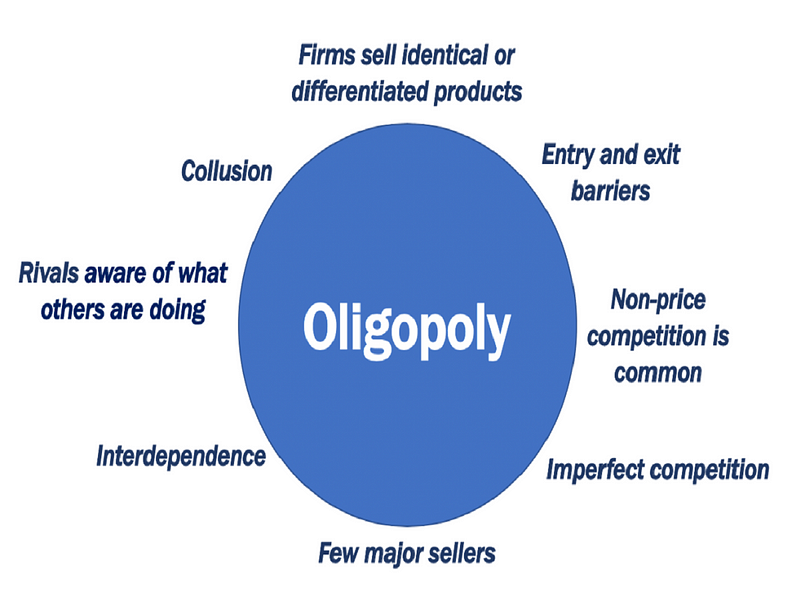
In today’s modern economic sytsem business models and orientation changing and expanding very rapidly. Today, all businesses in worldwide adopting Artificial Intelligence (AI) technologies to expand output and maximise profits. Therefore, analysis of oligopoly and its core understanding is crucial. Ologopoly is the type market structure where few firms competing with each other and sometimes these firms collude and forms an agreement which is generally referred as the “Cartel” to maximise joint profits. However, it is important to note that generally there are mainly two types of oligopolistic market forms- 1) Pure Oligopoly 2) DIffrentiated Oligopoly.
In this article I will be discussing importantce of understanding of the oligopolistic market structure with the perspective of business landscape.
In this market structure, a small number of firms hold a significant share of the industry’s total output. From tech giants like Apple and Google to airlines and telecommunication companies, oligopolies are prevalent across various sectors. Understanding how these firms behave and interact is crucial for navigating the competitive landscape effectively.
This article delves into the importance of oligopoly theory in today’s business environment. We’ll explore how this economic framework sheds light on the strategic decision-making processes of oligopolistic firms. By examining the theories pioneered by E.H. Chamberlin and others, we’ll gain insights into how these firms consider pricing, product differentiation, advertising, and potential collusion. This knowledge is invaluable for businesses of all sizes, as it allows them to:
- Anticipate competitor behavior: By understanding the factors influencing oligopolistic decision-making, businesses can better predict their rivals’ actions and formulate strategic responses.
- Develop effective competitive strategies: Whether a firm operates within an oligopoly or seeks to enter one, understanding oligopoly theory equips them with the tools to carve out a profitable niche.
- Advocate for fair competition: Oligopolistic markets can sometimes exhibit tendencies towards limited innovation and higher prices. By recognizing these potential drawbacks, businesses and policymakers can work towards fostering a more competitive environment.
Throughout this article, we’ll illustrate the practical application of oligopoly theory with real-world examples. By bridging the gap between theory and practice, we’ll demonstrate how a grasp of oligopoly dynamics empowers businesses to thrive in today’s concentrated market landscape.
Interdependence and Strategic Decision-Making in Oligopolies — Oligopolies, markets with a few dominant firms, present a unique situation when it comes to decision-making. Unlike monopolies (single seller) and perfectly competitive markets (many small sellers), firms in oligopolies are highly interdependent. This means a decision by one firm significantly impacts the actions and success of its rivals, and vice versa. Let’s delve deeper into this concept and how oligopolists navigate this strategic landscape.
Key Differences:
- Number of Sellers: Oligopolies have few sellers (think cell phone companies), while monopolies have one (national power grid) and perfectly competitive markets have many (farmers’ market).
- Control Over Price: Monopolies have significant control over price, oligopolies have some influence, and perfectly competitive firms are price takers (dictated by market forces).
- Interdependence: This is the key differentiator. Oligopolies are highly interdependent, while monopolies and perfectly competitive firms are not.
The Interdependence Web:
Imagine a web where each strand represents a firm in the oligopoly. A movement by one firm (a price change, new product launch) sends ripples through the web, impacting the other firms. They must consider these potential consequences before making any strategic decisions.
- Price Changes: If one firm lowers prices, others might follow to stay competitive, leading to price wars and potentially lower profits for everyone. Conversely, if one firm raises prices, others might not follow, leading to a loss of market share for the first firm.
- Product Differentiation: Oligopolists might introduce new features or variations to attract customers, forcing rivals to react with similar innovations.
- Marketing Strategies: Advertising campaigns by one firm can prompt counter-campaigns from others, all vying for consumer attention.
Game Theory and the Prisoner’s Dilemma:
Game theory helps analyze strategic interactions in oligopolies. The Prisoner’s Dilemma is a classic example:
- Two oligopolists, A and B, are deciding on pricing strategies: cooperate (charge high prices) or defect (charge low prices).
- If they both cooperate, they earn moderate profits.
- If one defects while the other cooperates, the defector gets high profits, and the cooperator suffers a loss.
- If they both defect, they both earn lower profits than by cooperating.
The dilemma lies in the uncertainty of the rival’s choice. Cooperation seems better in the long run, but the temptation to defect for short-term gain can be high. This reflects the struggle for oligopolists to maintain cooperation on price or other strategic aspects.
Navigating Interdependence:
Oligopolists use various strategies to navigate this interdependent environment:
- Collusion (illegal): Firms secretly agree on prices, output levels, or market divisions to maximize collective profits. This eliminates competition but is often illegal.
- Signaling: Firms send public messages about their future actions to influence rivals’ decisions. For example, announcing a price increase might deter rivals from lowering theirs.
- Tit-for-Tat Strategies: Firms match rivals’ actions, cooperating if the rival cooperates and retaliating if they defect. This can lead to stable outcomes but limits potential gains.
- Product Differentiation: Firms focus on making their products unique to reduce direct competition and lessen the impact of rivals’ actions.
Interdependence is a defining characteristic of oligopolies. It creates a complex strategic environment where firms must constantly anticipate and react to their rivals’ moves. Understanding game theory concepts like the Prisoner’s Dilemma helps analyze these situations and predict how oligopolists might behave. The success of an oligopolistic firm hinges on its ability to navigate this web of interdependence and make strategic decisions that maximize its profits while considering the potential reactions of its competitors.
Market Dynamics and Pricing Strategies in Oligopolies — Oligopolies present a fascinating dance between competition and cooperation. When it comes to pricing, firms must consider several factors unique to this market structure. Let’s explore how market share, product differentiation, and potential collusion influence pricing strategies, followed by two prominent pricing models in oligopolies: price leadership and the kinked demand curve.

Factors Shaping Pricing Decisions:
- Market Share: Oligopolists constantly strive to increase or maintain their market share (percentage of total market sales). Aggressive pricing can win customers but might trigger price wars that erode profits for everyone.
- Product Differentiation: Oligopolies often differentiate their products (think car brands) to create a niche and reduce price sensitivity. Customers become less focused solely on price when considering features, brand loyalty, or after-sales service.
- Potential Collusion: The threat (or reality) of collusion, where firms agree on prices or market share, can lead to higher, non-competitive prices. However, collusion is illegal in most countries.
Pricing Models for Oligopolies:
- Price Leadership: This model occurs when a dominant firm in the industry sets the market price, and others follow suit or adjust their prices slightly. This can create stability and avoid price wars, but it limits competition and consumer choice. Factors like firm size, brand reputation, and historical price leadership can determine who becomes the price leader.
- Barometric Price Leadership: The leader subtly adjusts prices based on market conditions, and others follow suit.
- Collusive Price Leadership: This is illegal collusion disguised as leadership, where firms agree on price hikes beforehand.
- Dominant Firm Price Leadership: The largest and most powerful firm dictates prices.
- Kinked Demand Curve: This theory proposes that an oligopolistic firm’s demand curve has a kink (sharp bend) at the prevailing market price.
- Reasoning: Firms are hesitant to raise prices above the kink because rivals might not follow, leading to a significant loss of market share.
- Conversely, if a firm lowers prices, rivals are likely to follow, minimizing the gain in market share. This discourages price changes and promotes price stability.
Choosing the Right Strategy:
The optimal pricing strategy depends on the specific oligopoly and its characteristics. Here’s a breakdown:
- Highly Differentiated Products: Firms may have more pricing freedom due to brand loyalty and less price sensitivity.
- Collusive Environment: If collusion is suspected, firms might set higher, non-competitive prices.
- Price War Potential: Firms might prioritize maintaining market share and avoid aggressive price cuts if a price war seems likely.
Pricing in oligopolies involves a delicate balancing act. Firms consider market share, product differentiation, and the ever-present shadow of potential collusion. Price leadership models and the kinked demand curve offer frameworks for understanding how oligopolists set prices in this complex and interdependent market environment. Ultimately, the success of a pricing strategy hinges on accurately reading the market dynamics and anticipating rivals’ actions.
Barriers to Entry and Innovation in Oligopolies — Oligopolies, markets dominated by a few powerful firms, are characterized by high barriers to entry, making it difficult for new players to compete. These barriers can stifle innovation and lead to drawbacks for consumers. Let’s delve into the ways oligopolies create entry hurdles and analyze the potential negative consequences.

Fortress of Entry Barriers:
Oligopolies establish various barriers to discourage or prevent new firms from entering the market and challenging their dominance. Here are some key examples:
- Economies of Scale: Existing firms benefit from large production volumes, allowing them to achieve lower per-unit costs. This advantage makes it difficult for new entrants to compete on price unless they can achieve similar economies of scale, which requires significant initial investment.
- Brand Loyalty: Oligopolists often invest heavily in brand building, creating customer loyalty and a preference for their established products. New entrants struggle to overcome this loyalty and gain market share.
- Regulatory Hurdles: Oligopolies might lobby for regulations that make it difficult for new firms to enter the market. Examples include complex licensing procedures, safety standards, or environmental restrictions that can be expensive and time-consuming to navigate for new entrants.
- Network Effects: In some oligopolies (think social media platforms), the value of the service increases as more users join. This creates a network effect, making it hard for new entrants to attract users and compete with the established network.
- Patent Protection: Oligopolies might hold patents on key technologies or processes, giving them exclusive rights and hindering new entrants from developing similar products.
The Innovation Dilemma:
Oligopolies can stifle innovation in several ways:
- Focus on Maintaining Market Share: Oligopolies might prioritize protecting their existing market share over investing in risky and potentially disruptive innovations.
- High Research and Development Costs: Research and development (R&D) can be expensive. Oligopolies might be hesitant to invest heavily in R&D, especially if they face limited competition and enjoy healthy profits with their existing products.
- Collusive Behavior: If oligopolists collude on prices or market share, they might have less incentive to innovate as they can maintain profits without significant improvements.
Consumer Drawbacks:
The dominance of a few firms in oligopolies can lead to disadvantages for consumers:
- Higher Prices: Oligopolies might have more pricing freedom due to limited competition. This can lead to higher prices for consumers compared to perfectly competitive markets.
- Limited Choice: Oligopolies might offer a narrower range of products or services compared to a market with many competitors. Consumers might have fewer options to choose from.
- Less Innovation: As discussed earlier, oligopolies might stifle innovation, leading to slower technological advancements and potentially limiting the availability of new and improved products for consumers.
Oligopolies create barriers to entry, making it difficult for new firms to enter the market and challenge the established players. While this can lead to stability and efficiency, it can also stifle innovation and potentially result in higher prices and limited choices for consumers. Understanding these dynamics is crucial for policymakers and regulators to ensure a balance between promoting competition and allowing oligopolies to operate efficiently.
Real-World Applications and Case Studies: Oligopolies in Action — Oligopolies are prevalent across various industries, shaping markets and consumer experiences. Let’s explore some real-world examples and how understanding oligopoly theory can be advantageous.
Industry Examples:
- Technology: The smartphone market is a classic oligopoly dominated by Apple and Samsung. Both companies consider each other’s moves when setting prices, designing new features, and launching marketing campaigns.
- Telecom: The wireless carrier industry in many countries is another example. A few major carriers compete (e.g., Verizon, AT&T), influencing pricing plans, network coverage strategies, and phone deals based on what their rivals offer.
- Airlines: The airline industry often features a handful of dominant players on specific routes. Understanding competitor pricing strategies, flight schedules, and potential for price wars is crucial for airlines to remain profitable.
- Beverages: The soft drink industry exemplifies product differentiation within an oligopoly. Coca-Cola and PepsiCo compete fiercely but also maintain distinct brand identities and product lines.
Case Studies in Strategic Advantage:
- Southwest Airlines: In the US airline industry, Southwest Airlines adopted a unique low-cost carrier strategy. By understanding the oligopoly dynamics of major airlines focused on business travelers, Southwest carved a niche in the budget-conscious travel segment, achieving significant success.
- Tesla in the Electric Vehicle Market: Tesla, a relative newcomer in the automotive industry, initially faced competition from established giants. However, by focusing on innovation and creating a premium electric vehicle brand, Tesla disrupted the market and forced traditional automakers to accelerate their own electric vehicle development.
Anticipating Competitor Moves:
- Gaming Consoles: When Sony launched the PlayStation 4 at a lower price than Microsoft’s Xbox One, it gained a significant initial market share advantage. This likely stemmed from Sony’s understanding of Microsoft’s pricing strategy and consumer preferences.
- Streaming Services: Streaming platforms like Netflix and Hulu constantly monitor competitor content offerings and pricing models. This allows them to adjust their own content libraries, pricing tiers, and marketing efforts to stay competitive in the growing streaming market.
Understanding oligopoly theory provides valuable insights for businesses operating in these markets. By analyzing factors like barriers to entry, product differentiation, and potential collusion, firms can develop effective strategies. They can anticipate competitor moves, identify opportunities for differentiation, and navigate the complex pricing dynamics of an oligopoly environment.
This knowledge can also be helpful for policymakers and regulators. By recognizing the potential drawbacks of oligopolies, such as limited innovation and higher prices, they can create policies that promote competition and ensure consumer welfare.
The Role of Government and Policy in Oligopolies — Oligopolies, while offering some economic advantages, can also lead to drawbacks like limited consumer choice and stifled innovation. Governments play a crucial role in promoting competition within oligopolies through regulations and antitrust laws. Let’s delve into how these policies work to create a fairer and more dynamic marketplace.
Government Regulations and Competition:
- Antitrust Laws: These are the primary tools governments use to prevent anti-competitive practices in oligopolies. Antitrust laws aim to:
- Prohibit mergers and acquisitions that would significantly reduce competition.
- Prevent price fixing agreements between companies.
- Stop companies from engaging in predatory pricing to drive competitors out of the market.
- Discourage other anti-competitive practices like market allocation (dividing markets among oligopolists).
- Regulation of Network Industries: In some industries like utilities or telecommunications, oligopolies are natural due to economies of scale. Governments often regulate these industries to ensure fair pricing and access to services. This can involve setting price caps, ensuring non-discriminatory access to essential infrastructure, or promoting competition in specific segments (e.g., internet service providers within a cable network).
- Consumer Protection Policies: Governments can also implement policies that protect consumers in oligopolistic markets. This might include promoting product transparency (clear labeling), preventing misleading advertising, and establishing consumer rights for product returns or service guarantees.
The Challenge of Enforcement:
Enforcing antitrust laws can be challenging. Detecting collusion between companies can be difficult, and powerful oligopolists might have resources to lobby against regulations. Additionally, some argue that overly strict regulations can stifle innovation or slow down economic growth.
Striking a Balance:
The ideal policy approach for oligopolies involves striking a balance between:
- Promoting Competition: Encouraging new entrants and preventing anti-competitive practices.
- Maintaining Efficiency: Allowing oligopolists to benefit from economies of scale and operate efficiently.
- Protecting Consumers: Ensuring fair prices, product quality, and consumer choice.
Examples of Antitrust Actions:
- The European Commission’s fine against Google: In 2017, the EU fined Google for abusing its dominant position in internet search by demoting competitors’ shopping comparison services in search results.
- The US Department of Justice lawsuit against AT&T: In 2016, the DOJ attempted to block AT&T’s acquisition of Time Warner, arguing it would reduce competition in the media and telecommunications industries. The merger was ultimately blocked by a judge.
Government regulations and antitrust laws play a vital role in fostering competition within oligopolies. By promoting fair competition, protecting consumers, and ensuring efficient operation, these policies can create a more balanced market environment for both businesses and consumers.
Conclusion — oligopoly theory serves as a powerful lens through which to analyze and navigate the intricacies of today’s business landscape. By comprehending the decision-making factors that influence oligopolistic firms, businesses can anticipate competitor actions, develop effective competitive strategies, and advocate for fair competition. As the world continues to witness the rise of concentrated industries, an understanding of oligopoly theory becomes an indispensable tool for businesses of all sizes. Whether aiming to compete within an oligopoly or simply operate effectively in its shadow, mastering this framework empowers businesses to make informed decisions and achieve sustainable success.
This knowledge extends beyond individual businesses, impacting policymakers and regulators as well. Recognizing the potential drawbacks of oligopolistic markets, such as limited innovation and price manipulation, allows for the implementation of regulations that foster a more competitive and dynamic environment. In essence, oligopoly theory is not merely an academic concept, but a vital tool for navigating the complexities of the modern marketplace, ensuring a level playing field and promoting long-term economic growth.
Thanks.
 Pratik Ghansham Salvi Assistant Professor of Economics | Banking & Finance | IMF Finance & Development Contributor
Leave a comment