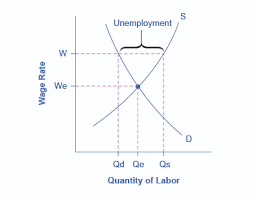
The human desire for both a comfortable living and a fulfilling life beyond work creates a fundamental tension in every economy. This tension arises from the work-leisure trade-off, where individuals must decide how much time to dedicate to earning income through work and how much time to devote to leisure activities for personal well-being. This seemingly simple choice has profound consequences for the entire labor market, impacting the balance between full employment and price stability.
This article delves into the intricate relationship between the work-leisure decision and how it shapes the labor market equilibrium. We will explore how individuals weigh the benefits of higher wages against the sacrifices of increased work hours. We will then analyze how these choices collectively influence the supply of labor in the market. Furthermore, we will examine the implications on achieving both full employment, where everyone who wants to work has a job, and price stability, where inflation remains under control. By understanding the work-leisure trade-off and its impact on labor market equilibrium, we can gain valuable insights into crafting policies that promote a healthy and stable economic environment.
The Work-Leisure Trade-Off: Balancing Time and Income — The work-leisure trade-off is a fundamental concept in economics that describes the choices individuals make between the time they spend working (earning income) and the time they dedicate to leisure activities (rest, hobbies, spending time with loved ones). It’s a constant balancing act, as increasing one inevitably comes at the expense of the other.
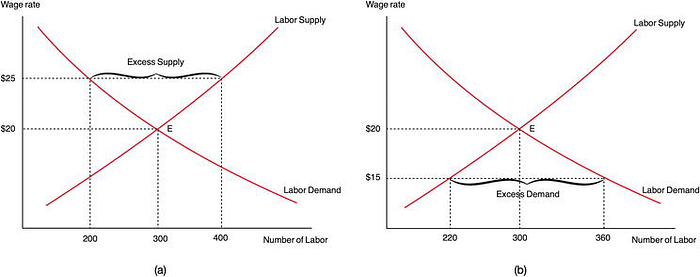
Individual Labor Supply Decisions:
This trade-off plays a crucial role in individual decisions about how much to work. Here’s how it works:
- Wages: The higher the wages offered for work, the greater the incentive to work more. More work translates to more income, which can be used to purchase desired goods and services, improve living standards, or save for the future.
- Leisure: Leisure activities provide satisfaction and enjoyment, contributing to overall well-being. However, every hour spent relaxing is an hour not spent earning.
Finding the Balance:
Individuals strive for an equilibrium point where the marginal benefit (additional satisfaction) gained from an extra hour of work equals the marginal cost (enjoyment forgone) of giving up leisure time. This balance point determines their labor supply — the number of hours they’re willing to work at a given wage.
Opportunity Cost: The Value of Leisure
The concept of opportunity cost is key to understanding the work-leisure trade-off. Opportunity cost refers to the value of the next best alternative that is given up when a choice is made. In this context:
- When you choose to work an extra hour, the opportunity cost is the leisure time you could have enjoyed instead.
- The wage you earn for that extra hour represents the value you place on that forgone leisure time.
The Wage Factor:
Wages play a significant role in influencing this decision:
- Higher Wages: If wages increase, the value of forgone leisure time also rises. This can incentivize some individuals to work more, as the additional income becomes more attractive compared to the leisure they give up.
- Lower Wages: When wages are low, the opportunity cost of leisure is lower. This may lead people to prioritize leisure over work, especially if they have other means of meeting their basic needs.
It’s Important to Note that —
The work-leisure trade-off isn’t just about wages. Other factors like personal preferences, health, family commitments, and access to part-time work options can also influence an individual’s decision about how much to work.
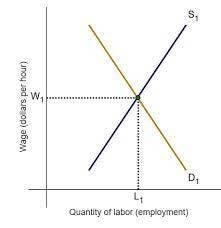
Labor Supply Curve and Wage Rates: A Two-Sided Story — The labor supply curve is a graphical representation of the relationship between wage rates and the amount of labor offered by workers in a specific market. It depicts the willingness and ability of individuals to work at different wage levels.
Understanding the Curve:
The labor supply curve typically slopes upwards. This means as wage rates increase (moving up the y-axis), the quantity of labor supplied (moving along the x-axis) also increases. There’s a logical explanation for this trend:
- Substitution Effect: When wages rise, the opportunity cost of leisure goes up. In simpler terms, the value of the time you give up by working becomes higher. This incentivizes some people to substitute leisure time with work to earn more income. They might be willing to put in extra hours or even take on a second job.
The Other Side of the Coin:
However, the relationship between wages and labor supply isn’t always straightforward. Here’s where the income effect comes in:
- Income Effect: A higher wage can also lead to the income effect. With increased wages, some individuals might achieve their desired standard of living with fewer working hours. They may choose to work less and enjoy more leisure time, prioritizing well-being over additional income. This can cause the labor supply curve to flatten at higher wage levels.
The Backward-Bending Curve:
In some cases, at very high wage levels, the labor supply curve might exhibit a backward-bending phenomenon. Here’s why:
- Reaching a Saturation Point: Once individuals have achieved a significant level of financial security with high wages, the additional income earned through extra work may become less important. They might prioritize leisure activities, pursue hobbies, or spend more time with family, leading to a decrease in labor supply despite further wage increases.
The shape and slope of the labor supply curve can vary depending on several factors, including:
- Occupation: Highly skilled professions might have a steeper upward slope due to the specialized training required.
- Age: Younger workers may be more willing to work long hours for career advancement, while older workers might prioritize leisure.
- Social Safety Nets: The presence of unemployment benefits or social security might influence the willingness to work less at higher wages.
The labor supply curve reflects the complex interplay between the desire for income and the need for leisure. By understanding both the substitution and income effects, we gain a deeper insight into how workers react to changes in wage rates.
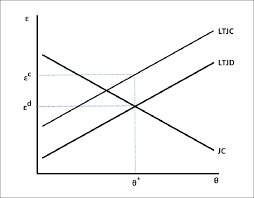
Labor Market Equilibrium and Full Employment: Finding the Sweet Spot — The labor market is where businesses (demanding labor) and workers (supplying labor) interact. Labor market equilibrium occurs when the quantity of labor demanded by firms exactly matches the quantity of labor supplied by workers at a specific wage rate.
Finding the Right Price (Wage):
Imagine the labor market as a marketplace where wages act as the price. Just like any market, the equilibrium wage rate is determined by the forces of supply and demand:
- Demand for Labor: Firms consider factors like production costs, consumer demand, and technology when deciding how many workers to hire. Generally, as wages increase, companies are less inclined to hire new workers (demand curve slopes downward).
- Supply of Labor: As discussed earlier, individuals make choices based on the work-leisure trade-off. At higher wage rates, more people are incentivized to enter the workforce or work longer hours (supply curve slopes upward).
Equilibrium Point:
The intersection of the labor supply and demand curves represents the equilibrium point. Here, the quantity of labor demanded by firms aligns perfectly with the quantity supplied by workers, and the prevailing wage rate reflects this balance.
Full Employment:
Full employment, in economic terms, refers to a state where everyone who is actively seeking work can find a job. However, achieving true full employment can be challenging due to factors like:
- Frictional Unemployment: This refers to temporary periods of unemployment due to job search and transitions between jobs.
- Structural Unemployment: This arises from a mismatch between the skills employers seek and the skills workers possess.
The Role of Policy:
Governments can influence labor market equilibrium through various policies:
- Minimum Wage: Setting a minimum wage can help ensure a basic level of income for workers. However, if set too high, it can lead to decreased demand for labor, pushing some workers out of the market and potentially increasing unemployment.
- Unemployment Benefits: These programs provide temporary financial assistance to unemployed individuals while they search for work. While it helps with financial security, it might slightly disincentivize some from actively seeking work.
Ultimately, the goal is to achieve an equilibrium that promotes full employment without creating distortions in the labor market. Striking the right balance between wages, unemployment benefits, and job training programs is crucial for a healthy and functioning labor market.
Price Stability and the Work-Leisure Trade-Off: Finding Common Ground
Price Stability: The Foundation for Growth
Price stability refers to a situation where the general level of prices for goods and services remains relatively stable over time. It signifies a healthy economy where inflation, the rate of price increase, is low and predictable. Price stability is crucial for several reasons:
- Planning and Budgeting: When prices are stable, businesses and individuals can make informed decisions about investments, spending, and saving. Unexpected price fluctuations create uncertainty and hinder economic growth.
- Preserves Value: Price stability protects the purchasing power of wages and savings. People know their money will retain its value over time, promoting economic confidence.
The Labor Market Connection:
The work-leisure trade-off can indirectly influence price stability through its impact on aggregate demand, the total demand for goods and services in an economy. Here’s how it works:
- Wage Increases and Spending: When wages rise due to a tight labor market (more jobs than workers), workers have more disposable income. This can lead to increased spending on goods and services, pushing aggregate demand upwards.
- Demand-Pull Inflation: If aggregate demand outpaces the economy’s productive capacity, businesses might raise prices to meet the demand. This can lead to a phenomenon called demand-pull inflation, where prices rise due to excess demand.
Full Employment vs. Inflation: A Delicate Balance
There can be a trade-off between achieving full employment and maintaining price stability:
- Full Employment and Inflation: When the labor market is very tight, with close to full employment, wages tend to rise. As discussed earlier, this can lead to increased aggregate demand and potentially higher inflation.
- Taming Inflation: To control inflation, central banks might raise interest rates. This discourages borrowing and investment, potentially slowing economic growth and leading to job losses.
Policymakers’ Dilemma:
Policymakers face the challenge of achieving both full employment and price stability:
- Managing Demand: Central banks can use monetary policy tools like interest rates to influence aggregate demand and inflation.
- Structural Policies: Governments can invest in education and training programs to improve the skills of the workforce, potentially easing structural unemployment and reducing inflationary pressures.
The ideal scenario is to achieve full employment with low and stable inflation. This requires careful management of economic policies to promote strong job creation without overheating the economy and triggering inflation.
Conclusion — The work-leisure trade-off stands as a fundamental determinant of labor market dynamics. By understanding how individuals weigh wages against leisure, we gain valuable insights into the forces shaping labor supply and the delicate balance between full employment and price stability.
Our analysis reveals how the interaction of individual choices within the labor market can lead to an equilibrium wage rate that determines the level of employment. However, achieving both full employment and price stability simultaneously can be a complex challenge. Policies aimed at increasing labor supply can lead to inflationary pressures, while prioritizing price stability might inadvertently push the economy away from full employment.
The path forward lies in crafting comprehensive economic strategies that acknowledge the work-leisure trade-off. Policies that enhance worker productivity, promote flexible work arrangements, and invest in education and training can all contribute to a more efficient labor market. Additionally, fostering a culture that values both work and leisure can encourage individuals to make informed choices that support a healthy balance.
Thanks.
 Pratik Ghansham Salvi Assistant Professor of Economics | Banking & Finance | IMF Finance & Development Contributor
Leave a comment