
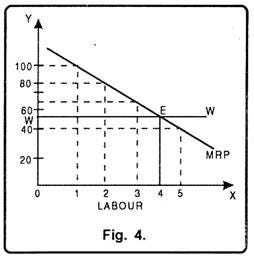
The theory of distribution occupies an important place in understanding how the diffrent factor endownments is determined. This concept evolved from classical economists to the neo-classical and liberal. However, it is important to note that this concept of marginal productivity theory is generally associated with the neo-classical theory. Furthermore, it basically focuses on how wage rate, interest rate is determined on the principle of marginal productivity but it assume certain unrealistic assumptions which are rarely found in today’s dynamic world.
The marginal productivity theory (MPT) has long been a cornerstone of economic analysis, positing that factors of production (labor, capital, land) are rewarded according to their marginal contribution to output. While this theory offers a seemingly intuitive explanation for income distribution in perfectly competitive markets, its applicability crumbles when confronted with the realities of imperfect competition, particularly within oligopolistic and monopsonistic market structures. This introduction delves into the fundamental flaws of applying the MPT in these scenarios, highlighting how power dynamics inherent to imperfect competition distort factor rewards and render the MPT an inadequate tool for understanding income distribution in these prevalent market conditions.
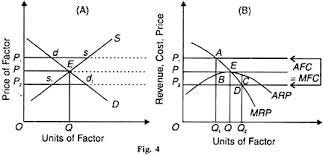
Firstly, oligopolistic markets, characterized by a few dominant firms, exhibit strategic interactions that deviate from the MPT’s assumption of independent price-taking firms. Oligopolists, aware of their interdependence, often engage in tacit collusion or explicit agreements, influencing prices and output levels to maximize their collective profits. This manipulation of market forces undermines the MPT’s core principle, as factor rewards are no longer solely determined by their marginal contribution to a firm’s individual output, but rather by the collective bargaining power of the oligopolistic firms within the market.
Secondly, monopsonistic markets, where a single buyer holds significant power, create a skewed power dynamic in factor markets. The monopsonistic buyer, facing limited competition in the purchasing of a particular factor (e.g., labor), can exploit its position to suppress factor prices below their marginal productivity value. This suppression arises from the monopsony’s ability to dictate terms to factor suppliers, limiting their bargaining power and leading to factor rewards that deviate significantly from what the MPT would predict.
By examining these inherent power imbalances in oligopolistic and monopsonistic markets, this paper aims to demonstrate the significant limitations of the MPT in analyzing factor distribution under imperfect competition. We will explore how the strategic behavior of firms and the monopsonistic buyer’s market power create distortions in factor rewards, rendering the MPT’s predictions inapplicable in these market structures. This analysis will highlight the need for alternative frameworks that better capture the complex dynamics of income distribution in a world dominated by imperfect competition.
Oligopolistic Market Dynamics: — Oligopolistic markets are characterized by a small number of firms dominating a particular industry. This limited competition leads to unique dynamics that deviate from the perfectly competitive market (PCM) assumptions. Let’s delve into the key aspects of oligopolistic behavior:
Strategic Interactions:
- Tacit Collusion: Oligopolists recognize their interdependence. They understand that their actions directly impact each other’s profits. This can lead to tacit collusion, where firms coordinate their behavior without explicit agreements. This can manifest through:
- Price Leadership: One firm sets the price, and others follow suit to maintain a stable market.
- Capacity Control: Firms agree to limit production to artificially inflate prices.
- Market Sharing: Firms carve up the market by dividing customers or geographic regions.
- Explicit Agreements: In some cases, oligopolists may form cartels, which are explicit agreements to fix prices, output levels, or market shares. These agreements are illegal in many jurisdictions due to their anti-competitive nature.
Market Power and Profit Maximization:
- Limited Competition: Unlike perfectly competitive firms that are price takers, oligopolists have some degree of market power. This allows them to influence market prices above the competitive level.
- Profits Above Normal Returns: By restricting output and artificially raising prices, oligopolies can generate profits exceeding the normal returns available in a perfectly competitive market. These excess profits are often shared amongst the few dominant firms.
- Suppressed Factor Costs: Oligopolies may also exert power over resource suppliers. They can use their collective bargaining power to drive down wages and the cost of raw materials below their marginal productivity value. This further enhances their profit margins.
Examples of Oligopolistic Markets:
- Airlines: A few major airlines often dominate domestic and international air travel routes. This allows them to influence ticket prices through tacit collusion or explicit agreements.
- Telecommunications: Mobile network operators in a region can be considered an oligopoly. They may coordinate pricing strategies or network infrastructure investments, leading to higher prices for consumers compared to a more competitive market.
- Pharmaceuticals: Large pharmaceutical companies often hold patents for specific drugs, giving them significant market power. This allows them to set high prices for these drugs, even if the production cost is relatively low.
Implications:
Oligopolies, through their strategic interactions, can significantly impact market outcomes. They often lead to:
- Higher prices for consumers: Compared to perfectly competitive markets, consumers pay more for goods and services in oligopolistic markets.
- Reduced economic efficiency: Oligopolies may not have the same incentive to innovate and reduce costs as firms in more competitive markets.
- Unequal distribution of profits: Excess profits generated by oligopolies are concentrated amongst a few firms, rather than being distributed more widely through the economy.
Understanding oligopolistic behavior is crucial for policymakers to implement regulations that promote competition and prevent anti-consumer practices in such markets.
Monopsonistic Market Dynamics: A monopsony is a market structure characterized by a single dominant buyer. This single buyer exerts significant market power, leading to distortions in factor prices and outcomes that deviate from the predictions of the perfectly competitive market (PCM). Here’s a closer look at its key features:
Buyer Power and Price Suppression:
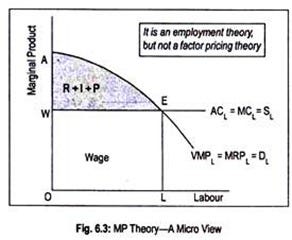
- Dictating Terms: The monopsonistic buyer acts as the price setter, determining the wages or prices paid for the factors it purchases. This contrasts with the PCM where multiple buyers compete for factors, driving prices closer to the marginal productivity level.
- Exploiting Supply Curve: Due to its dominant position, the monopsonist faces an upward-sloping supply curve for factors (e.g., labor). It can leverage this to its advantage by offering lower wages or prices than would be possible in a competitive market where multiple buyers bid against each other.
Limited Bargaining Power for Sellers:
- Reduced Leverage: Factor suppliers (e.g., workers) in a monopsony have limited bargaining power. With only one buyer, they lack the ability to negotiate for higher wages or prices effectively.
- Reduced Wages and Rewards: This lack of bargaining power leads to factor prices being set below their marginal productivity value. This means that workers are paid less than the true value they contribute to the production process.
Examples of Monopsonistic Markets:
- Agricultural Markets: In certain regions, a single processing plant or buyer may dominate the market for a specific agricultural product. This allows them to dictate low prices to farmers, suppressing their income below what they would earn in a more competitive market with multiple buyers.
- Company Towns: In towns dominated by a single large employer, workers may have limited options for alternative jobs. This gives the employer significant monopsony power, allowing them to set wages lower than they could in a more competitive labor market with multiple employers vying for workers.
- Public Sector Jobs: In some sectors like education or government services, the public sector employer may be the dominant buyer of labor. While not always exploitative, this situation can limit the bargaining power of employees compared to a market with multiple private sector employers competing for their skills.
Implications:
Monopsonistic markets can lead to several negative consequences:
- Lower Wages and Reduced Worker Welfare: Workers in monopsonistic markets often earn lower wages than they would in a competitive market, leading to lower overall income and reduced economic well-being.
- Inefficient Resource Allocation: Monopsony power can lead to underemployment and misallocation of resources, as wages are not reflective of true worker productivity.
- Reduced Economic Growth: Lower wages and reduced worker spending can dampen overall economic activity and growth.
Consequences and Alternative Frameworks:
Income Inequality:
Imperfect competition, characterized by oligopolies and monopsonies, has significant consequences for income distribution:
- Profits Concentrated Among Few Firms: The power dynamics in these markets allow dominant firms to earn excess profits that are not fully reflected in consumer prices. This leads to a concentration of wealth amongst a small number of firms, exacerbating income inequality.
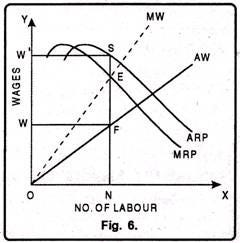
- Factor Rewards Below Marginal Productivity: Oligopolies and monopsonies can exert power over factor suppliers, driving wages and other factor prices below their marginal productivity value. This means workers, farmers, or other resource providers receive less than the true value they contribute to the production process, further widening the income gap.
Need for Alternative Theories:
The limitations of the MPT in analyzing imperfect competition necessitate alternative frameworks that better capture the power dynamics and bargaining processes within these market structures:
- Bargaining Power Models: These models incorporate the strategic interactions between firms and factor suppliers, acknowledging the influence of market power on wage and price determination.
- Game Theory: This framework allows for analyzing the strategic behavior of firms and individuals in imperfect markets, including collusive agreements, price leadership, and other tactics used to manipulate market outcomes.
- Labor Market Models with Imperfect Competition: These models analyze the monopsony power of employers and its impact on wages, employment levels, and worker welfare.
Policy Implications:
Recognizing the limitations of the MPT in imperfect competition has important policy implications:
- Promoting Competition: Antitrust policies and regulations aimed at preventing the formation of cartels and oligopolies can help promote competition and reduce the concentration of market power.
- Mitigating Monopsony Power: Policies such as minimum wage laws, collective bargaining rights, and regulations on buyer behavior in specific markets can help mitigate the exploitative power of monopsonistic buyers and ensure fairer wages and working conditions.
- Income Redistribution Policies: While not directly addressing the market power dynamics, progressive taxation and social safety nets can play a role in mitigating the negative consequences of income inequality stemming from imperfect competition.
By acknowledging the limitations of the MPT and employing alternative frameworks, policymakers can design more effective interventions to address income inequality, promote fairer market outcomes, and ensure a more efficient allocation of resources within the economy.
Empirical Evidence: Several studies have documented the discrepancies between the MPT’s predictions and the observed income distribution in imperfect competition:
- Wage Inequality in Monopsonistic Markets: Research on agricultural markets with dominant buyers has shown how monopsony power depresses wages for farmers compared to regions with more competitive markets. Studies like “Monopsony Power in the U.S. Labor Market” by Autor, Dorn, and Hanson (2013) find a significant correlation between the presence of a single dominant employer in a local labor market and lower wages for workers.
- Profit Concentration in Oligopolies: Studies on industries with a few dominant firms, such as airlines or pharmaceuticals, consistently show higher profit margins compared to perfectly competitive markets. This suggests that oligopolies are able to exploit their market power to extract higher profits at the expense of consumers.
- Income Inequality Trends: The rising trend of income inequality in many developed countries coincides with the increasing concentration of market power in certain industries. This correlation further strengthens the argument that imperfect competition plays a significant role in exacerbating income inequality.
Theoretical Rigor and Practical Relevance:
Maintaining a balance between theoretical explanations and real-world examples is crucial for understanding the practical implications of imperfect competition on income distribution.
- Theoretical frameworks: Bargaining power models, game theory, and labor market models with imperfect competition provide the analytical tools to understand the strategic interactions and power dynamics that shape income distribution in these markets.
- Real-world examples: Illustrating these theoretical concepts with concrete examples from various industries, such as agriculture, airlines, or telecommunications, helps ground the analysis in practical contexts and demonstrates the real-world consequences of imperfect competition.
By combining theoretical rigor with real-world evidence, we gain a more comprehensive understanding of how imperfect competition deviates from the MPT’s predictions and contributes to income inequality. This knowledge is essential for designing effective policies that promote competition, mitigate the exploitative power of dominant buyers, and create a more equitable distribution of income within the economy.
Conclusion — the marginal productivity theory (MPT) loses significant explanatory power when applied to imperfect competition, particularly within oligopolistic and monopsonistic market structures. The strategic interactions and market power inherent in these structures fundamentally alter the dynamics of factor distribution, leading to outcomes that deviate significantly from the MPT’s predictions.
Oligopolists, through their strategic behavior, manipulate prices and suppress factor costs below their marginal productivity value, resulting in profits concentrated amongst a few firms rather than being fully reflected in factor rewards. Monopsonistic buyers, due to their dominant position, can dictate terms to factor suppliers, leading to factor prices falling short of their marginal productivity value. These power imbalances contribute to income inequality, with a significant portion of the economic surplus accruing to dominant firms and buyers, while factor rewards remain lower than what the MPT would suggest.
Therefore, recognizing the limitations of the MPT in imperfect competition is crucial for understanding the true dynamics of income distribution in our contemporary market landscape. Alternative frameworks that better capture the strategic interactions, bargaining processes, and power dynamics within these market structures are necessary to provide a more accurate picture of how factors of production are rewarded in a world dominated by imperfect competition. Only with a nuanced understanding of these market dynamics can we effectively address the issue of income inequality and strive for a more equitable distribution of economic rewards
Thanks.
 Pratik Ghansham Salvi Assistant Professor of Economics | Banking & Finance | IMF Finance & Development Contributor
Leave a comment