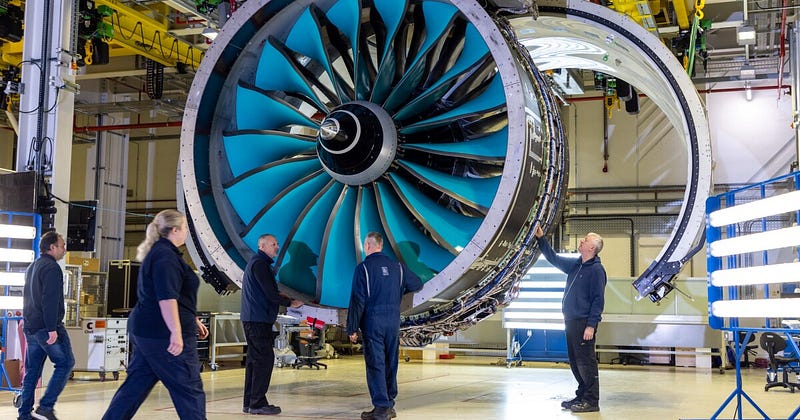
The aviation industry faces a pressing challenge: balancing the undeniable thrill and economic benefits of air travel with its environmental impact. Fuel consumption and emissions are major concerns, and innovation is crucial to ensure a sustainable future for flight. In this quest for progress, Rolls-Royce’s UltraFan engine emerges as a game-changer. This revolutionary technology isn’t just another engine; it’s a testament to human ingenuity, promising a significant leap forward in efficiency.
This article delves into the core of the UltraFan, exploring the ingenious technologies that propel it towards unparalleled efficiency. We’ll uncover how it slashes fuel consumption, reduces emissions, and paves the way for a more sustainable future for air travel. We’ll also examine the economic implications, exploring how the UltraFan translates efficiency gains into cost savings for airlines and ultimately, passengers. Furthermore, we’ll discuss the engine’s potential impact on resource utilization, highlighting how it reduces reliance on precious fossil fuels. So, buckle up and prepare for a deep dive into the world of the UltraFan engine — a technological marvel poised to revolutionize the way we fly.
Environmental Sustainability in Aviation: Reducing Fuel Consumption and Emissions — The aviation industry plays a vital role in our globalized world, but it also contributes to environmental concerns. Reducing fuel consumption and emissions is critical for sustainable aviation. Here’s a breakdown of the significance and targeted improvements:
Significance of Reducing Fuel Consumption and Emissions:
- Climate Change: Burning jet fuel releases greenhouse gasses, particularly carbon dioxide (CO2), a major contributor to climate change. Lowering fuel consumption directly reduces CO2 emissions and their impact on global warming.
- Air Quality: Aircraft emissions contribute to air pollution near airports and along flight paths. These pollutants can harm human health and ecosystems.
- Fuel Efficiency: Reducing fuel consumption lowers operational costs for airlines, making air travel more sustainable economically.
Targeted Improvements of the UltraFan Engine:
UltraFan is a new generation of jet engines by Rolls-Royce designed for significant improvements in fuel efficiency. Here’s a look at its targeted achievements:
- Percentage improvement in fuel efficiency: Compared to previous models, UltraFan aims to deliver a 25% reduction in fuel burn. This translates to a substantial decrease in CO2 emissions per flight.
Specific Technologies for Reduced Emissions:
Several key technologies contribute to UltraFan’s reduced emissions:
- Lightweight Materials: Utilizing advanced materials like composites for engine components reduces overall weight. Lighter engines require less energy to operate, leading to lower fuel consumption.
- Advanced Combustion Systems: UltraFan incorporates a more efficient way of burning fuel within the engine. This optimized combustion process minimizes the production of harmful pollutants like nitrogen oxides (NOx) and particulates.
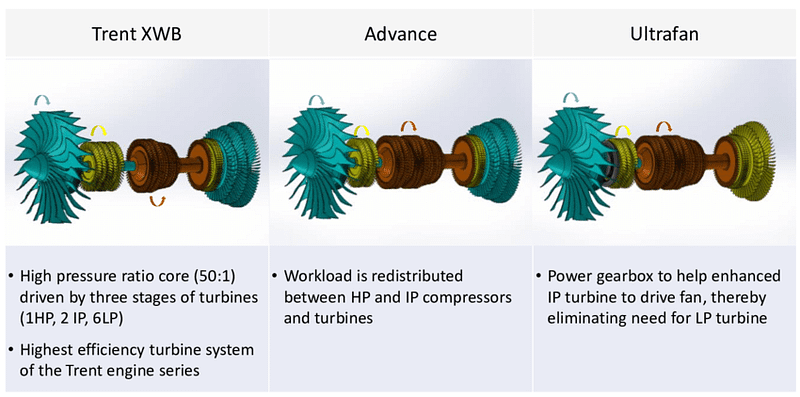
- Gearbox Technology: A gearbox allows the engine to operate at its most efficient speed, independent of the propeller speed. This further optimizes fuel usage during various flight phases.
These advancements in engine design represent a significant step towards a more sustainable aviation industry. By focusing on reducing fuel consumption and emissions, the UltraFan engine paves the way for cleaner skies and a greener future for air travel.
Economic Sustainability in Aviation: The Power of Efficiency — Economic sustainability ensures the long-term financial health of airlines while enabling affordable and accessible air travel. Here’s how reducing fuel consumption and emissions contributes to economic sustainability:
Benefits for Airlines:
- Cost Savings Due to Lower Fuel Consumption: Fuel is one of the largest operational expenses for airlines. The significant reduction in fuel burn achieved by engines like UltraFan translates directly to substantial cost savings. This improves profitability and allows airlines to reinvest in their fleets and services.
- Potential for More Efficient Routes and Operations: Technological advancements often lead to operational improvements. Engines with better fuel efficiency may enable airlines to consider more direct flight paths or explore routes that were previously deemed less economical due to fuel costs. This flexibility could lead to a wider range of flight options for passengers.
- Optimization of Aircraft Utilization: Airlines can potentially extend the flight time of aircraft with more fuel-efficient engines. This translates to increased utilization of existing resources, leading to better economic returns.
Potential Impact on Ticket Prices for Passengers:
The impact of lower fuel costs on ticket prices is a complex issue. While airlines benefit from significant cost savings, other factors like airport fees, taxes, and airline competition also influence ticket pricing.
Here are some potential scenarios:
- Reduced Ticket Prices: If fuel cost savings are substantial and airlines see increased competition, ticket prices may decrease to attract passengers.
- Stable Ticket Prices: Airlines might choose to maintain current ticket prices while using the cost savings to improve profitability or invest in other areas like passenger amenities or new routes.
- Focus on Sustainable Travel: Airlines may offer tiered pricing structures where passengers who choose fuel-efficient flights receive discounts, encouraging environmentally conscious travel choices.
Ultimately, the effect on ticket prices depends on various market forces and individual airline strategies. However, the potential for lower fuel costs due to advancements like the UltraFan engine opens doors for a more economically sustainable aviation industry, which could benefit both airlines and passengers in the long run.
Resource Efficiency: UltraFan’s Path Towards Less Reliance on Fossil Fuels — The aviation industry heavily relies on fossil fuels, a finite resource with environmental concerns. Here’s how the UltraFan engine contributes to resource efficiency:
Reducing Reliance on Fossil Fuels:
While UltraFan doesn’t eliminate the need for jet fuel entirely, it significantly reduces our dependence on this fossil fuel. Here’s how:
- Improved Fuel Efficiency: As discussed earlier, the 25% reduction in fuel burn translates to a direct decrease in the amount of jet fuel required per flight. This translates to a lower overall demand for this resource.
- Paving the Way for Sustainable Aviation Fuels (SAF): Increased engine efficiency creates a more favorable environment for the adoption of SAF. SAF is a cleaner alternative fuel derived from renewable sources like biomass or recycled materials. With lower fuel consumption, airlines can integrate SAF into their operations more readily, further reducing reliance on traditional jet fuel.
Advanced Materials and Manufacturing for Resource Efficiency:
UltraFan incorporates advancements in materials and manufacturing techniques to achieve both lighter weight and lower fuel burn:
- Lightweight Materials: Utilizing composites, a category of advanced materials that are strong yet lighter than traditional metals, significantly reduces engine weight. Lighter engines require less energy to operate, leading to lower fuel consumption. This approach minimizes the amount of fuel needed to achieve the same level of thrust.
- Efficient Manufacturing Techniques: Advancements in manufacturing processes like additive manufacturing (3D printing) allow for complex, lightweight engine components with minimal material waste. This reduces the overall resource consumption during engine production.
Combined Impact:
The combined effect of improved fuel efficiency and lighter weight construction with advanced materials makes UltraFan a significant step towards a more resource-efficient aviation industry. By minimizing fuel consumption and paving the way for sustainable alternatives, UltraFan helps us move closer to a future where air travel relies less on traditional fossil fuels.
UltraFan’s Efficiency Boosting Technologies:
The UltraFan engine integrates several innovative features that work together to achieve a significant improvement in fuel efficiency. Here’s a closer look at the key contributors:
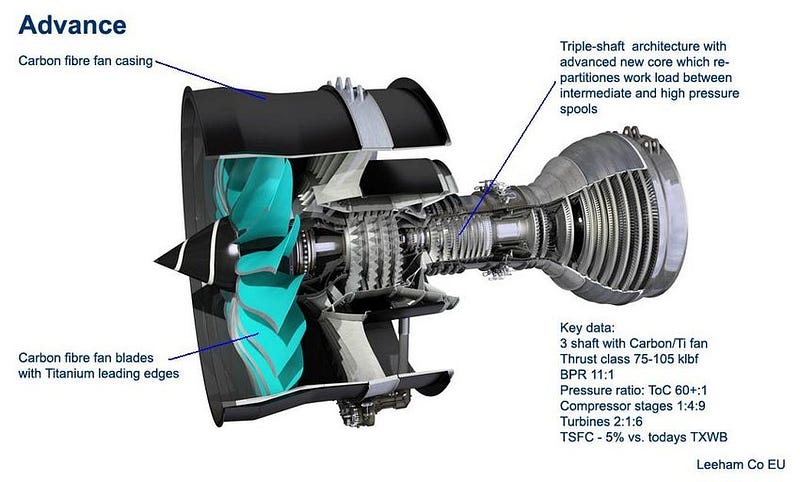
- Carbon Composite Fan Blades:
- Traditional fan blades are typically manufactured from metal alloys. UltraFan utilizes carbon composite fan blades. These blades are:
- Lighter: Carbon composites offer a significant weight reduction compared to metal. Lighter fan blades reduce the overall engine weight, and a lighter engine requires less energy to operate, leading to improved fuel efficiency.
- Aerodynamically Superior: The design flexibility of composites allows for more optimized blade shapes that improve airflow through the engine. This enhanced airflow translates into increased thrust generation and better fuel efficiency.
- Efficient at Lower Speeds: Carbon composite blades can operate efficiently at lower engine speeds. This is important because during various flight phases, like taxiing and climbing, the engine operates at less than peak speed. The ability to maintain efficiency at lower speeds with composites contributes to overall fuel savings.
- Gear Architecture:
- Traditional jet engines often have a direct shaft connection between the fan and the low-pressure compressor. UltraFan incorporates a gear architecture that decouples the fan shaft from the low-pressure compressor shaft. This allows for:
- Independent Operation: The fan can operate at its optimal speed for maximum efficiency, regardless of the compressor speed. This is crucial because the ideal operating speeds for the fan and compressor differ.
- Improved Performance Across Flight Phases: By optimizing fan speed throughout the flight cycle, the gear architecture contributes to better fuel efficiency across various flight conditions, including takeoff, climb, cruise, and descent.
- Advanced Core Design:
The core of a jet engine is where the burning of fuel takes place to generate thrust. UltraFan incorporates an advanced core design that features:
Additional Innovative Aspects:
While the above three features are the cornerstones of UltraFan’s efficiency, there might be other innovative aspects incorporated depending on the specific engine variant and ongoing development. Rolls-Royce is constantly researching and testing new technologies to further enhance engine performance. Some potential areas of exploration include:
- Electric and Hybrid Propulsion Integration: Although UltraFan focuses on traditional jet fuel combustion for efficiency gains, future iterations might integrate electric or hybrid propulsion elements to achieve even greater efficiency and potentially enable shorter-distance electric taxiing on runways.
- Advanced Sensors and Controls: Utilizing advanced sensor technology and control systems, engineers can further optimize engine operation for real-time efficiency based on various flight conditions.
By combining these technological advancements, the UltraFan engine paves the way for a new generation of jet engines that are not only more efficient but also contribute to environmental sustainability in the aviation industry.
UltraFan: Shaping the Future of Aviation — The UltraFan engine represents a significant leap forward in jet engine technology. Here’s a glimpse into its potential impact on the future of aviation:
Influence on Future Engine Generations:
- Efficiency Benchmark: UltraFan sets a new benchmark for fuel efficiency in jet engines. Future engine designs will likely strive to build upon or surpass the efficiency gains achieved by UltraFan. This could lead to a new generation of engines with even lower fuel consumption and emissions.
- Technology Transfer: The innovative technologies developed for UltraFan, like advanced materials and gear architecture, can be adapted and incorporated into future engine designs for various aircraft types. This cross-pollination of technology will accelerate advancements across the aviation industry.
- Modular Design: UltraFan’s modular design allows for scalability across different thrust ranges. This flexibility can be leveraged in the development of future engines for a wider range of aircraft, from narrowbody jets to large widebody airplanes.
Contribution to Sustainable Aviation:
- Reduced Emissions: The UltraFan engine’s significant reduction in fuel burn directly translates to lower CO2 emissions. This contributes to a more sustainable aviation industry by minimizing the environmental impact of air travel.
- Enabling Sustainable Fuels: Improved engine efficiency creates a more favorable environment for the adoption of Sustainable Aviation Fuels (SAF). With lower fuel consumption, airlines can integrate SAF more readily, leading to a significant reduction in overall emissions from the aviation sector.
- Paving the Way for Hybrid and Electric Technologies: The advancements in materials science and engineering demonstrated by UltraFan can pave the way for the development of hybrid and electric propulsion systems for future aircraft.
Challenges and Considerations:
- Development Costs: Cutting-edge technology often comes at a high price. The development costs associated with the UltraFan engine are significant. Balancing these costs with the long-term benefits of fuel efficiency and environmental sustainability will be crucial for widespread adoption.
- Integration with Existing Aircraft: While the modular design offers flexibility, integrating the UltraFan engine with existing aircraft models might require modifications. The extent of these modifications and their impact on operational costs will need careful consideration.
- Long-Term Reliability and Maintenance: New technologies often require extensive testing and operational experience to ensure long-term reliability and establish efficient maintenance procedures. Addressing these aspects will be important for gaining the confidence of airlines and ensuring smooth operation of the UltraFan engine in the long run.
Despite these challenges, the UltraFan engine represents a significant step towards a more efficient and sustainable future for aviation. The technological advancements incorporated in UltraFan lay the groundwork for the next generation of jet engines, paving the way for a cleaner and greener future for air travel.
Conclusion — The Rolls-Royce UltraFan engine stands as a beacon of innovation, not just for its impressive engineering feats, but for the transformative impact it promises on the aviation industry. By prioritizing efficiency, the UltraFan tackles the twin challenges of environmental sustainability and economic viability. Reduced fuel consumption translates to cleaner skies and lower operating costs, paving the way for a future where air travel can coexist with a healthy planet.
The UltraFan’s significance extends beyond its immediate benefits. It serves as a springboard for further advancements in engine technology, inspiring the development of even more sustainable solutions. As the UltraFan takes flight, it carries with it the potential to reshape the landscape of air travel, ushering in an era where efficiency reigns supreme.
However, the journey towards a truly sustainable aviation industry takes a collective effort. Continued investment in research and development, coupled with supportive policies and infrastructure improvements, are crucial to maximize the UltraFan’s potential. With unwavering commitment and a spirit of innovation, the skies can become a canvas for a more sustainable future, and the UltraFan engine serves as a powerful brushstroke in creating that masterpiece.
Thanks.
 Pratik Ghansham Salvi Assistant Professor of Economics | Banking & Finance | IMF Finance & Development Contributor
Leave a comment