Enhancing Fiscal Sustainability : Why India Needs Independent Fiscal Council?
Maintaining a healthy balance between government spending and revenue is crucial for long-term economic growth and stability. This concept, known as fiscal sustainability, is a pressing concern for India. The nation faces challenges like rising public debt, fluctuating revenue streams, and pressures for populist spending. To navigate these complexities and achieve long-term fiscal health, India needs a robust institutional framework.
This article proposes the establishment of an independent fiscal council (IFC) as a critical step towards enhancing India’s fiscal sustainability. An IFC is an autonomous body of experts tasked with providing independent assessments of the government’s fiscal plans and policies. We will delve into the specific reasons why an IFC is necessary for India’s economic well-being.
This article will explore how an IFC can:
- Promote Transparency and Accountability: By offering objective analysis of government budgets and forecasts, an IFC can shed light on potential fiscal risks and ensure the public is well-informed about the government’s financial decisions.
- Strengthen Fiscal Rules: An IFC can act as an impartial watchdog, holding the government accountable for adhering to established fiscal rules and preventing deviations that could lead to unsustainable debt levels.
- Improve Fiscal Forecasting: An IFC, with its expertise and independence, can provide more accurate and unbiased forecasts of government revenue and expenditures, aiding in better financial planning.
- Discourage Populist Spending: The objective analysis of an IFC can help counter short-sighted spending policies driven by political agendas, promoting long-term fiscal discipline.
By establishing a well-designed and empowered IFC, India can take a significant step towards ensuring sustainable public finances, fostering economic growth, and building a more secure future for its citizens.
Current Challenges to Fiscal Sustainability in India — India’s path to fiscal sustainability faces several hurdles. Let’s delve into three key challenges:
1. Rising Public Debt:
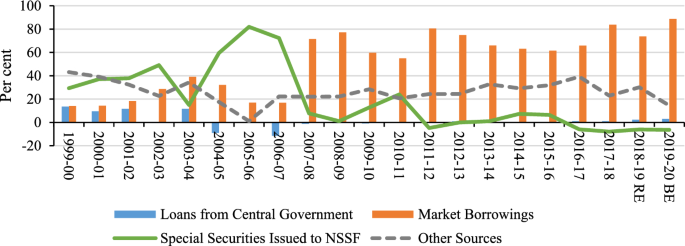
Current Situation: India’s public debt-to-GDP ratio has been on an upward trend. As of 2023–24, it’s estimated to be around 90% of GDP, which is considerably higher than many emerging economies.
Implications: This high debt burden has several negative consequences:
- Reduced Growth: Large interest payments crowd out resources for productive investments that could fuel economic growth.
- Vulnerability to Shocks: A high debt level makes the economy more susceptible to external shocks like rising interest rates or global slowdowns.
- Limited Fiscal Space: The government has less room for maneuver in times of crisis, as it may struggle to raise additional funds.
2. Volatile Revenue Streams:
- Dependence on Specific Sectors: India’s revenue collection is heavily reliant on a few sectors, such as import duties and indirect taxes. This dependence makes government income vulnerable to fluctuations in these sectors.
For instance, a slowdown in global trade can significantly reduce import duty collections.
- Economic Conditions: Overall economic health significantly impacts tax revenue. An economic downturn leads to decreased corporate profits and personal income, reducing tax collection.
- Inefficient Tax Collection: Leakages and inefficiencies in the tax collection system further exacerbate the issue of volatile revenue streams.
3. Populist Spending Pressures:
- Short-Term Gains: Politicians sometimes prioritize short-term political gains over long-term fiscal prudence. This can lead to policies that increase government spending without a corresponding increase in revenue.
- Examples include farm loan waivers, subsidies on essential goods, or public sector wage hikes before elections.
- Unsustainable Spending Patterns: These populist measures create unsustainable spending patterns, putting further pressure on the government’s finances.
- The burden of such spending eventually falls on taxpayers or necessitates further borrowing, worsening the debt situation.
These challenges pose a significant risk to India’s fiscal health. Addressing them requires a multi-pronged approach, including:
- Fiscal Consolidation: The government needs to find ways to reduce the budget deficit and bring down the debt-to-GDP ratio over time. This may involve rationalizing expenditure and exploring new avenues for revenue generation.
- Diversifying Revenue Streams: Reducing dependence on specific sectors and improving tax collection efficiency are crucial steps towards achieving stable revenue streams.
- Fiscal Responsibility: Implementing a framework for long-term fiscal planning and adhering to responsible spending practices are essential to avoid the pitfalls of populism.
By addressing these challenges, India can ensure long-term fiscal sustainability and create a more robust foundation for economic growth and development.
Benefits of an Independent Fiscal Council (IFC) —
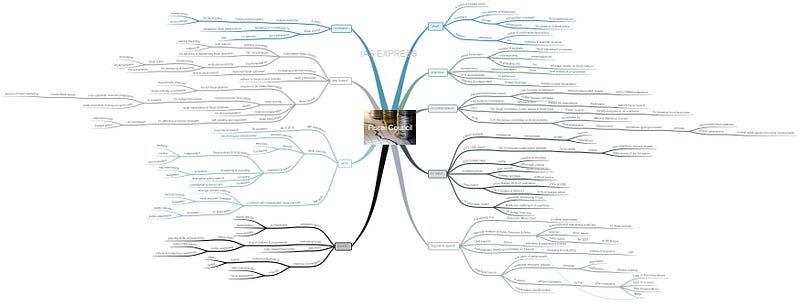
An Independent Fiscal Council (IFC) can be a powerful tool for promoting sound fiscal policy in a country. Here’s a detailed breakdown of its benefits:
1. Enhanced Transparency and Accountability:
- Budget and Forecast Analysis: An IFC can analyze government budgets and economic forecasts, identifying potential risks and hidden assumptions. This independent assessment informs public debate and empowers citizens to hold policymakers accountable.
- Creative Accounting Watchdog: IFC scrutiny can expose creative accounting practices employed by governments to mask the true state of public finances. This transparency discourages manipulation and ensures responsible fiscal management.
2. Strengthened Fiscal Rules:
- Monitoring Fiscal Rules: An IFC can act as an independent monitor of adherence to established fiscal rules, such as deficit targets or debt-to-GDP ratios. By holding governments accountable for following these rules, the IFC safeguards long-term fiscal sustainability.
- Refining Fiscal Frameworks: The IFC’s expertise allows them to propose improvements to existing fiscal rules or recommend entirely new ones. These recommendations can address emerging challenges and ensure the effectiveness of the fiscal framework.
3. Improved Fiscal Forecasting:
- Unbiased Expertise: Composed of economic and fiscal experts, the IFC can provide more accurate and unbiased economic forecasts compared to government estimates that might be influenced by political agendas.
- Realistic Budgeting and Risk Management: Better forecasts enable governments to set realistic budgetary goals and proactively manage potential economic risks. This helps avoid situations where unforeseen circumstances lead to fiscal crises.
4. Discouraged Populist Spending:
- Long-Term Cost Exposure: IFC analysis can expose the true long-term costs of short-term, populist spending policies. By highlighting the hidden burdens placed on future generations, the IFC discourages fiscally irresponsible decisions.
- Evidence-Based Policymaking: The IFC promotes evidence-based fiscal decision-making by providing objective analysis and highlighting the potential consequences of various policy options. This empowers policymakers to make informed choices that prioritize long-term economic health over short-term political gains.
- For example, an IFC might analyze a proposed farm loan waiver, highlighting its immediate cost to the government but also the potential for increased borrowing needs and higher interest payments in the future.
IFC serves as a vital check and balance in the fiscal policy arena. By promoting transparency, accountability, and evidence-based decision-making, it can help ensure long-term fiscal sustainability and foster a more robust economy.
Why Indian Government Opossed with Independent Fiscal Council?
1. Perceived Encroachment on Government Authority:
- Loss of Control over Budgetary Decisions: The government might view the IFC’s recommendations as an infringement on its power to set fiscal policy and allocate resources. This could lead to resistance towards independent scrutiny of their budgetary decisions.
2. Concerns over Effectiveness and Duplication:
- Existing Institutions: The government might argue that existing institutions like the Finance Commission and Comptroller and Auditor General (CAG) already perform some of the proposed functions of an IFC. They might view an IFC as duplicating efforts without significant added value.
3. Potential for Political Gridlock:
- Disagreements and Deadlocks: The government might be apprehensive about situations where the IFC’s recommendations contradict their preferred policies. This could lead to disagreements and potentially hinder the decision-making process.
4. Difficulty in Ensuring Complete Independence:
- Political Influence: The government might be concerned about the possibility of political influence creeping into the selection process or operation of the IFC, undermining its intended independence.
5. Belief in Existing Mechanisms:
- Fiscal Responsibility and Budget Management (FRBM) Act: The government might point to existing frameworks like the FRBM Act, which outlines fiscal consolidation goals, as sufficient safeguards for responsible fiscal management.
It’s important to note that there are also arguments in favor of establishing an IFC in India. Proponents believe it would enhance transparency, strengthen adherence to fiscal rules, and promote evidence-based fiscal policymaking.
Finding a Middle Ground:
The debate surrounding an IFC in India reflects a complex interplay between the need for fiscal discipline and the government’s desire to retain control over budgetary decisions. Exploring alternative models with a more consultative role for the IFC or strengthening existing institutions could be potential solutions for achieving a balance between these objectives.
How Independent Fiscal Council is Differ from the Finance Comission of India?
The Finance Commission of India and an Independent Fiscal Council (IFC) are both important institutions related to India’s fiscal health, but they serve distinct purposes:
Finance Commission:
- Constitutional Body: Established by the Indian Constitution, the Finance Commission is a temporary body reconstituted every five years.
- Focus: Primarily concerned with distributing financial resources between the central government and the state governments. It recommends the division of tax revenue and determines grants-in-aid to states.
- Limited Scope: Doesn’t have a broad mandate to analyze the government’s overall fiscal policy or assess its long-term sustainability.
Independent Fiscal Council (IFC):
- Proposed Body: An IFC is not yet established in India, but it’s a proposed institution.
- Focus: Aimed at providing independent analysis and recommendations on the government’s entire fiscal policy framework. This includes analyzing budgets, monitoring adherence to fiscal rules (like deficit targets), and evaluating the long-term sustainability of government spending plans.
- Wider Scope: Plays a more comprehensive role in promoting fiscal responsibility by offering objective assessments and holding the government accountable for its fiscal decisions.
In essence, the Finance Commission deals with the division of the financial pie, while an IFC would focus on ensuring the pie itself is sustainable in the long run.
Design and Functioning of an Effective Independent Fiscal Council (IFC) —
An effective IFC requires careful design and clear mandates to fulfill its role. Let’s delve into the key aspects:
1. Composition:
- Expertise: The IFC should be composed of highly qualified and respected economists and fiscal experts. Their knowledge and experience are crucial for providing independent and insightful analysis.
- Selection Process: To ensure independence, council members should be appointed through a rigorous and transparent process. This might involve nominations by professional bodies, followed by parliamentary approval or selection by an independent commission.
2. Mandate:
- Core Functions: The IFC’s mandate should clearly define its core functions. These typically include:
- Analyzing government budgets and economic forecasts
- Monitoring adherence to established fiscal rules
- Evaluating the long-term sustainability of fiscal policies
- Providing recommendations for improving fiscal frameworks
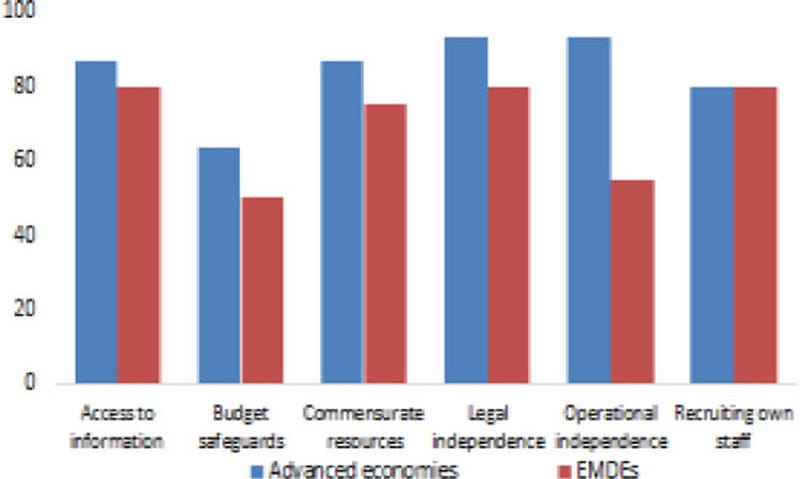
- Sufficient Authority: The IFC needs sufficient authority to carry out its functions effectively. This includes access to relevant government data and the ability to conduct independent research.
3. Reporting and Recommendations:
- Public Communication: The IFC’s findings and recommendations should be communicated transparently to the public. This can be achieved through:
- Regular public reports on the state of public finances
- Parliamentary submissions and presentations before relevant committees
- Publicly accessible website with reports, findings, and recommendations
- Impact on Policymaking: While the IFC may not have direct decision-making power, its recommendations should be taken seriously by policymakers. Ideally, the government should be required to respond publicly to the IFC’s reports, outlining its position and any actions it plans to take in response.
- Term Length and Reappointment: Council members should be appointed for fixed terms with the possibility of reappointment, ensuring continuity of expertise while preventing undue influence by any single government.
- Plurality of Views: The council should be structured to represent a plurality of economic viewpoints, fostering a more balanced and comprehensive approach to fiscal analysis.
- Resources and Budget: The IFC needs adequate resources and a dedicated budget to function effectively. This ensures it can hire qualified staff, conduct necessary research, and fulfill its mandate without financial constraints.
Independent Fiscal Council (IFC) with a separate All-India Service cadre like the Indian Administrative Service (IAS) —
Benefits of a Separate All-India Service Cadre:
- Expertise and Independence: A separate cadre specifically focused on fiscal analysis could attract highly qualified economists and fiscal experts. This ensures the IFC has the necessary expertise to fulfill its role effectively.
- Reduced Political Influence: By being separate from existing administrative services like the IAS, the IFC cadre could be less susceptible to political pressure, safeguarding its independence and objectivity.
- Long-Term Focus: A dedicated cadre could foster a culture of long-term fiscal planning within the IFC, prioritizing sustainable economic growth over short-term political gains.
Addressing Concerns:
- Duplication of Efforts: The IFC’s role would be distinct from existing institutions like the Finance Commission. The focus on independent analysis and long-term sustainability complements existing frameworks.
- Government Overreach: The IFC’s mandate should be clearly defined as offering analysis and recommendations, not dictating policy. Additionally, a transparent selection process and clear reporting mechanisms can ensure the government retains control over budgetary decisions.
Overall, an IFC with a separate all-India service cadre has the potential to be a powerful tool for promoting sound fiscal policy in India. The expertise, independence, and long-term focus of such a body could contribute significantly to achieving sustainable economic growth and development.
By following these design principles, an IFC can become a valuable institution for promoting sound fiscal policy and safeguarding long-term economic stability.
Global Examples of Successful Independent Fiscal Councils (IFCs)
Several countries have established IFCs that have played a significant role in promoting fiscal discipline. Let’s explore two prominent examples and see what lessons India can learn:
1. Germany:
- The German Council of Economic Experts (SVR): Established in 1963, the SVR is a highly respected institution known for its independent analysis and forecasting.
- Key Features: The SVR comprises five renowned economists appointed for a five-year term. They publish annual reports and special analyses, offering objective evaluations of the government’s fiscal policies.
- Lessons for India: Germany’s model highlights the importance of a strong selection process and a clear focus on economic expertise. The SVR’s long-standing reputation demonstrates the value of an IFC that consistently delivers high-quality, unbiased analysis.
2. United Kingdom:
- The Office for Budget Responsibility (OBR): Established in 2010, the OBR is an independent body responsible for economic and fiscal forecasting.
- Key Features: The OBR is headed by a director with a team of experienced economists. It scrutinizes the government’s budget forecasts and provides independent assessments of their likely accuracy.
- Lessons for India: The UK model emphasizes the importance of a robust forecasting function within the IFC. The OBR’s focus on independent verification of government forecasts helps build public trust and promotes transparency in fiscal planning.
- Adapting to National Context: While these models offer valuable insights, India should design its IFC considering its specific economic and political context.
- Learning from Diverse Examples: India can learn from other countries like Sweden, Netherlands, and Canada, which have also established successful IFCs with unique features.
Conclusion — establishing a well-designed and empowered Independent Fiscal Council (IFC) is a critical step towards ensuring India’s long-term fiscal health. By promoting transparency, strengthening fiscal rules, and fostering evidence-based decision-making, an IFC can act as a cornerstone for sustainable public finances. This, in turn, will pave the way for robust economic growth, improved public services, and a brighter future for all Indian citizens.
The global economic landscape is fraught with uncertainties, and India needs a robust institutional framework to navigate these challenges. An IFC, with its expertise and independence, can provide the necessary guidance and oversight to ensure responsible fiscal management. By taking this crucial step, India can break free from the shackles of unsustainable debt and chart a course towards a more prosperous and secure future.
Thanks.
 Pratik Ghansham Salvi Assistant Professor of Economics | Banking & Finance | IMF Finance & Development Contributor
Leave a comment