The Impact of Carbon Border Adjustment Mechanism (CBAM)on Global Trade and Climate Policy

The global climate crisis has spurred unprecedented international cooperation to reduce greenhouse gas emissions. While many nations have implemented domestic carbon pricing mechanisms, concerns about competitive disadvantages for domestic industries have arisen. To address this, the European Union (EU) introduced the Carbon Border Adjustment Mechanism (CBAM) in 2023. This innovative policy aims to level the playing field for European industries while incentivizing global decarbonization.
CBAM imposes a carbon tax on imports of certain goods from countries with weaker climate policies. By requiring importers to purchase carbon certificates equivalent to the emissions embedded in the imported products, the EU seeks to ensure that foreign producers face comparable carbon costs to European companies. This mechanism is designed to prevent carbon leakage, where companies relocate their production to regions with less stringent environmental regulations to avoid domestic carbon costs.
The implementation of CBAM has far-reaching implications for global trade and climate policy. It represents a significant step towards a more equitable and sustainable global economy. By placing a carbon price on imports, CBAM effectively extends the EU’s carbon market to the global stage, potentially influencing the decarbonization efforts of other countries.
This article will delve into the intricacies of CBAM, examining its potential impacts on global trade flows, international relations, and the transition to a low-carbon future. We will explore the challenges and opportunities associated with CBAM, considering its implications for both developed and developing economies. By understanding the significance of this policy, we can assess its potential to drive global climate action and shape the contours of international trade in the years to come.
The Carbon Border Adjustment Mechanism (CBAM) is a European Union (EU) policy designed to address the issue of carbon leakage. This occurs when EU companies relocate their production processes to countries with less stringent environmental regulations, leading to a competitive disadvantage for those remaining in the EU,
Core Objectives and Mechanisms —
The primary goals of CBAM are:
- Prevent Carbon Leakage: By imposing a carbon tax on imported goods from countries with weaker emissions standards, CBAM aims to discourage companies from offshoring production to avoid EU emissions regulations.
- Level the Playing Field: CBAM seeks to ensure that European industries compete fairly with foreign producers, preventing them from gaining an unfair advantage by avoiding domestic carbon costs.
How CBAM Works
The CBAM mechanism involves the following steps:
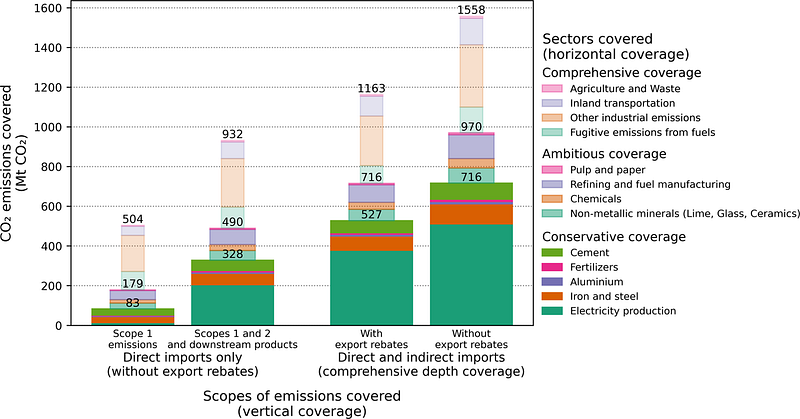
- Covered Goods: The CBAM applies to a specific list of goods, primarily those considered at risk of carbon leakage. These goods include iron and steel, aluminum, cement, fertilizers, and hydrogen.
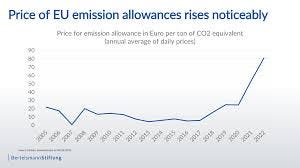
- Purchasing Carbon Certificates: Importers of covered goods into the EU must purchase carbon certificates to offset the embedded emissions in their products. The price of these certificates is linked to the EU Emissions Trading System (ETS) price, ensuring a level playing field.
- Reporting Requirements: Importers must submit quarterly reports detailing the quantity of imported goods, the embedded emissions, and the number of carbon certificates purchased.
Potential Impact of CBAM — The implementation of CBAM could have significant implications for both European industries and foreign producers:
For European Industries:
- Competitive Advantage: CBAM could provide European industries with a competitive advantage by leveling the playing field with foreign producers who may face higher carbon costs.
- Increased Costs: However, European industries may also experience increased costs, particularly if they rely heavily on imported raw materials or components.
- Innovation: The policy could incentivize European industries to invest in cleaner technologies and processes to reduce their emissions and lower their carbon costs.
For Foreign Producers:
- Increased Costs: Foreign producers may face increased costs due to the need to purchase carbon certificates, which could reduce their competitiveness in the EU market.
- Regulatory Burden: Compliance with CBAM’s reporting and verification requirements could also impose additional administrative burdens on foreign producers.
- Incentive for Emissions Reduction: The policy could incentivize foreign producers to adopt more sustainable practices and reduce their emissions to avoid or minimize the cost of carbon certificates.
Overall, the CBAM represents a significant step towards addressing the issue of carbon leakage and promoting a more level playing field for European industries. However, its long-term effectiveness will depend on various factors, including the effectiveness of its implementation, the global response to climate change, and the evolution of international trade relations.
Implications of CBAM on Global Trade — The Carbon Border Adjustment Mechanism (CBAM) has the potential to significantly impact global trade patterns. Here are some key considerations:
Changes in Import and Export Flows
- Increased Costs for Imports: CBAM could lead to increased costs for imports from countries with weaker emissions standards. This could make these imports less competitive in the EU market, potentially reducing their demand.
- Diversification of Supply Chains: To avoid higher costs, EU companies might seek to diversify their supply chains, sourcing goods from countries with stricter emissions regulations.
- Increased Exports from the EU: If CBAM effectively levels the playing field, EU producers might become more competitive in international markets, leading to an increase in their exports.
Location of Production Facilities and Investment Decisions —
- Shift in Production Locations: Companies may consider relocating their production facilities to the EU or other regions with stricter emissions regulations to avoid CBAM costs. This could lead to a shift in investment flows and potentially job creation in these regions.
- Investment in Clean Technologies: CBAM could incentivize companies to invest in cleaner technologies and processes to reduce their emissions and avoid CBAM costs. This could drive innovation and technological advancements.
Trade Disputes and Retaliatory Measures —
- Trade Disputes: CBAM could lead to trade disputes between the EU and countries affected by the policy. These countries may argue that CBAM is discriminatory and violates international trade rules.
- Retaliatory Measures: In response to CBAM, affected countries may impose retaliatory tariffs or other trade barriers on EU exports. This could lead to a trade war, harming both the EU and these countries.
- Negotiations and Cooperation: To mitigate the risk of trade disputes, the EU and affected countries may need to engage in negotiations and cooperation to find mutually acceptable solutions.
The implementation of CBAM could have significant implications for global trade. While it aims to address the issue of carbon leakage and promote a more level playing field, it could also lead to trade tensions and economic disruptions. The long-term impact of CBAM will depend on how effectively it is implemented, the response of affected countries, and the broader global context of climate change and trade relations.
Climate Policy and CBAM ACT — The Carbon Border Adjustment Mechanism (CBAM) has the potential to significantly impact global climate policy. Here are some key considerations:
Incentivizing Global Decarbonization Efforts —
- Indirect Pressure on Emissions: CBAM can indirectly pressure countries to reduce their emissions by making it more expensive for their products to be exported to the EU. This could incentivize these countries to implement their own carbon pricing mechanisms or adopt cleaner production processes.
- Global Benchmark: CBAM could establish a global benchmark for carbon pricing, encouraging other countries to adopt similar policies. This could lead to a more harmonized global approach to addressing climate change.
- Limited Direct Impact: While CBAM can indirectly influence emissions reductions, its direct impact on global emissions is likely to be limited. It is not a direct carbon tax on domestic emissions and does not directly address the emissions of EU-based companies.
Influence on Carbon Pricing Mechanisms in Other Countries —
- Policy Diffusion: The implementation of CBAM could accelerate the adoption of carbon pricing mechanisms in other countries. As countries seek to maintain their competitiveness in the EU market, they may be more likely to adopt similar policies.
- Learning from CBAM: Other countries can learn from the experiences and challenges of CBAM implementation. This could help them design and implement their own carbon pricing mechanisms more effectively.
Promoting International Cooperation on Climate Change —
- Global Dialogue: CBAM can foster global dialogue on climate change and encourage international cooperation. It can serve as a platform for discussing best practices, addressing challenges, and building consensus on climate action.
- Multilateral Agreements: CBAM could be a stepping stone towards more ambitious multilateral agreements on climate change. By demonstrating the effectiveness of carbon pricing mechanisms, it can build momentum for broader international action.
- Challenges and Limitations: However, CBAM’s effectiveness in promoting international cooperation will depend on various factors, including the willingness of countries to cooperate, the design and implementation of CBAM itself, and the broader global context of climate change.
The Carbon Border Adjustment Mechanism has the potential to play a significant role in incentivizing global decarbonization efforts, influencing the development of carbon pricing mechanisms in other countries, and promoting international cooperation on climate change. While its direct impact on emissions may be limited, its indirect effects and its potential to shape global climate policy are significant.
Challenges and Opportunities of CBAM — The Carbon Border Adjustment Mechanism (CBAM) presents both challenges and opportunities for the European Union and global climate policy.
Key Challenges —
- Data Collection and Verification: Accurate and reliable data on the embedded emissions of imported goods is crucial for the effective implementation of CBAM. Collecting and verifying this data can be challenging, especially for complex supply chains.
- Enforcement: Ensuring compliance with CBAM regulations can be difficult, particularly for importers from countries with weaker environmental regulations. Effective enforcement mechanisms are necessary to prevent evasion and ensure the policy’s effectiveness.
- International Cooperation: CBAM could lead to trade disputes and retaliatory measures from countries affected by the policy. Building international cooperation and consensus is essential to mitigate these risks and ensure the long-term success of CBAM.
Opportunities for Innovation and Sustainable Development —
- Technological Advancements: CBAM could incentivize the development of new technologies and processes that reduce emissions and improve the efficiency of production. This could drive innovation and create new business opportunities.
- Sustainable Supply Chains: CBAM can encourage companies to develop more sustainable supply chains by prioritizing suppliers with lower emissions. This can contribute to the transition to a low-carbon economy and improve environmental performance.
- Job Creation: The implementation of CBAM could lead to job creation in sectors related to emissions monitoring, verification, and carbon market trading. This could provide economic benefits and support the transition to a low-carbon economy.
Just Transition to a Low-Carbon Economy —
- Social and Economic Impacts: CBAM could have significant social and economic impacts on certain industries and regions. It is important to consider these impacts and develop policies to ensure a just transition to a low-carbon economy.
- Targeted Support: Providing targeted support to affected industries and regions can help mitigate the negative impacts of CBAM and ensure a fair distribution of the costs and benefits of the policy.
- International Cooperation: A just transition requires international cooperation to address the global challenges of climate change. CBAM can play a role in fostering this cooperation and ensuring that the transition benefits all countries.
While CBAM presents significant challenges, it also offers opportunities for innovation, sustainable development, and a just transition to a low-carbon economy. By addressing the challenges and maximizing the opportunities, the EU can play a leading role in combating climate change and building a more sustainable future.
Case Studies and Comparative Analysis —
Specific Case Studies
- Iron and Steel Industry: The iron and steel industry is a major target of CBAM due to its high carbon emissions. Countries like India and China, which are major producers of iron and steel, could face significant challenges in complying with CBAM regulations. This could lead to increased costs for European importers and potentially impact global trade flows.
- Cement Industry: The cement industry is another sector at risk of CBAM. Countries like Vietnam and Indonesia, which are major cement exporters, may need to invest in cleaner technologies or face higher costs to comply with CBAM.
- Aluminum Industry: The aluminum industry, particularly in regions with abundant hydropower resources, could be less affected by CBAM due to its lower carbon intensity. However, countries like China, which rely heavily on coal-fired power plants for aluminum production, could face significant challenges.
Comparison to Other Carbon Pricing Mechanisms
- Emissions Trading Schemes (ETS): Both CBAM and ETS are market-based mechanisms for reducing emissions. However, ETS focuses on domestic emissions, while CBAM targets imported goods. ETS typically involves the trading of emissions allowances, while CBAM requires importers to purchase carbon certificates.
- Carbon Taxes: Carbon taxes are directly imposed on the emission of greenhouse gases. Unlike CBAM, carbon taxes apply to both domestic and imported goods. Carbon taxes can be easier to implement but may be less effective in driving emissions reductions, especially in sectors with high global competition.
Lessons Learned from Other Jurisdictions —
- EU Emissions Trading System (EU ETS): The EU ETS has been a valuable learning experience. It has demonstrated the effectiveness of market-based mechanisms in reducing emissions, but has also highlighted challenges such as price volatility and the need for continuous improvements.
- California Carbon Market: The California carbon market has shown that it is possible to implement a successful carbon pricing mechanism even in a state with a diverse economy. However, it has also faced challenges related to compliance and enforcement.
- Chinese Emissions Trading Scheme: China’s ETS, while still in its early stages, has the potential to become one of the largest carbon markets in the world. Its success will depend on effective implementation and enforcement, as well as international cooperation.
By examining these case studies and comparing CBAM to other carbon pricing mechanisms, it is possible to gain a better understanding of the potential impacts, challenges, and opportunities associated with CBAM.
CONCLUSION — The Carbon Border Adjustment Mechanism (CBAM) represents a significant step towards addressing the issue of carbon leakage and promoting a more level playing field for European industries. By imposing a carbon tax on imported goods from countries with weaker emissions standards, CBAM aims to incentivize global decarbonization efforts and prevent EU companies from relocating their production processes to avoid domestic carbon costs.
However, CBAM also presents challenges and opportunities. Implementing the policy effectively requires careful consideration of data collection, enforcement, and international cooperation. The impact of CBAM on global trade patterns, including changes in import and export flows and the location of production facilities, will depend on various factors, such as the strength of the policy, the response of affected countries, and the broader global context of climate change and trade relations.
While CBAM has the potential to play a significant role in addressing the challenges of climate change and global trade, its long-term effectiveness will depend on its successful implementation and the broader global response to these issues. By carefully considering the challenges and opportunities associated with CBAM, the European Union and other countries can work together to build a more sustainable and equitable future.
Thanks.
 Pratik Ghansham Salvi Assistant Professor of Economics | Banking & Finance | IMF Finance & Development Contributor
Leave a comment