World Water Day is celebrated annually on 22nd March for creating awareness of the precious resource of water. It is one of the important global platforms to understand the importance of freshwater. Water is the foundation of economic growth, public health infrastructure and environmental sustainability.
The global population is rising rapidly and we face its widespread effects as climate change and water scarcity in certain regions of the world. Therefore economic policy of “WATER” plays a determinant role for ensuring equitable access, efficient allocation and long term sustainability of water.
In this article I will discuss the role of economic policy in shaping the water sustainability and understanding how investments in infrastructure, innovative technologies along with equitable distribution ensures the long run sustainable development. By integrating economic strategies with environmental sustainability policymakers can ensure that water will be accessible, affordable and resilient for future generations.
Water’s Economic Significance —
Water as a Core Economic Input —
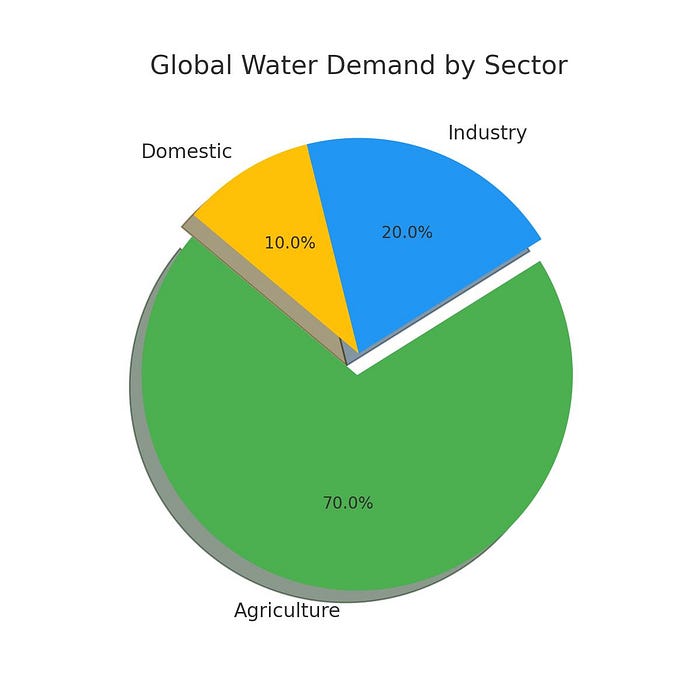
Water is an essential driver of economic activity, serving as a fundamental input for multiple industries. Agriculture, which accounts for nearly 70% of global freshwater withdrawals, relies heavily on consistent water availability for irrigation and livestock. Similarly, industries such as manufacturing, mining, and textiles require vast amounts of water for production processes. The energy sector, particularly hydroelectric power and cooling systems in thermal and nuclear plants, depends on stable water supplies to generate electricity. Even transportation networks, especially those reliant on inland waterways, are influenced by water availability.
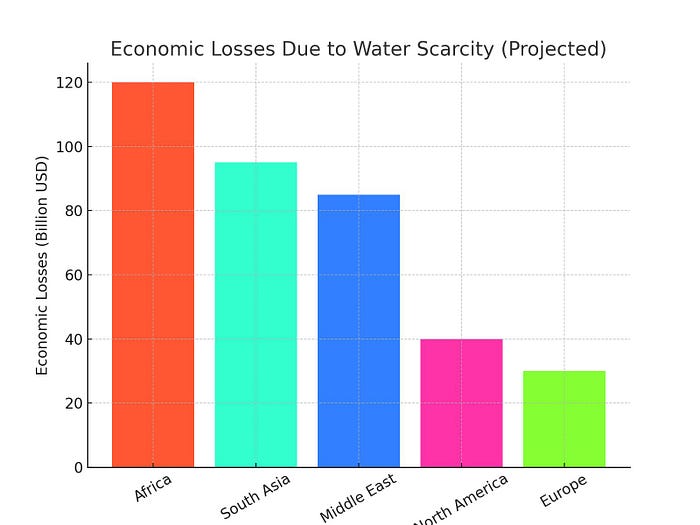
When water becomes scarce or polluted, the economic consequences are severe. A decline in freshwater availability reduces agricultural yields, threatening food security and rural livelihoods. Industries face production disruptions and rising operational costs, while unreliable water access in the energy sector can lead to power shortages. The economic losses from water crises run into billions of dollars, emphasizing the need for robust water policies that safeguard supply and quality.
The True Cost of Water —
For decades, water has been treated as an abundant, low-cost resource. However, this perception ignores the full economic, environmental, and social costs associated with its use. The concept of “full-cost pricing” argues that water tariffs should reflect not just extraction and distribution expenses but also ecosystem preservation and long-term sustainability.
One challenge in implementing full-cost pricing is accounting for non-market water uses — such as wetlands that filter pollutants, forests that regulate rainfall, and groundwater recharge systems that ensure long-term availability. While these services do not have direct market prices, their degradation imposes hidden costs on economies, from increased flooding risks to reduced biodiversity. Governments and policymakers must integrate these considerations into water pricing mechanisms to promote efficient use and conservation.
Economic Risks of Water Scarcity and Pollution —
Water scarcity presents significant economic risks. Reduced agricultural output due to droughts and declining water tables can drive up food prices and trigger supply chain disruptions. Industrial production, which depends on reliable water access, faces output losses when supplies run dry. Healthcare costs also rise due to water shortages, as lack of clean drinking water increases the prevalence of waterborne diseases.
Water pollution further exacerbates economic vulnerabilities. Contaminated water sources harm fisheries, reducing incomes for coastal and inland fishing communities. Tourism-dependent economies suffer when polluted rivers, lakes, and beaches deter visitors. Additionally, industries that rely on clean water for production — such as beverage manufacturing and pharmaceuticals — face higher purification costs, ultimately affecting consumers.
A crucial yet often overlooked factor in water scarcity is glacier melt. Glaciers serve as natural freshwater reservoirs, feeding major rivers that sustain agriculture, industry, and populations. Climate change-induced glacier retreat is disrupting seasonal water flows, reducing water availability during dry months. Regions that rely on glacial meltwater, such as South Asia and the Andes, are particularly vulnerable to this shift, highlighting the urgent need for climate-adaptive water policies.
Investing in sustainable water management is not just an environmental necessity but an economic imperative. Effective policies that promote conservation, innovation, and equitable access will determine the resilience of economies in the face of growing water challenges.
Strategic Investments for Sustainable Water Management —
1) Investing in Water Infrastructure
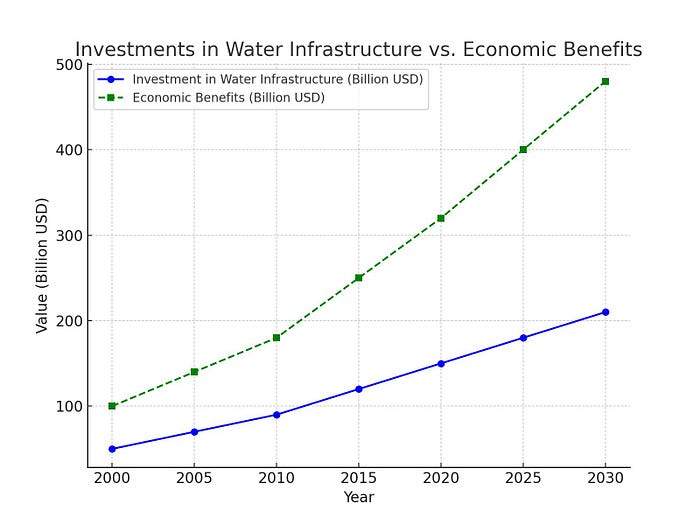
Modern, efficient water infrastructure is crucial for ensuring sustainable water supply, reducing losses, and improving resilience to climate change. Investments in dams, reservoirs, pipelines, and wastewater treatment plants play a key role in managing water resources effectively. Upgrading aging infrastructure can significantly reduce water waste due to leaks and inefficiencies, improving overall resource management.
A crucial aspect of financing these projects is the role of public-private partnerships (PPPs). Governments often lack the financial resources to fund large-scale water infrastructure projects, making collaboration with private sector investors essential. PPPs enable the construction of sustainable water systems while ensuring efficiency, innovation, and long-term maintenance. Successful examples include desalination plants in the Middle East and large-scale irrigation systems in Africa, where private sector investment has helped improve water access.
Developing countries, which are particularly vulnerable to water scarcity, require targeted infrastructure investments. Many regions face erratic rainfall patterns, over-reliance on groundwater, and a lack of sanitation facilities. Expanding water storage capacity, improving distribution networks, and integrating climate-resilient solutions are key to addressing these vulnerabilities. Without strategic investments, water insecurity can hamper economic growth, food production, and public health.
2) Promoting Water Efficiency and Conservation —
Water conservation is essential for long-term sustainability. Governments and industries must adopt water-saving technologies and practices across agriculture, industry, and households.
- Agriculture: Drip irrigation, soil moisture sensors, and drought-resistant crops can significantly reduce water use while maintaining productivity.
- Industry: Closed-loop water systems, efficient cooling technologies, and wastewater recycling help reduce industrial water footprints.
- Households: Low-flow fixtures, smart irrigation systems, and behavioral incentives (such as water-saving campaigns) encourage conservation at the consumer level.
Economic incentives can drive water conservation. Water tariffs, tiered pricing structures, and rebates for efficient appliances encourage responsible water use. For example, in some cities, dynamic pricing models have successfully reduced household water consumption while ensuring affordability for lower-income populations. Similarly, industries adopting water-efficient processes can benefit from tax credits or reduced regulatory fees.
3) Investing in Technology and Innovation —
Technological advancements are transforming water management, offering new solutions to address scarcity and quality issues. Desalination, water recycling, and smart water management systems are at the forefront of this transformation.
- Desalination: Countries like Israel and Saudi Arabia have pioneered desalination technologies, providing fresh water from seawater. Advances in energy-efficient desalination methods, such as reverse osmosis, make this approach more viable.
- Water Recycling: Treated wastewater can be safely reused for agriculture, industry, and even potable consumption. Cities like Singapore and Los Angeles have implemented large-scale water recycling programs to reduce dependence on freshwater sources.
- Smart Water Management: IoT-based monitoring systems, AI-driven leak detection, and blockchain-enabled water transactions are revolutionizing how water is tracked and distributed. These technologies improve efficiency, reduce waste, and enhance water security.
Investment in research and development is critical to fostering innovation in water technology. Governments, universities, and private institutions must collaborate to develop cost-effective and scalable solutions. Breakthroughs in nanotechnology for water filtration, AI-driven water analytics, and nature-based water treatment systems hold the potential to reshape global water management.
Strategic investments in infrastructure, efficiency, and innovation will ensure that water remains a sustainable and accessible resource for all, supporting economic development and environmental conservation in the long run.
Policy and Governance for Equitable and Sustainable Water Use —
Strengthening Water Governance
Effective water governance is essential for ensuring sustainable and equitable water use. Transparent, accountable, and participatory governance frameworks enable communities, industries, and policymakers to collaborate in managing water resources efficiently. Without strong governance, water mismanagement, corruption, and inefficiencies can lead to depletion and inequitable distribution.
One of the most effective governance approaches is Integrated Water Resources Management (IWRM), which promotes coordinated development and management of water, land, and related resources. IWRM ensures that economic and social needs are met while preserving ecosystems. Countries that have successfully implemented IWRM, such as the Netherlands and Australia, have demonstrated how coordinated policies can lead to long-term water security.
Implementing Effective Water Regulations
Regulatory frameworks are crucial in preventing water pollution, managing demand, and ensuring sustainability. Strict enforcement of pollution control measures is necessary to protect water sources from industrial, agricultural, and household contaminants. For example, regulatory policies such as the U.S. Clean Water Act and the European Water Framework Directive have played key roles in restoring and maintaining water quality.
Water allocation and permitting systems help regulate water usage by ensuring that industries, municipalities, and agriculture sectors do not overexploit resources. These systems often involve licensing mechanisms that allocate water based on availability, environmental impact, and economic needs. In many countries, cap-and-trade systems for water rights have been introduced to encourage efficient use by allowing users to trade water allocations.
Ensuring Equitable Access to Water
Water inequality remains a significant global challenge, particularly in developing regions where marginalized communities often lack reliable access to clean water. Policies must prioritize universal access, ensuring that disadvantaged groups, including rural populations and low-income households, have affordable and sufficient water supply.
Water subsidies and targeted financial mechanisms can help make water affordable for all. Some governments implement tiered pricing models, where basic water needs are provided at low or no cost, while higher consumption levels are priced progressively. Additionally, community-led water initiatives, such as localized water cooperatives, have proven effective in addressing access disparities in remote areas.
International Cooperation
Water resources do not adhere to political borders, making transboundary water cooperation essential. Many of the world’s major rivers, including the Nile, Mekong, and Danube, flow through multiple countries, requiring shared governance mechanisms. Without cooperation, disputes over water rights can escalate into conflicts.
Global agreements and diplomatic frameworks are necessary to protect shared water sources. Institutions such as the United Nations Water Convention and regional treaties have played crucial roles in fostering cooperation. Moreover, preserving critical water sources like glaciers requires international climate action, as their melting affects water availability for millions. Countries that depend on glacier-fed rivers, such as those in South Asia and South America, must collaborate on policies that mitigate climate change and safeguard these essential water reserves.
By strengthening governance, enforcing regulations, ensuring equitable access, and fostering international cooperation, policymakers can build a resilient and sustainable water future for all.
The Path to a Sustainable Future —
Integrating Water into Development Planning
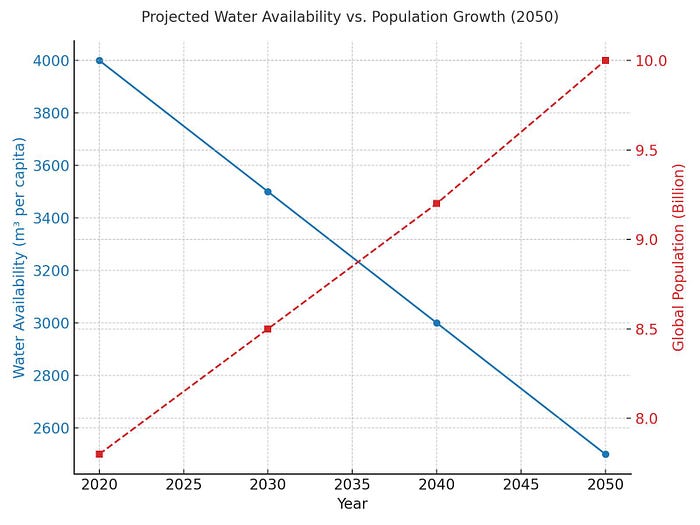
Water is not just a sectoral concern — it is a foundational element of economic growth, social well-being, and environmental sustainability. To build a truly sustainable future, water considerations must be integrated into national and regional development plans rather than treated as an isolated issue. Governments must align water policies with broader economic strategies, ensuring that water security supports industrial development, agricultural productivity, and urban expansion.
Water also plays a crucial role in achieving the United Nations Sustainable Development Goals (SDGs). SDG 6 explicitly focuses on ensuring clean water and sanitation for all, but water management is also directly linked to goals related to poverty reduction, food security, health, energy, and climate action. Without sustainable water policies, progress in these areas will be severely hindered.
The Economic Benefits of Sustainable Water Management —
Investing in sustainable water management yields significant economic benefits. Studies indicate that every dollar invested in clean water and sanitation can generate up to $4 in economic returns, through improved health, productivity, and environmental resilience. Efficient water management also reduces costs associated with droughts, floods, and waterborne diseases, preventing economic losses that can run into billions of dollars annually.
Sustainable water management enhances industrial efficiency, agricultural resilience, and energy security. By adopting modern irrigation systems, industries and farmers can reduce waste and increase yields, leading to more stable food prices and economic growth. Cities that invest in green infrastructure — such as rainwater harvesting and wastewater recycling — can reduce dependency on costly external water sources.
Call to Action —
A sustainable water future is within reach, but it requires urgent and collective action. Policymakers must prioritize water in their economic strategies, ensuring that policies promote conservation, efficiency, and equitable access. Businesses must adopt water-efficient practices and invest in innovative solutions that reduce waste and pollution. Individuals, too, have a role to play — by using water responsibly, supporting sustainable policies, and advocating for change.
The time to act is now. Water is the foundation of life, and its sustainable management is key to building a resilient, prosperous, and equitable future for all. By working together — governments, industries, and communities — we can ensure that this vital resource remains available for generations to come.
Conclusion
Water is more than just a resource — it is the backbone of economies, societies, and ecosystems. As demand rises and climate challenges intensify, ensuring its sustainable management requires a strong economic policy framework. Strategic investments in infrastructure, technology, and conservation can enhance efficiency, mitigate risks, and secure water availability for future generations. Equitable governance, effective regulations, and international cooperation are essential to ensuring that water remains accessible and affordable for all, particularly the most vulnerable communities.
By integrating water considerations into development planning and recognizing its critical role in economic growth, we can unlock long-term benefits for both people and the planet. Sustainable water management is not just an environmental necessity — it is an economic imperative. The choices we make today will determine whether water remains a driver of prosperity or becomes a source of crisis. Policymakers, businesses, and individuals must act now to invest in a water-secure, sustainable future for all.
 Pratik Ghansham Salvi Assistant Professor of Economics | Banking & Finance | IMF Finance & Development Contributor
Leave a comment