“Energy Security and Global Development: The Crisis of Petroleum Dependence and the Need for Sustainable Resource Management ”
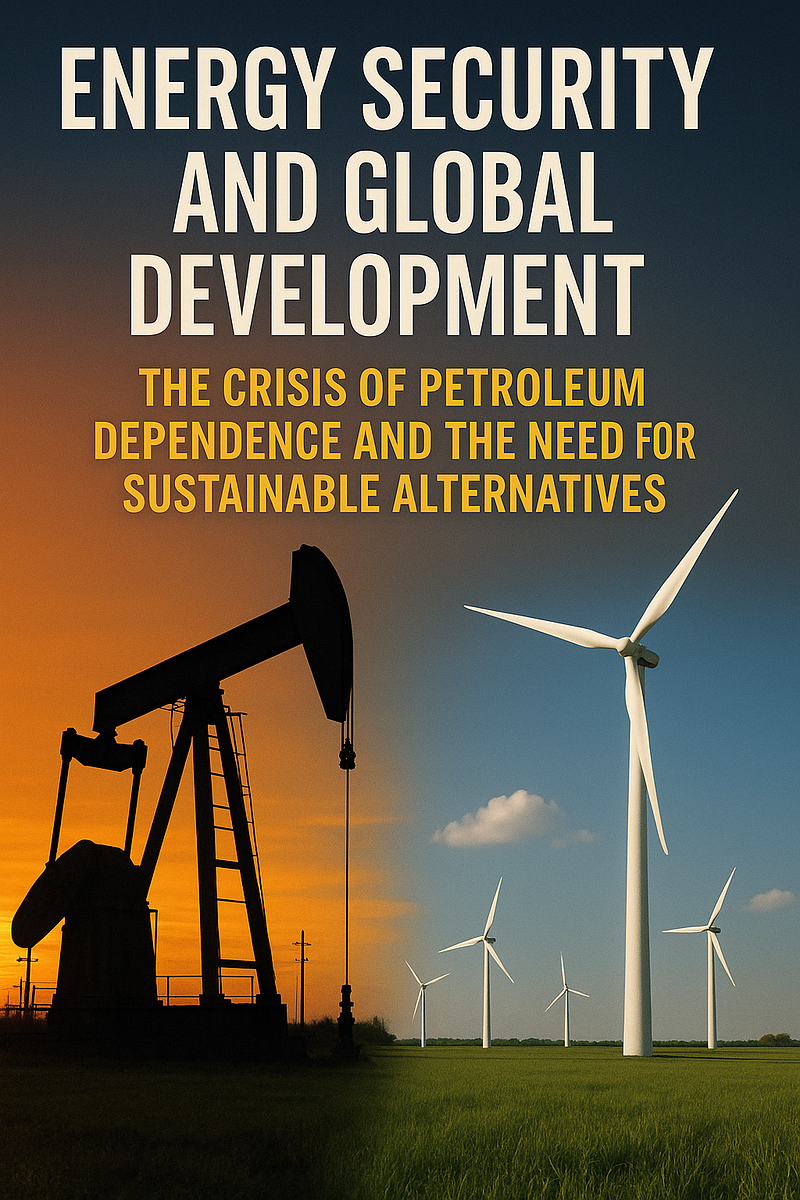
The 21st century unfolds against a backdrop of unprecedented global interconnectedness and ambition for widespread development. Yet, this very progress is inextricably linked to a resource that has fueled industrialization and shaped geopolitical landscapes for over a century: petroleum. For nations striving to elevate their citizens’ living standards, access to reliable and affordable energy remains a fundamental prerequisite. However, this reliance on petroleum has spawned a dual crisis that demands urgent attention: the precarious nature of energy security and the imperative for sustainable development.
The first facet of this crisis, energy security, manifests in the volatile dance between supply and demand, often dictated by geopolitical instability, the finite nature of fossil fuel reserves, and the strategic control exerted by major producing nations. Fluctuations in petroleum prices can send shockwaves through global economies, disproportionately impacting developing nations with limited financial buffers and hindering their developmental trajectories. The vulnerability to supply disruptions, whether due to political conflicts, natural disasters, or deliberate manipulation, underscores the inherent fragility of a system tethered to a geographically concentrated and exhaustible resource. This precariousness not only threatens economic stability but can also exacerbate social unrest and international tensions, casting a long shadow over aspirations for a more peaceful and prosperous world.
Simultaneously, the unyielding dependence on petroleum fuels the second, equally critical crisis: the urgent need for sustainable alternatives. The scientific consensus on the detrimental environmental consequences of fossil fuel combustion is unequivocal. Greenhouse gas emissions, primarily from the burning of petroleum and other fossil fuels, are driving climate change, leading to rising sea levels, extreme weather events, and disruptions to ecosystems that disproportionately affect vulnerable populations in developing countries. Furthermore, the localized environmental impacts of petroleum extraction, transportation, and refining can devastate communities and natural habitats, undermining long-term sustainability goals. This environmental imperative necessitates a fundamental shift away from carbon-intensive energy sources towards cleaner, renewable alternatives.
Therefore, this article delves into the intricate relationship between energy security and global development, dissecting the multifaceted challenges posed by persistent petroleum dependence. It will explore the vulnerabilities inherent in the current energy paradigm, particularly for developing nations striving for economic growth and social progress. Furthermore, it will critically examine the burgeoning landscape of sustainable energy alternatives, evaluating their potential to address both the energy security dilemma and the urgent need for environmental stewardship. By analyzing the technological advancements, policy frameworks, and international collaborations necessary to facilitate a global energy transition, this article aims to illuminate pathways towards a future where energy security and sustainable development are not mutually exclusive but rather mutually reinforcing pillars of a thriving global community.
The Precariousness of Petroleum Dependence and Energy Security —
Geopolitical Vulnerabilities
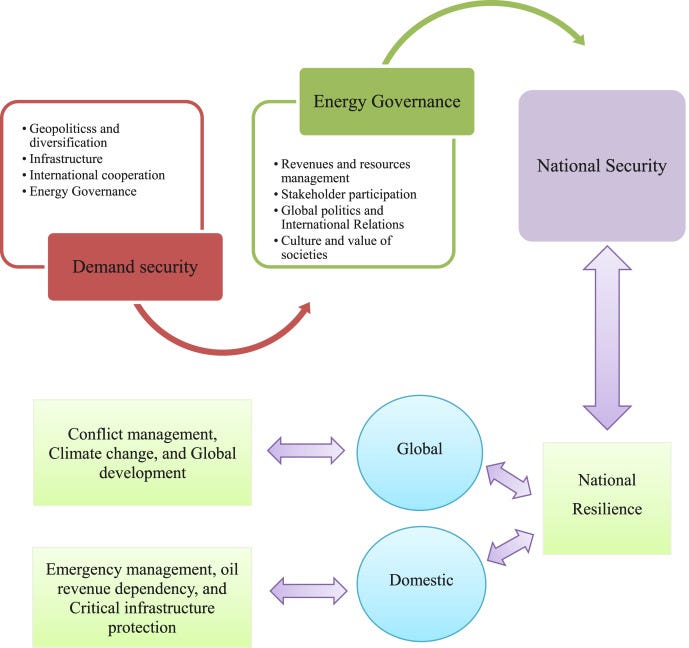
The global energy system is intricately tied to the political landscape of oil-producing regions. A significant portion of the world’s petroleum supply originates from geopolitically sensitive zones — such as the Middle East, Venezuela, and parts of Africa — where political instability, conflict, and governance challenges often threaten the continuity of oil production and export. Events such as civil wars, international sanctions, insurgent attacks on oil infrastructure, or shifts in political regimes can disrupt supply chains, causing immediate ripples across global markets.
For instance, the 1973 Arab Oil Embargo, in which the Organization of Arab Petroleum Exporting Countries (OAPEC) cut off oil exports to nations supporting Israel in the Yom Kippur War, led to a quadrupling of oil prices and economic stagnation in many Western economies. More recently, U.S.-Iran tensions and the Russian invasion of Ukraine have shown how strategic control over energy resources can be weaponized, reinforcing oil’s centrality to international power dynamics.
Control over oil reserves often translates into geopolitical leverage. Nations rich in oil reserves — like Saudi Arabia, Russia, and Iran — can wield disproportionate influence on global politics by manipulating output levels or forging strategic alliances. The creation of OPEC+ (including Russia) reflects the increasing use of oil as a geopolitical tool to influence global pricing and market balance, often at the expense of energy-importing developing nations.
Economic Volatility
Oil price fluctuations have profound effects on macroeconomic stability, particularly in developing countries that rely heavily on petroleum imports. A sudden spike in global oil prices inflates import bills, depletes foreign exchange reserves, and widens current account deficits. This puts pressure on national currencies, leads to inflationary spirals, and reduces the fiscal space for developmental spending.
Sectors such as transportation, agriculture, and manufacturing — which are energy-intensive and form the backbone of economic activity in many developing nations — are especially vulnerable. For instance, higher diesel and fuel prices increase the cost of moving goods and people, impacting everything from food prices to industrial logistics. In agriculture, rising fuel costs raise the price of running irrigation pumps and transporting produce, directly affecting food security and rural livelihoods.
The volatility also deters long-term investment, as businesses remain wary of unpredictable operational costs. Countries such as India and Bangladesh, which depend on imported oil for over 80% of their needs, frequently grapple with budgetary pressures and inflation due to erratic oil markets. These economies must often resort to fuel subsidies, which, while temporarily shielding consumers, burden public finances and distort energy markets.
Supply Constraints and Resource Depletion
Petroleum, being a finite resource, poses a fundamental challenge to long-term energy security. The concept of “peak oil” — the hypothetical point at which global oil production reaches its maximum rate before entering terminal decline — has raised concerns about the sustainability of a petroleum-based energy system. Although technological advances have delayed peak oil scenarios, the eventual depletion of easily accessible reserves remains a pressing concern.
To meet rising global demand, many nations have turned to unconventional oil sources such as tar sands, shale oil, and deepwater drilling. While these sources extend the life of petroleum supply, they come with substantial environmental and economic costs. Extracting oil from tar sands, for example, is energy-intensive and results in higher greenhouse gas emissions, extensive water usage, and habitat destruction. Shale oil extraction, through hydraulic fracturing (fracking), has been linked to groundwater contamination and seismic activity.
These trade-offs present a dilemma: while unconventional sources can temporarily mitigate supply constraints, they often undermine global efforts to combat climate change and promote sustainable development. Moreover, the high cost and environmental degradation associated with these methods make them a less viable solution for many developing nations already grappling with ecological and financial vulnerabilities.
The Imperative for Sustainable Alternatives and Global Development-
Environmental Consequences of Petroleum Use
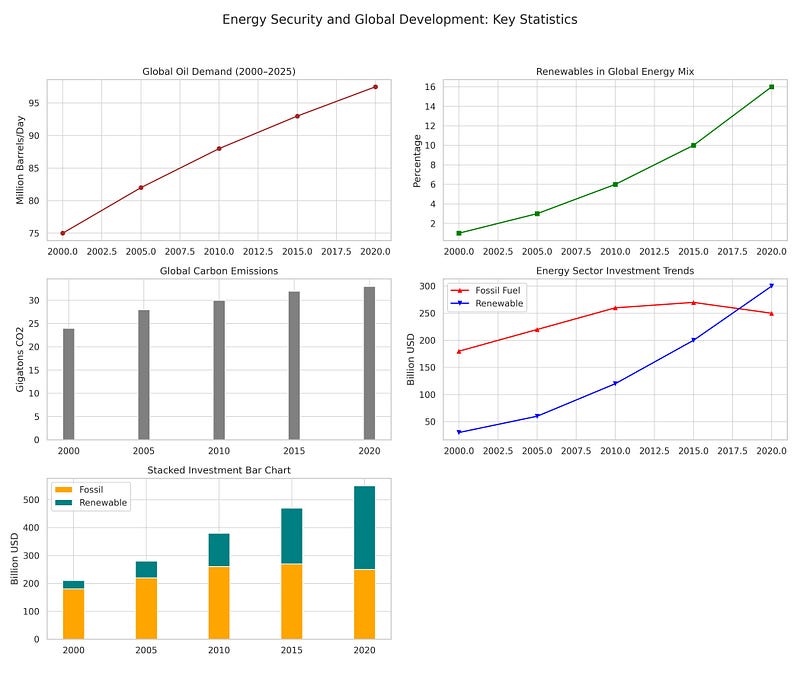
The combustion of petroleum and other fossil fuels is the largest contributor to anthropogenic greenhouse gas (GHG) emissions, particularly carbon dioxide (CO₂). When burned, petroleum releases vast quantities of CO₂ into the atmosphere, intensifying the greenhouse effect and leading to global warming. According to the Intergovernmental Panel on Climate Change (IPCC), the energy sector — dominated by fossil fuel use — is responsible for nearly three-quarters of global GHG emissions. This warming has cascading consequences for ecosystems, human health, and global stability.
Developing nations disproportionately bear the brunt of climate change, despite having contributed the least to global emissions. Rising sea levels threaten low-lying coastal regions and small island states, where millions are at risk of displacement. Extreme weather events — such as hurricanes, floods, droughts, and heatwaves — are becoming more frequent and severe, straining already fragile infrastructures. Moreover, changing climate patterns severely disrupt agriculture, upon which many developing economies depend, leading to food insecurity, economic instability, and forced migration.
Beyond global emissions, petroleum use also causes significant localized environmental degradation. Oil extraction often entails the destruction of natural habitats and contamination of soil and groundwater through spills and leaks. Transportation of oil via pipelines and tankers poses continual risks of devastating spills, as seen in events like the Deepwater Horizon disaster. Refining processes release harmful pollutants such as sulfur dioxide, nitrogen oxides, and volatile organic compounds, which contribute to air pollution and pose health risks to nearby communities.
The Landscape of Sustainable Energy Alternatives
Transitioning to renewable energy is essential to mitigate these consequences. Several sustainable technologies are rapidly gaining traction and demonstrating their potential to replace fossil fuels:
- Solar Energy: Photovoltaic (PV) and concentrated solar power (CSP) technologies harness sunlight to generate electricity. Solar has seen dramatic reductions in cost — over 80% in the past decade — making it one of the most competitive sources of new power generation globally.
- Wind Energy: Onshore and offshore wind turbines convert wind into electricity with increasing efficiency. Turbine technology advancements and improved grid integration have significantly lowered costs, particularly in regions with consistent wind patterns.
- Hydropower: The most established renewable source, hydroelectricity uses water flow to generate power. While efficient and reliable, large dams can have ecological and social impacts. Nonetheless, small-scale hydro offers sustainable options for localized applications.
- Geothermal Energy: By tapping into Earth’s internal heat, geothermal systems provide consistent power generation with minimal emissions. Though geographically constrained, it holds great promise in tectonically active regions.
- Biomass: Organic materials like agricultural waste, wood, and algae can be converted into bioenergy. While biomass is renewable, sustainability depends on responsible sourcing and emissions control.
A critical enabler of renewable energy adoption is energy storage. Technologies such as lithium-ion batteries, flow batteries, and pumped hydro storage help balance supply and demand by storing excess energy for use during periods of low generation. These solutions are essential for overcoming the intermittency of solar and wind power, thus ensuring a stable and reliable energy supply.
Sustainable Energy as an Enabler of Development
Renewable energy is not merely a tool for reducing emissions; it is a catalyst for sustainable and inclusive development. Decentralized renewable systems, such as solar microgrids and off-grid wind or hydro systems, can bring electricity to remote and underserved communities where extending traditional grids is economically unviable. This access to energy unlocks opportunities in education, healthcare, and entrepreneurship, enhancing quality of life and fostering local development.
Moreover, the sustainable energy sector is a powerful engine for green job creation. From manufacturing and installation to maintenance and research, renewable energy supports millions of jobs worldwide. Developing countries with abundant renewable resources stand to gain significantly by nurturing domestic industries, attracting clean investment, and building local expertise.
Lastly, sustainable energy fosters energy independence. By reducing dependence on imported fossil fuels — often subject to volatile prices and geopolitical tensions — nations can enhance their economic resilience and national security. A diversified energy portfolio built on renewables empowers countries to shape their own energy futures and prioritize sustainability and equity.
Challenges and Opportunities
Policy and Regulatory Frameworks
Government policies play a pivotal role in shaping the trajectory of sustainable energy adoption. Well-designed incentives, such as feed-in tariffs, tax credits, and renewable energy mandates, have proven instrumental in accelerating deployment. Carbon pricing mechanisms — whether in the form of carbon taxes or cap-and-trade systems — help internalize the environmental costs of fossil fuels and shift market dynamics in favor of low-carbon alternatives.
However, policy effectiveness hinges on clarity, stability, and long-term commitment. Unpredictable policy shifts or regulatory uncertainty can deter private investment and stall progress. Countries that have successfully attracted renewable energy investments, such as Germany and India, have done so through consistent and transparent frameworks that reduce investor risk.
One of the most difficult challenges lies in phasing out fossil fuel subsidies, which globally amounted to over $7 trillion annually according to recent estimates by the IMF. These subsidies distort energy markets, perpetuate carbon-intensive infrastructure, and hinder the competitiveness of clean technologies. Reforming these subsidies and aligning fiscal policies with sustainability goals requires political will, social safety nets to protect vulnerable populations, and strong public communication strategies to gain societal support.
Technological Innovation and Diffusion
Rapid technological advancements are at the heart of the clean energy revolution. Breakthroughs in photovoltaic efficiency, wind turbine design, next-generation batteries, and green hydrogen are expanding the frontier of what is possible in sustainable energy. Significant research and development (R&D) efforts are underway globally, often supported by public funds, academic institutions, and private enterprises.
Despite these innovations, a key challenge lies in technology transfer to developing countries. Many low- and middle-income nations lack the technical infrastructure, skilled workforce, and institutional capacity needed to absorb and adapt advanced technologies. Addressing this requires comprehensive capacity building programs, knowledge exchange platforms, and supportive intellectual property regimes that balance innovation incentives with equitable access.
Smart grids and digital technologies offer transformative potential for managing decentralized and variable energy sources. By integrating sensors, automation, and data analytics, smart grids enable real-time monitoring, demand response, and predictive maintenance — optimizing efficiency, reliability, and integration of renewables. For developing countries, leapfrogging to smart energy systems presents an opportunity to avoid the legacy issues of centralized fossil-based grids.
Financing the Transition
Transitioning to a low-carbon global energy system will require investments estimated at $4–6 trillion annually through 2050, according to the International Energy Agency (IEA). Mobilizing such capital is a formidable challenge, particularly for developing countries grappling with fiscal constraints and competing development priorities.
Both public and private sector financing have crucial roles to play. Governments must lead with strategic investments, concessional finance, and risk mitigation instruments to catalyze private participation. Green bonds, sustainable infrastructure funds, and climate finance mechanisms such as the Green Climate Fund (GCF) are emerging as vital channels to direct capital toward clean energy projects.
In developing contexts, innovative financing models such as pay-as-you-go solar systems, community cooperatives, blended finance, and results-based financing are proving effective. These models not only lower the entry barriers for consumers and small businesses but also create scalable, inclusive pathways for energy access and sustainable development.
International Cooperation and Partnerships
Climate change and sustainable energy are global challenges that demand coordinated international action. Multilateral agreements like the Paris Agreement establish shared goals and accountability mechanisms, while platforms such as the UNFCCC and Sustainable Energy for All (SEforALL) foster cooperation across borders.
Multilateral institutions — including the World Bank, International Renewable Energy Agency (IRENA), and regional development banks — play a crucial role in financing, technical assistance, and capacity building. Their support is especially vital for helping developing nations overcome financial and institutional barriers to energy transition.
Moreover, technology sharing and collaborative R&D between developed and developing countries can accelerate innovation and adaptation. South-South cooperation, regional energy partnerships, and global knowledge networks enhance the collective capacity to tackle shared challenges. By working together, nations can not only advance sustainability but also promote equity and resilience in the global energy system.
Diversifying the Energy Mix and Embracing Renewables
Aggressive Investment in Renewable Energy Infrastructure
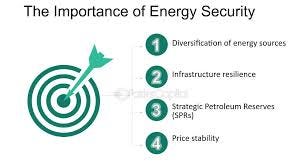
A sustainable energy transition demands large-scale, targeted investments across various renewable sources. Prioritizing the expansion of solar, wind, hydro, geothermal, and biomass projects — at utility-scale, commercial, and decentralized levels — ensures resilience, inclusivity, and energy security. Incentive mechanisms such as tax credits, green energy auctions, and concessional financing must be expanded to catalyze private sector participation.
However, structural bottlenecks such as lengthy permitting processes, fragmented jurisdictional approvals, and complex regulatory landscapes can hinder deployment. Streamlining permitting procedures and establishing single-window clearance systems can dramatically accelerate project implementation timelines.
Simultaneously, upgrading the existing grid infrastructure is vital. Integrating a high share of variable renewables requires investments in smart grid technologies, advanced forecasting tools, and enhanced transmission networks to facilitate dynamic balancing and inter-regional energy flows.
Promoting Energy Storage Solutions
The integration of energy storage systems is essential to overcome the intermittency challenges of solar and wind power. Governments must provide financial incentives — such as subsidies, tax breaks, and guaranteed markets — for the development and deployment of battery storage, pumped hydro, and thermal storage systems.
Continued investment in research and development is critical to drive down costs, improve efficiency, and extend the lifecycle of energy storage technologies. Next-generation storage innovations, such as solid-state batteries and gravity storage systems, offer promising potential for scalable applications.
Developing Regional Energy Interconnections
Cross-border electricity grids and regional interconnections can balance supply and demand by allowing surplus renewable energy to be shared across regions. For example, Africa’s “Power Pools” and Europe’s interconnected grids demonstrate how transnational cooperation enhances energy security, reduces redundancy, and optimizes resource allocation.
Such interconnections require harmonized technical standards, coordinated planning, and robust institutional cooperation. Regional platforms must be empowered to facilitate joint investments in infrastructure and collaborative long-term energy strategies.
Implementing Stringent Energy Efficiency Standards
Improving energy efficiency is one of the most cost-effective strategies for reducing emissions. Governments must mandate higher efficiency standards across sectors, including buildings, appliances, industrial equipment, and transport systems. This includes minimum energy performance standards (MEPS), building energy codes, and vehicle fuel economy regulations.
To accelerate adoption, incentive schemes such as rebates, low-interest loans, and tax deductions should be provided to support energy-efficient retrofitting and the adoption of high-efficiency technologies.
Prioritizing R&D in Advanced Renewable Energy Technologies
To unlock the full potential of renewables, sustained investment in cutting-edge R&D is essential. Governments and institutions must support next-generation solar panels (e.g., perovskites), offshore wind technologies, and hybrid systems that integrate multiple energy sources.
R&D funding should also focus on improving energy storage, grid management, and materials science to enhance system efficiency and reduce costs.
Exploring Emerging Sustainable Energy Options
Emerging technologies such as green hydrogen, advanced biofuels, ocean energy, and artificial photosynthesis offer new frontiers for clean energy innovation. Supporting pilot projects, demonstration plants, and early-stage commercialization can help de-risk these technologies and prepare them for large-scale deployment.
Public-private partnerships and venture capital investment must be encouraged to ensure that these innovations move swiftly from labs to markets.
Conclusion — The preceding analysis has illuminated the deeply intertwined nature of energy security and global development, revealing the inherent vulnerabilities and unsustainable trajectory of continued reliance on petroleum. The dual crisis we face — the precariousness of a system beholden to geopolitical vagaries and finite resources, coupled with the urgent imperative to mitigate the devastating environmental consequences of fossil fuel combustion — demands a paradigm shift in how we power our world. For developing nations striving for economic advancement and improved quality of life, this transition is not merely an environmental necessity but a fundamental prerequisite for long-term stability and prosperity.
The path forward necessitates a decisive and multifaceted approach, embracing a future where energy security is not jeopardized by dependence on a single, volatile resource, but rather strengthened by a diversified portfolio of clean and domestically available sustainable alternatives. Investing aggressively in renewable energy infrastructure, from sprawling solar farms to localized microgrids, offers the promise of energy independence, reduced exposure to global price shocks, and the creation of new economic opportunities. Concurrently, a concerted effort to enhance energy efficiency across all sectors is crucial to minimize demand and maximize the impact of cleaner energy sources.
Policy and market mechanisms play a vital role in catalyzing this transition. Carbon pricing, the phasing out of fossil fuel subsidies, and the establishment of supportive regulatory frameworks can create the necessary incentives and level the playing field for sustainable energy technologies. However, the scale of this challenge necessitates robust international cooperation. Developed nations have a responsibility to facilitate technology transfer, provide financial assistance, and share best practices to empower developing countries in their own energy transitions. Furthermore, continued investment in research and innovation is essential to unlock the full potential of emerging sustainable energy solutions and drive down costs.
Ultimately, the transition from petroleum dependence to a sustainable energy future is not simply a technological or economic challenge; it is a profound opportunity to reshape our world for the better. By embracing renewable energy, enhancing efficiency, and fostering global collaboration, we can simultaneously bolster energy security, drive sustainable development, mitigate climate change, and create a more equitable and resilient global community. The choices we make today will determine whether the 21st century is defined by the continued vulnerabilities of a fossil fuel-based economy or by the dawning of a new era powered by clean, secure, and sustainable energy for all. The time for decisive action is now, to ensure a future where energy security and global development are mutually reinforcing pillars of a thriving planet.
Thanks.
 Pratik Ghansham Salvi Assistant Professor of Economics | Banking & Finance | IMF Finance & Development Contributor
Leave a comment