The Uneven Digital Landscape of India: User Adoption, Misinformation, and the Widening Inequality Gap
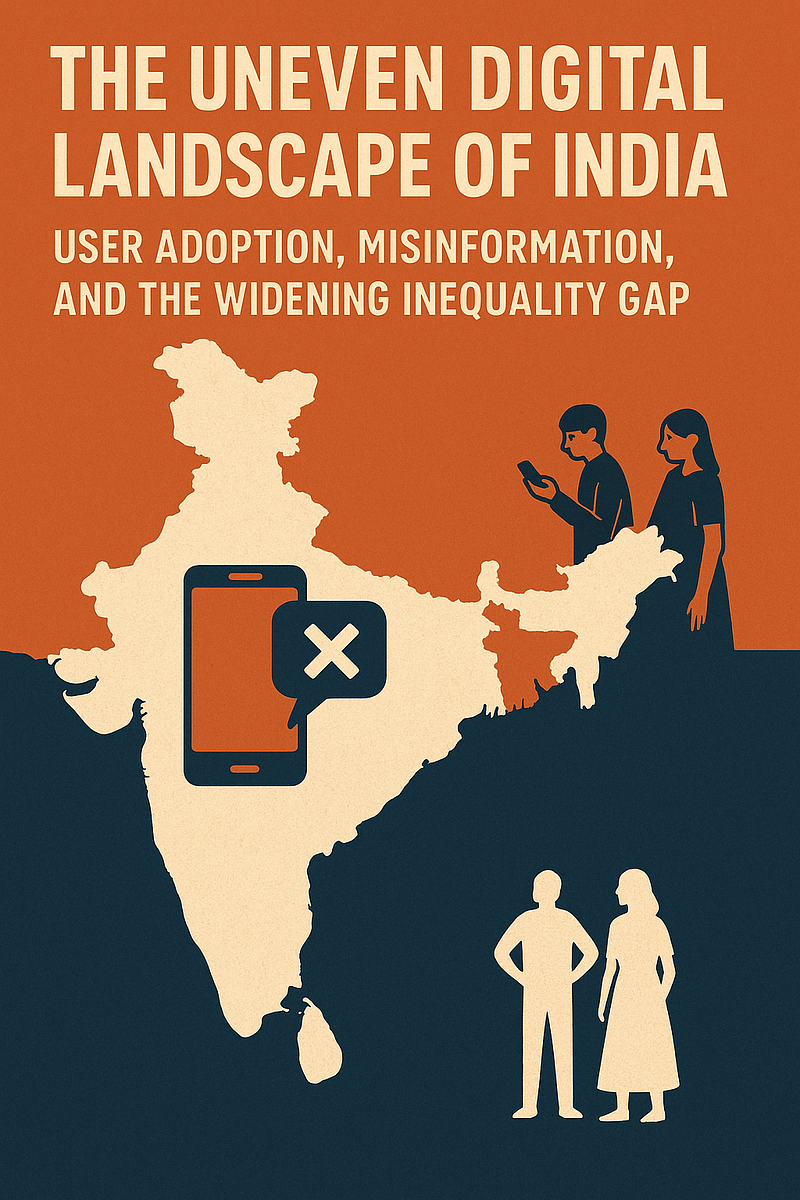
India stands as a fascinating, and often paradoxical, case study in the global digital revolution. On the surface, the nation presents a compelling narrative of rapid digital adoption, boasting hundreds of millions of internet users propelled by affordable smartphones and increasingly accessible data. This surge in connectivity has undeniably unlocked new avenues for communication, commerce, and access to information for a significant portion of the population. However, beneath this veneer of digital empowerment lies a more complex and concerning reality: a profoundly uneven digital landscape characterized by a stark disparity between mere user adoption and meaningful digital literacy, infrastructure, and equitable access. This imbalance, coupled with the pervasive influence of a burgeoning and often unregulated media ecosystem, has inadvertently created fertile ground for the proliferation of misinformation and a widening of pre-existing social and economic inequalities.
While the sheer number of digital users in India is often celebrated as a testament to progress, a closer examination reveals that this adoption frequently translates to basic consumption rather than deep engagement with the nuances and critical evaluation inherent in a truly digitized society. Many new users, often from marginalized communities and with limited digital literacy, navigate the online world with a fundamental lack of the skills and awareness necessary to discern credible information from falsehoods. This digital divide, therefore, extends beyond mere access to encompass the crucial aspects of digital fluency, critical thinking, and the ability to engage safely and productively within the digital sphere.
Compounding this challenge is the significant role played by the media landscape in India. The rapid expansion of digital media platforms, including social media, news aggregators, and citizen journalism initiatives, while offering the potential for diverse voices and greater transparency, has also become a key conduit for the rapid and often unchecked dissemination of misinformation. In a highly competitive and fragmented media environment, the pressure to generate engagement and the lack of robust fact-checking mechanisms can inadvertently contribute to the spread of inaccurate or deliberately misleading content. Furthermore, the blurring lines between traditional journalistic outlets and partisan digital platforms can make it increasingly difficult for users to distinguish between reliable news and propaganda, exacerbating the vulnerability of digitally nascent populations.
This article delves into the intricate interplay between India’s impressive user adoption rates, the escalating crisis of misinformation, and its direct correlation with the widening inequality gap. By examining the structural limitations in digital infrastructure and literacy, coupled with the evolving role and impact of media in disseminating information (and disinformation), this analysis aims to unpack the complexities of India’s digital landscape. Ultimately, it argues that simply equating user growth with genuine digitization overlooks the critical need for equitable access, enhanced digital literacy, and a responsible media ecosystem to ensure that the digital revolution serves as a tool for empowerment and progress for all, rather than a catalyst for further division and societal fragmentation.
The Illusion of Universal Digital Access — The digital revolution has often been celebrated as a great equalizer — an unstoppable force that promises to democratize knowledge, empower citizens, and transform lives across all segments of society. However, this optimistic vision masks a stark reality: access to digital technology in India is far from universal. The digital divide manifests in several critical and intersecting ways — geographic, gendered, socio-economic, and educational — each of which perpetuates and deepens existing social inequalities.
1) Urban vs. Rural Divide
Despite significant advances in India’s digital infrastructure, a glaring disparity remains between urban and rural areas. While urban regions enjoy relatively high-speed internet, multiple service providers, and widespread smartphone usage, rural India often grapples with weak or inconsistent connectivity, limited network coverage, and poor infrastructure. According to the Telecom Regulatory Authority of India (TRAI), rural internet penetration continues to lag behind urban areas by a considerable margin. This digital lag severely restricts rural residents’ access to online education, job portals, telemedicine, e-governance, and financial services.
In times of crisis, such as the COVID-19 pandemic, this divide became painfully apparent. Urban students could continue their education through online platforms, while millions of rural children were left without any viable learning alternative, widening the already persistent educational gap. Similarly, job seekers in rural areas remain disconnected from emerging gig economy opportunities and digital marketplaces, deepening their economic marginalization.
2) The Gender Digital Gap
Gender further complicates this digital disparity. Women in India face significantly lower rates of internet access and mobile phone ownership compared to men. A report by the GSMA (Global System for Mobile Communications) revealed that Indian women are 41% less likely than men to use mobile internet, one of the highest gender gaps in the world. This is not merely a technical or economic issue — it is deeply rooted in social norms and patriarchal structures that restrict women’s mobility, autonomy, and access to resources.
Cultural attitudes often view digital devices as unnecessary or even dangerous for women, fostering control over their communication and social participation. Consequently, the gender digital divide inhibits women’s ability to access health information, participate in online learning, engage in civic discourse, and pursue entrepreneurial opportunities. Bridging this gap is critical for achieving broader goals of gender equality and inclusive development.
3) Socio-economic Barriers
Even in areas where internet services are available, the cost of access remains a formidable barrier for low-income populations. Smartphones, laptops, and even data plans represent a significant financial burden for many households, especially those surviving on daily wages or working in informal sectors. This economic exclusion creates what may be termed a digital underclass — a segment of the population systematically left out of the digital economy and unable to benefit from government schemes, online banking, e-commerce, or virtual education.
Moreover, the digital marketplace increasingly assumes online connectivity as a default, marginalizing those who cannot afford to participate. Public services and welfare programs transitioning to digital-only modes often fail to consider these barriers, leading to unintended exclusions and systemic disadvantage.
4) Digital Literacy Divide
Access alone does not guarantee meaningful participation. Millions of first-time users — particularly in rural and marginalized communities — lack the basic digital literacy required to navigate the internet safely and effectively. Skills such as discerning credible information from misinformation, protecting personal data, using digital tools for financial transactions, or participating in e-learning platforms are often absent. This gap creates a new kind of digital disenfranchisement, where access exists in form but not in substance.
In a world increasingly driven by algorithms, data, and digital systems, digital literacy is not a luxury but a necessity. Without it, users are vulnerable to fraud, exploitation, and misinformation, and remain passive consumers rather than active participants in the digital age. Government and civil society interventions must therefore go beyond infrastructure development to include robust, multilingual, and culturally sensitive digital literacy programs.
The Fertile Ground for Misinformation — In the digital age, the internet and social media hold the potential to empower individuals with unprecedented access to information and a platform for expression. Yet, this openness also breeds a darker consequence: the rampant spread of misinformation. In India, a confluence of factors has made the digital ecosystem a fertile ground for the propagation of fake news, rumors, and hate speech, with serious repercussions for social harmony, public health, and democracy itself.
1) The Role of Social Media Platforms
Social media platforms such as WhatsApp, Facebook, and a growing number of regional apps have become primary sources of information for millions. While these platforms facilitate instant communication and community building, their design also enables misinformation to spread rapidly and virally. WhatsApp’s end-to-end encryption, while safeguarding privacy, simultaneously creates a ‘closed’ environment where rumors and fake news can circulate unchecked in private groups and broadcast lists.
Facebook’s algorithms tend to prioritize content that generates high engagement, often sensational or emotionally charged posts, which can inadvertently amplify misinformation and hate speech. Regional social media apps, catering to vernacular language speakers, further localize and accelerate the spread, tapping into specific cultural and social contexts where fact-checking mechanisms are weaker.
2) Language Barriers and Misinformation
India’s linguistic diversity presents a unique challenge. Misinformation frequently spreads in regional languages such as Hindi, Bengali, Marathi, Tamil, and others, where the ecosystem for fact-checking and digital literacy is underdeveloped. Fact-checking organizations and media watchdogs often focus on English and major national languages, leaving many regional language communities vulnerable to unchecked rumors.
The localized nature of misinformation exploits social, cultural, and political fault lines unique to specific regions, making it more believable and harder to combat. Moreover, limited access to credible information sources in regional languages compounds the problem, allowing false narratives to thrive.
3) Visual Misinformation
Manipulated images, doctored videos, and misleading memes present another layer of complexity. Visual content is often more persuasive and emotionally impactful than text, making it a powerful tool for misinformation. Deepfake technology and simple editing tools have made it easier than ever to create realistic but false visual content.
Less digitally literate users, especially in rural areas, may lack the skills or awareness to critically evaluate such images or videos. As a result, visual misinformation spreads quickly, fueling communal tensions, panic, and mistrust.
4) The “Information Overload” Problem
The internet offers an overwhelming volume of information, often bombarding users with conflicting news, opinions, and narratives. This ‘information overload’ can paralyze users’ ability to critically assess what is credible and what is not. Faced with an avalanche of data, many users resort to heuristics such as trusting sensational headlines or sources that confirm their pre-existing beliefs, inadvertently reinforcing misinformation.
The speed at which information spreads online means that falsehoods can go viral long before corrections or clarifications catch up. The resultant confusion erodes public trust in traditional media and institutions, deepening societal divisions.
5) Lack of Media Literacy and Critical Thinking
Underlying all these challenges is a fundamental deficit: the absence of widespread media literacy and critical thinking education. Many schools and community programs in India do not prioritize teaching students how to evaluate sources, recognize bias, or understand the motivations behind information dissemination.
Without these skills, individuals become easy targets for misinformation campaigns. This vulnerability is exploited by malicious actors who deliberately craft and spread fake news for political, financial, or ideological gain. Strengthening media literacy at all educational levels and through public awareness campaigns is essential to build a more informed, resilient citizenry.
The Widening Inequality Gap — The digital revolution promised to be a great equalizer, but in reality, it has often deepened existing inequalities. Far from bridging social divides, disparities in digital access, skills, and control over data are entrenching economic, educational, health, and political disparities across Indian society. The digital divide is thus not just a technological issue but a profound social challenge that threatens to widen inequality on multiple fronts.
1) Economic Disparity
Access to digital technology and the skills to use it effectively have become essential prerequisites for economic advancement. Those with reliable internet access, up-to-date devices, and digital literacy are able to tap into online job markets, launch e-commerce ventures, access microfinance and digital payment platforms, and participate in the growing gig economy. Conversely, individuals and communities without these tools remain excluded from these new economic opportunities, perpetuating cycles of poverty.
This gap means that wealthier and urban populations continue to accelerate their economic progress, while marginalized and rural groups fall further behind. The digital economy thus risks becoming a space where inequality is reproduced and even intensified.
2) Educational Inequality
The shift to online learning, especially accelerated by the COVID-19 pandemic, has starkly revealed the educational inequalities shaped by the digital divide. Students from affluent backgrounds, equipped with devices and stable internet, could attend virtual classes, access online resources, and continue their academic progress.
In contrast, many students from marginalized communities lacked the necessary technology or digital skills, facing interruptions in their education. This digital exclusion compounds existing disadvantages related to socioeconomic status, language barriers, and geographic isolation, creating a widening educational gap that may have long-term consequences for social mobility.
3) Healthcare Disparities
The rise of telemedicine and digital health platforms promises improved access to healthcare, particularly in underserved areas. However, the lack of digital access and literacy limits the ability of large sections of the population — especially in rural and low-income areas — to benefit from these innovations.
Without smartphones, internet connectivity, or the skills to navigate health apps and portals, vulnerable populations struggle to access timely health information, consultations, and services. This digital healthcare divide exacerbates existing disparities in health outcomes and access to quality care.
4) Social and Political Exclusion
Digital platforms are increasingly central to political discourse and social participation. However, misinformation, hate speech, and online polarization disproportionately affect marginalized communities, often leading to their further social exclusion. False narratives and targeted campaigns can inflame communal tensions, foster mistrust, and incite violence, undermining social cohesion.
Moreover, as democratic processes increasingly incorporate digital tools — for voter registration, information dissemination, and campaigning — unequal access risks disenfranchising large segments of the population, weakening the foundations of inclusive democracy.
5) The “Data Divide”
Beyond access and skills, a new dimension of inequality is emerging: the “data divide.” Large corporations and powerful entities accumulate vast amounts of personal data from digitally connected users, leveraging it for profit, targeted advertising, and influence. Meanwhile, those without digital access are invisible in this data ecosystem, excluded from both the benefits and protections that come with it.
This asymmetry creates new power imbalances and raises concerns over privacy, surveillance, and digital rights. The data divide may entrench economic and social inequalities by giving disproportionate control and advantage to a few entities while sidelining vulnerable populations.
The Role and Responsibility of Media — In today’s digital landscape, the media plays a pivotal role in shaping public perception and discourse. While it serves as a crucial conduit of information, the evolving nature of media consumption and production has also introduced significant challenges. These challenges complicate the media’s ability to fulfill its responsibility to provide accurate, unbiased, and reliable information to the public.
1) The Proliferation of “Fake News” Outlets
The digital ecosystem has seen a surge in online platforms that masquerade as legitimate news sources but primarily exist to spread misinformation, sensationalism, or politically motivated narratives. These “fake news” outlets often exploit social media’s viral nature, using clickbait headlines and emotionally charged content to attract eyeballs and advertising revenue.
Many such platforms operate without transparent editorial standards or accountability, deliberately distorting facts or fabricating stories to serve political agendas or financial interests. This proliferation undermines public trust in the media and creates fertile ground for misinformation.
2) Sensationalism and Clickbait
In the competitive digital media environment, the pressure to attract clicks, shares, and engagement often incentivizes media outlets to prioritize sensational or provocative content over rigorous factual reporting. Headlines are crafted to elicit strong emotional reactions — fear, outrage, or excitement — sometimes at the expense of nuance or accuracy.
This trend toward sensationalism erodes journalistic integrity and contributes to a polarized, fragmented media landscape where sensational falsehoods can spread faster than sober, well-researched news.
3) Partisan Polarization and Media Bias
The media landscape has grown increasingly polarized, with outlets catering to distinct political or ideological audiences. This fragmentation leads to selective dissemination of information that reinforces pre-existing beliefs rather than promoting balanced understanding.
Biased reporting and editorial slants can amplify divisive narratives, deepening societal rifts. Consumers of partisan media may find themselves in echo chambers, exposed only to information that confirms their worldview, which hampers constructive dialogue and critical thinking.
4) Lack of Robust Fact-Checking and Accountability
Fact-checking in India faces numerous challenges, including the country’s linguistic diversity, the sheer volume of content, and the rapid pace at which information spreads online. Many fact-checking organizations operate with limited resources and struggle to keep pace with misinformation circulating across multiple languages and platforms.
Furthermore, the lack of enforceable accountability mechanisms means that media outlets and individuals who spread misinformation often face few consequences. This impunity perpetuates the cycle of false information and public confusion.
5) The Blurring Lines Between News and Opinion
The boundaries between factual reporting and opinion have increasingly blurred, particularly on digital platforms where commentary, analysis, and news often coexist indistinguishably. Opinion pieces are sometimes presented with the visual styling and tone of news reports, making it difficult for users to distinguish facts from subjective viewpoints.
This blending contributes to misinformation and bias by confusing audiences, who may accept opinionated or partisan content as objective truth. Clear demarcation and transparency regarding content type are essential to uphold media credibility.
Potential Solutions and the Way Forward — Addressing the multifaceted challenges posed by the digital divide, misinformation, and media responsibility requires a holistic and sustained approach. By combining policy initiatives, educational reforms, community engagement, and ethical promotion, India can work towards a more inclusive, informed, and resilient digital society.
1) Investing in Digital Infrastructure and Accessibility
A foundational step towards digital equity is ensuring that affordable, reliable internet access reaches every corner of the country — especially rural and underserved areas. Policymakers must prioritize investments in expanding broadband infrastructure, incentivizing private-public partnerships, and subsidizing connectivity costs for low-income populations. Programs that facilitate affordable access to smartphones and digital devices are equally critical.
Improved infrastructure will unlock access to essential services such as education, healthcare, financial inclusion, and employment opportunities, narrowing the urban-rural digital gap and empowering marginalized communities.
2) Promoting Digital Literacy and Media Literacy Education
Access alone is insufficient without the skills to use digital tools effectively and responsibly. Integrating comprehensive digital literacy and media literacy programs into school curricula and adult education is essential. These programs should focus on critical thinking, safe internet practices, identifying misinformation, and understanding media bias.
Community outreach initiatives, especially in regional languages, can complement formal education, reaching vulnerable populations such as women, rural residents, and the elderly. Equipping citizens with these skills will foster a more discerning and empowered digital populace.
3) Strengthening Fact-Checking Mechanisms and Media Regulation
Supporting independent fact-checking organizations is vital for timely identification and correction of misinformation. Governments, civil society, and digital platforms must collaborate to provide resources and amplify fact-checking efforts.
At the same time, responsible regulatory frameworks need to be developed to mitigate harmful misinformation and hate speech without infringing on free speech or democratic freedoms. Transparency, accountability, and the protection of journalistic independence should underpin any such regulations.
4) Community-Based Digital Inclusion Initiatives
Local, grassroots initiatives are uniquely positioned to address the specific needs of communities. Digital literacy training tailored to cultural contexts and delivered in regional languages can effectively bridge the digital divide.
Community centers, libraries, NGOs, and local government bodies can serve as hubs for digital access and education, fostering a participatory approach that builds trust and relevance among users.
5) Promoting Responsible Digital Citizenship
Finally, nurturing a culture of responsible digital citizenship is essential. Public awareness campaigns, school programs, and social media movements can encourage ethical online behavior, respectful dialogue, and critical engagement with digital content.
By promoting values such as empathy, verification before sharing, and respect for diverse perspectives, society can build resilience against misinformation and foster healthier online communities.
Conclusion — India’s digital journey, while marked by impressive user adoption, reveals a deeply uneven landscape. The surge in internet users, fueled by increasing affordability and accessibility, masks a persistent and growing digital divide. This divide is characterized by disparities in access, digital literacy, and the ability to critically navigate the online world.
Several key factors contribute to this unevenness. The stark contrast between urban and rural connectivity, the pronounced gender gap in access and usage, and the economic barriers faced by low-income populations all play a significant role. These disparities hinder the equitable distribution of the benefits of digitization, limiting opportunities for education, economic advancement, and social mobility for a large segment of the population.
Moreover, the proliferation of misinformation, often amplified by a rapidly evolving and, at times, unregulated media landscape, poses a significant threat. The lack of digital literacy among a substantial portion of new users makes them particularly vulnerable to fake news, rumors, and manipulated content. This not only undermines the potential of digital platforms to empower but also exacerbates existing social and political divisions. The media’s role in disseminating information, and often disinformation, cannot be overlooked. The pressure to generate engagement, coupled with the lack of robust fact-checking mechanisms, contributes to an environment where misinformation can thrive, further widening the inequality gap.
Addressing this uneven digital landscape requires a multifaceted approach. It necessitates not only expanding digital infrastructure and ensuring affordable access for all but also prioritizing digital literacy education. Empowering individuals with the skills to critically evaluate online content and engage safely and productively in the digital sphere is paramount. Furthermore, fostering a responsible media ecosystem that prioritizes accuracy and accountability is crucial in curbing the spread of misinformation.
India stands at a critical juncture. The choices made today regarding digital inclusion and equity will have profound implications for its future. Failing to address the underlying inequalities in its digital landscape risks creating a society where the benefits of technological progress are concentrated in the hands of a privileged few, while a large segment of the population is left further behind. By prioritizing equitable access, promoting digital literacy, and fostering a responsible information environment, India can harness the transformative power of digital technology to build a more inclusive, prosperous, and equitable future for all its citizens.
Thanks.
 Pratik Ghansham Salvi Assistant Professor of Economics | Banking & Finance | IMF Finance & Development Contributor
Leave a comment