“The Economic Imperative of Tackling Plastic Pollution: Toward a Clean and Sustainable Economy”
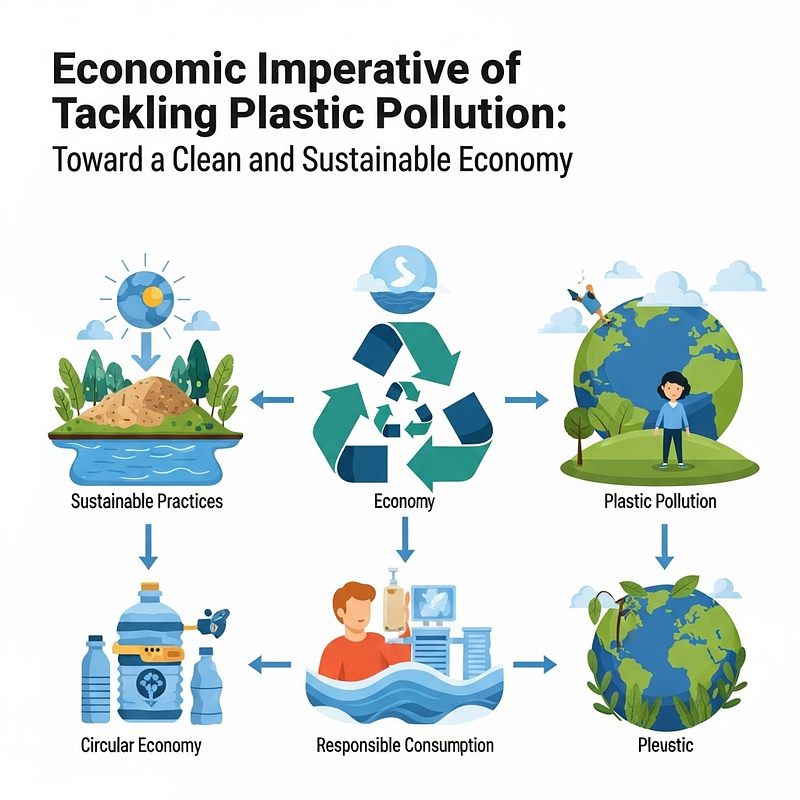
The ubiquitous character of plastic, once seen as a miracle material for its versatility and durability, has become one of the most pressure environments and financial challenges of our time. From the deepest sea tombs to the highest mountain peaks, plastic pollution, in its countless forms, has infiltrated every corner of our planet. This wide pollution is not just an ecological crisis; It is an intensive financial, which implements enormous costs for industries, communities and generations to come. In India, a nation that undergoes rapid growth, the goal of the case provides both malicious challenges and important opportunities. This article delays a significant economic imperative to handle plastic pollution, and claims that moving towards a truly clean and durable economy is not just an environmentally ideal, but a full need for long -term prosperity. We will find out the hidden financial burden of plastic waste, financial opportunities that lie in its deficiency and strategic route for nations, especially for people like India, to get away from a linear “technology disc” plastic model to reality, revive economic structure. The speed of this change cannot be eliminated, because society’s economic well -being is unshakable with the health of the environment.The ubiquitous character of plastic, once seen as a miracle material for its versatility and durability, has become one of the most pressure environments and financial challenges of our time. From the deepest sea tombs to the highest mountain peaks, plastic pollution, in its countless forms, has infiltrated every corner of our planet. This wide pollution is not just an ecological crisis; It is an intensive financial, which implements enormous costs for industries, communities and generations to come. In India, a nation that undergoes rapid growth, the goal of the case provides both malicious challenges and important opportunities. This article delays a significant economic imperative to handle plastic pollution, and claims that moving towards a truly clean and durable economy is not just an environmentally ideal, but a full need for long -term prosperity. We will find out the hidden financial burden of plastic waste, financial opportunities that lie in its deficiency and strategic route for nations, especially for people like India, to get away from a linear “technology disc” plastic model to reality, revive economic structure. The speed of this change cannot be eliminated, because society’s economic well -being is unshakable with the health of the environment.
The Economic Cost of Inaction — Plastic pollution is not just an environmental issue — it is a pressing economic challenge. Inaction on plastic and micro plastic pollution imposes heavy direct, indirect, and externalized costs on economies, ecosystems, and public health. From waste management expenses to losses in key sectors like tourism, fisheries, and agriculture, the costs accumulate rapidly and undermine both present and future economic well-being. Environmental economics provides a vital lens to understand these costs, revealing how market failures, externalities, and public goods problems converge in the plastic crisis.
1. Direct Costs of Waste Management —
a. Collection and Disposal
Municipalities across India are bearing the brunt of escalating waste management costs due to the growing volume of plastic waste. The challenge is compounded by:
- Inadequate Infrastructure: Many Indian cities lack efficient systems for waste segregation, collection, and recycling. Urban local bodies often operate under severe budgetary and logistical constraints.
- Dependence on the Informal Sector: Waste pickers play a crucial role in plastic recycling, yet their work remains undervalued and unsupported. This informal reliance limits the scalability and efficiency of waste recovery systems.
As plastic consumption increases, these costs are projected to rise, straining municipal budgets and leading to fiscal inefficiencies.
b. Landfill Management
A significant portion of plastic waste in India is dumped into open landfills, many of which are already overflowing. The economic costs include:
- Land Acquisition: Procuring land for new landfill sites is expensive and politically sensitive, especially in urbanizing regions.
- Environmental Monitoring and Remediation: Landfills release leachate and methane, which require long-term management. Cleanup and rehabilitation of these sites add to public expenditures.
- Health Externalities: Communities living near landfills often face health issues, resulting in indirect healthcare costs and reduced labor productivity.
c. Incineration and Open Burning —
While incineration may seem like a viable disposal method, its economic and environmental downsides are substantial:
- Air Pollution: Incinerating plastics releases toxic substances such as dioxins and furans, which are harmful to human health and the environment.
- Greenhouse Gas Emissions: Plastic incineration contributes significantly to carbon emissions, undermining climate mitigation goals and adding to the long-term economic costs of global warming.
Open burning, a common practice in rural and peri-urban areas, is even more hazardous and often goes unaccounted for in official statistics, skewing policy responses.
2. Impact on Key Economic Sectors
a. Fisheries and Aquaculture
India’s fisheries and aquaculture sectors — critical for employment and food security — are increasingly affected by marine plastic pollution:
- Entanglement and Ingestion: Fish stocks are declining due to plastic debris entanglement and ingestion, affecting catch quality and quantity.
- Contamination of Seafood: Microplastics in seafood may pose serious health risks, reducing market confidence and export competitiveness.
- Damage to Gear and Equipment: Fishing nets and propellers damaged by plastic debris incur repair and replacement costs, lowering net income for small-scale fishers.
b. Tourism
Plastic waste, particularly on beaches and in water bodies, detracts from India’s appeal as a tourist destination:
- Reduced Tourist Arrivals: Littered coastlines and polluted rivers (e.g., Ganga, Yamuna) deter both domestic and international tourists.
- Economic Losses: Tourism is a major source of revenue for states like Goa, Kerala, and Tamil Nadu. Pollution-induced tourism declines translate into lost income, employment, and investment.
- Clean-Up Costs: Regular beach and river clean-ups are costly and often fall on local governments with limited fiscal space.
c. Agriculture
Microplastics have entered terrestrial ecosystems, threatening long-term agricultural productivity:
- Soil Health Degradation: Studies show microplastic accumulation in soil affects microbial activity, water retention, and nutrient cycling.
- Plastic Mulch Waste: While plastic mulching boosts short-term yields, its poor disposal leads to soil contamination and increased costs for farmers.
These trends could have serious implications for India’s food security and rural livelihoods.
d. Shipping and Maritime Industries
Plastic debris poses operational risks for maritime infrastructure:
- Equipment Damage: Ships often encounter floating plastic that clogs engines, damages propellers, or impairs navigation systems.
- Increased Maintenance Costs: Frequent repairs and cleaning increase operating costs, affecting the competitiveness of shipping operators.
e. Healthcare
There are growing concerns about the health impacts of plastic exposure:
- Respiratory Illnesses: Open burning of plastics releases particulate matter and harmful chemicals, causing chronic respiratory issues, especially among urban poor.
- Chemical Exposure: Chemicals in plastics (e.g., BPA, phthalates) are linked to hormonal imbalances, reproductive disorders, and other non-communicable diseases.
- Microplastics in Food and Water: Their long-term health effects are still being studied, but precautionary principles suggest potential future healthcare burdens.
3. Hidden and Externalized Costs
a. Lost Material Value
According to a 2022 FICCI report, India stands to lose over USD 133 billion in material value by 2030 due to uncollected and unrecycled plastic, especially from packaging waste. This loss underscores the inefficiency of the linear “take-make-dispose” economy. Transitioning to a circular economy model could unlock economic value, create jobs, and reduce environmental stress.
b. Ecosystem Services Degradation
Plastic pollution degrades the natural systems that provide essential services:
- Water Purification: Rivers and wetlands clogged with plastic lose their ability to filter pollutants.
- Biodiversity: Marine and terrestrial plastic pollution threatens wildlife and ecological balance.
- Climate Regulation: Healthy forests and oceans act as carbon sinks. Their degradation due to pollution contributes to climate instability.
These ecosystem services, though often unpriced, hold immense economic value and are vital for sustainable development.
c. Climate Change Contribution
Plastic production and disposal are carbon-intensive processes:
- The global plastic lifecycle is responsible for ~5% of global GHG emissions, with projections rising.
- Incineration and fossil-based feedstocks further contribute to India’s carbon budget burden, potentially increasing the costs of meeting international climate commitments like the Paris Agreement.
d. Reduced Quality of Life
Beyond economic metrics, plastic pollution affects human well-being in measurable ways:
- Aesthetic Loss: Dirty urban landscapes and natural areas reduce the quality of life and community pride.
- Recreational Loss: Polluted beaches, rivers, and parks are less usable, affecting physical and mental health.
- Psychological Stress: Living near polluted environments contributes to mental distress and social discontent, especially among vulnerable communities.
The economic cost of inaction on plastic and microplastic pollution is multifaceted and mounting. Direct public expenditures, sectoral damages, hidden market inefficiencies, and environmental externalities are all part of a broader economic failure. In the language of environmental economics, plastic pollution represents a massive negative externality — its true costs are not reflected in market prices, but are borne by society at large. Addressing this challenge is not only an ecological necessity but an economic imperative for India and the world.
The Economic Opportunities of Tackling Plastic Pollution — While the costs of inaction on plastic pollution are substantial and well-documented, the flip side is equally compelling: taking action against plastic pollution presents significant economic opportunities. From job creation to cost savings and innovation, transitioning toward a circular economy opens up pathways to not only reduce environmental harm but also promote sustainable and inclusive economic growth. Environmental economics recognizes this as a case of correcting market failures and aligning economic incentives with ecological sustainability.
1. Job Creation in the Circular Economy
a. Waste Collection and Segregation
India’s vast and largely informal waste economy provides a unique opportunity for inclusive job creation:
- Formalizing the Informal Sector: By integrating informal waste pickers into formal systems — with training, social security, and fair wages — India can enhance the dignity and productivity of labor while improving collection efficiency.
- Decentralized Waste Management: Empowering urban local bodies and communities to implement decentralized waste segregation can create thousands of local jobs across the country.
b. Recycling and Reprocessing Industries
India recycles about 60% of its post-consumer plastic waste, largely due to informal workers. There is considerable room for scaling and formalizing this activity:
- Advanced Recycling Technologies: Investments in chemical recycling, pyrolysis, and mechanical recycling technologies can generate high-skill technical jobs.
- Localized Processing Units: Setting up recycling units near urban centers reduces transportation costs and creates green employment in processing, sorting, and logistics.
c. Manufacturing with Recycled Content
A thriving market for products made from recycled plastics can:
- Reduce reliance on virgin plastic, lowering carbon emissions and resource depletion.
- Support new industrial ecosystems focused on recycled inputs, leading to job creation in manufacturing, design, and supply chains.
d. Repair, Reuse, and Refill Business Models
Shifting from linear consumption models to repairable and reusable goods presents long-term economic value:
- Startups and local enterprises focused on refill stations, reusable packaging, and repair cafés are emerging.
- These models not only extend product lifespans, but also support microentrepreneurs and artisans who specialize in repair and repurposing.
2. Resource Efficiency and Value Creation
a. Reduced Raw Material and Energy Costs
Producing plastic from recycled materials typically requires less energy than producing from fossil-based virgin materials:
- Cost Savings: Businesses benefit from lower production costs and reduced dependence on volatile fossil fuel prices.
- Energy Efficiency Gains: Lower energy inputs mean reduced emissions and lower operational expenses, improving overall productivity.
b. Innovation and New Business Models
Plastic reduction fosters an ecosystem of innovation:
- Biodegradable Alternatives: Companies are developing materials based on seaweed, cornstarch, or cellulose as sustainable alternatives to traditional plastics.
- Waste-to-Value Initiatives: Technologies such as pyrolysis convert plastic waste into usable fuels or industrial inputs, turning waste into an economic asset.
- Startup Growth: India is witnessing a rise in startups offering tech-enabled waste collection, reverse logistics, and circular supply chain solutions.
c. Enhanced Brand Value and Consumer Trust
Sustainability is becoming a key driver of consumer choice:
- Companies that commit to plastic neutrality, sustainable packaging, and recycling initiatives gain a competitive advantage.
- This translates to greater market share, consumer loyalty, and access to ESG (Environmental, Social, and Governance) investments.
3. Savings in Public Spending
a. Reduced Waste Management Costs
By reducing the volume of waste through source segregation, recycling, and reusables:
- Municipalities can save on transportation, landfill operation, and incineration costs.
- Reduced dependency on landfills also means lower health and remediation expenses in the long run.
b. Avoided Environmental Remediation Costs
Acting now reduces the need for expensive clean-ups in the future:
- Cleaning rivers, beaches, and public spaces already polluted by plastic costs millions each year.
- Preventive measures and better waste governance are economically more efficient than reactive clean-up operations.
4. Contribution to GDP and Economic Growth
Tackling plastic pollution is not a constraint to growth — it is a catalyst for sustainable economic expansion:
- According to various estimates, India’s circular economy has the potential to generate over USD 2 trillion in market value and create nearly 10 million jobs by 2050.
- The net present value (NPV) of achieving 100% plastic circularity by 2030 in India is estimated at USD 170 billion, according to the Observer Research Foundation (ORF).
- These gains come from resource optimization, innovation, job creation, and reduced environmental degradation, all of which contribute to inclusive and green GDP growth.
Tackling plastic pollution is more than an environmental obligation — it is an economic opportunity. Through job creation, resource savings, industrial innovation, and public cost reductions, India can build a circular plastic economy that aligns ecological health with economic resilience. Environmental economics provides the analytical framework and policy tools to support this transformation, emphasizing that sustainability and prosperity are not mutually exclusive, but mutually reinforcing. A just transition to a plastic-smart economy is not just desirable; it is indispensable for long-term economic viability and societal well-being.
Strategic Pathways for India Towards a Clean and Sustainable Economy — To realize the economic and environmental benefits of reducing plastic pollution, India must pursue a systemic and integrated strategy. This involves reinforcing policy frameworks, scaling infrastructure, fostering innovation, and reshaping public behavior. Environmental economics emphasizes the importance of correcting market failures, internalizing externalities, and aligning private incentives with public goals. The following pathways outline how India can transition towards a clean, circular, and sustainable economy through targeted interventions and inclusive governance.
1. Policy and Regulatory Framework
a. Strengthening Extended Producer Responsibility (EPR)
EPR is a crucial tool for internalizing the external costs of plastic pollution:
- Enforcement Gaps: Although EPR rules exist, implementation is often weak. Producers sometimes outsource their obligations or acquire fraudulent certificates without ensuring actual waste collection.
- Transparent Compliance: A robust digital tracking system for plastic waste flows, audits of PROs (Producer Responsibility Organizations), and strict penalties for non-compliance are needed.
- Localized Solutions: EPR strategies must account for regional waste profiles and support local waste infrastructure development.
b. Effective Bans and Regulations on Single-Use Plastics (SUPs)
While India has implemented a ban on certain SUPs, enforcement remains inconsistent:
- Need for Scalable Alternatives: The success of bans depends on the availability of affordable substitutes — especially for MSMEs and informal businesses.
- Phased and Targeted Approach: Prioritizing high-impact SUPs (e.g., multilayered packaging) and engaging stakeholders in transition planning can ensure smoother implementation.
c. Incentivizing Circularity
Environmental economics supports the use of fiscal instruments to encourage positive externalities:
- Tax Breaks and Subsidies: Incentivize companies that use recycled content, invest in recycling infrastructure, or produce eco-friendly alternatives.
- Green Procurement Policies: Government agencies can create demand for recycled or biodegradable products through preferential purchasing.
d. Standardization and Certification
To mainstream recycled products and boost consumer trust:
- Quality Standards: Establish national benchmarks for recycled plastics, ensuring safety, durability, and performance.
- Eco-labeling: Certify plastic alternatives and recycled products to help consumers make informed choices and enable premium pricing for sustainable products.
2. Infrastructure Development
a. Formalizing Waste Management Systems
Investment in formal waste systems is critical for scale and efficiency:
- Segregation at Source: Mandating and supporting segregation in households and businesses reduces contamination and improves recycling yields.
- Integration of Informal Sector: Waste pickers must be brought into the formal fold through cooperatives, training programs, and social security provisions.
b. Advanced Recycling Technologies
Many plastics remain non-recyclable with existing methods:
- Chemical Recycling and Pyrolysis: These can handle multi-layered and contaminated plastics but require capital investment and regulation.
- R&D Support: Public and private investments in scalable, safe, and energy-efficient recycling technologies are essential to overcome existing bottlenecks.
3. Innovation and Research
a. Material Science Innovation
There is a pressing need to develop truly biodegradable materials that do not break down into harmful microplastics:
- Bio-based Polymers: Innovations using agricultural waste, seaweed, or fungal mycelium are gaining traction globally and should be incentivized in India.
- Lifecycle Assessments (LCAs): R&D should include comprehensive LCAs to evaluate the net environmental benefit of new materials.
b. Product Design for Circularity
Eco-design principles must be embedded in product development:
- Design for Recyclability: Avoiding mixed-material packaging, using standardized polymer types, and simplifying product design enhances recyclability.
- Design for Reuse: Encouraging modular and refillable designs prolongs product life and reduces material throughput.
c. Digital Solutions and Data-Driven Waste Management
Digital technology can dramatically improve efficiency and accountability:
- Waste Traceability Platforms: Track plastic production, usage, and end-of-life using blockchain and IoT systems.
- Smart Logistics: Optimize collection and transportation routes using GIS and AI to reduce costs and emissions.
4. Behavioral Change and Public Awareness
a. Consumer Education and Behavioral Nudges
Environmental economics recognizes the role of information asymmetry and behavioral biases in perpetuating unsustainable consumption:
- Awareness Campaigns: Educate citizens on the economic and health impacts of plastic waste, the importance of waste segregation, and sustainable consumption choices.
- Incentive Programs: Offer rewards for recycling, using reusable packaging, or participating in community clean-ups.
b. Collaborative Governance
Solving the plastic crisis requires collective action:
- Multi-Stakeholder Platforms: Bring together government agencies, industry bodies, academia, NGOs, and waste worker associations to co-create and co-implement solutions.
- Community Engagement: Localized campaigns and participatory waste management models (e.g., zero-waste wards) can be highly effective and socially inclusive.
India stands at a critical juncture where addressing plastic pollution is not just a necessity, but an opportunity to build a resilient, equitable, and green economy. Through a comprehensive strategy grounded in environmental economics — combining effective regulation, infrastructure investment, innovation, and behavioral change — the country can shift from a linear to a circular economy. This transition will reduce environmental externalities, generate millions of jobs, and place India on a path of sustainable and inclusive growth. The time to act is now — not just for ecological survival, but for economic transformation.
The Role of Microplastics: A Hidden Economic and Environmental Threat- While visible plastic waste poses severe environmental challenges, microplastics — tiny plastic particles less than 5 mm in size — represent an even more insidious threat. These particles originate from the breakdown of larger plastics, synthetic textiles, tire wear, and microbeads in personal care products. Due to their minuscule size, microplastics infiltrate soil, air, water, and food systems, making them virtually impossible to remove and increasingly costly to manage.
From an environmental economics standpoint, microplastics represent a classic case of negative externalities — costs imposed on society that are not reflected in the market prices of plastic products. Addressing them requires upstream interventions, regulatory action, and innovation, as well as assigning proper economic value to environmental degradation and human health risks.
1. Economic Impact of Microplastics
a. Contamination of Food Chains
Microplastics are increasingly found in:
- Fisheries and Aquaculture: Ingestion of microplastics by marine organisms reduces fish health and quality, disrupting the marine food chain and undermining the livelihoods of coastal communities. Export markets, particularly in Europe, are beginning to scrutinize seafood imports for microplastic contamination, threatening India’s lucrative seafood export sector.
- Agriculture: Microplastics from plastic mulch, sewage sludge, and irrigation with contaminated water accumulate in soils, potentially altering microbial activity, reducing fertility, and lowering crop productivity. This jeopardizes long-term food security and agricultural income.
b. Health Costs and Risks
While research is ongoing, preliminary studies suggest that microplastics may:
- Bioaccumulate in human tissues, possibly leading to inflammation, endocrine disruption, and other chronic conditions.
- Affect livestock health if animals ingest contaminated feed or water.
The economic consequences could be substantial: - Rising public healthcare costs, especially in countries like India with large rural populations exposed to environmental pollution.
- Loss of labor productivity due to long-term health effects.
c. Removal and Management Challenges
Microplastics are extremely difficult to remove from the environment:
- Water Treatment Infrastructure: Most wastewater treatment plants are not equipped to effectively capture microfibers from synthetic clothing or other plastic particles.
- Remediation of Soils and Waterways: Technologies to filter microplastics from soil, rivers, and oceans are either rudimentary or prohibitively expensive.
The cost of inaction in addressing microplastics will compound over time, requiring future generations to bear the burden of expensive clean-up and health interventions.
d. Soil Health and Agricultural Productivity
Microplastics degrade soil structure, reduce water retention capacity, and may inhibit plant growth by interfering with nutrient uptake. This poses:
- Long-term risks to India’s agricultural output, particularly in plastic-intensive farming regions.
- Threats to sustainable rural development, food systems resilience, and farmer incomes.
2. Addressing Microplastics in a Circular Economy
To manage microplastics effectively, the focus must shift from downstream clean-up to upstream prevention and systemic redesign — a core tenet of circular economy principles.
a. Upstream Interventions
- Reduce Virgin Plastic Production: Limiting the use of single-use and short-lifecycle plastics reduces the source of microplastics.
- Redesign Products for Durability and Recyclability: Textiles, tires, and consumer goods should be designed to minimize shedding and fragmentation.
- Ban or Phase Out Microbeads: Many countries have already taken action on this front, and India must enforce strict regulations.
b. Wastewater and Runoff Management
- Improve Wastewater Treatment: Investing in tertiary filtration systems and fiber-trap technologies for washing machines can significantly reduce microplastic discharge into rivers and oceans.
- Prevent Runoff from Agriculture and Urban Areas: Constructed wetlands, buffer zones, and green infrastructure can help reduce plastic runoff into aquatic systems.
c. Innovation in Filtration and Remediation
- R&D in Advanced Filtration: Technologies such as nano-filtration, magnetic separation, and bio-based absorbents hold promise for capturing microplastics.
- Nature-Based Solutions: Using bio-remediating organisms (e.g., fungi, bacteria) or plant-based filtration systems to trap and degrade microplastics is a field with emerging potential.
Microplastics are the invisible threat at the heart of the plastic pollution crisis. Their economic consequences are far-reaching, impacting food safety, agricultural productivity, public health, and the sustainability of export sectors. Tackling microplastics requires foresight, investment, and innovation — not just in waste management, but in product design, infrastructure, and research. A circular economy approach that emphasizes prevention over remediation offers the most effective and economically viable pathway to protect public goods and ensure long-term ecological and economic resilience.
Conclusion — The persistent tide of plastic pollution, far from being merely an environmental concern, has revealed itself as a profound economic threat, undermining the very foundations of sustainable growth. As this article has demonstrated, the costs associated with plastic pollution are multifaceted and substantial, ranging from direct clean-up expenses and infrastructure damage to significant losses in vital economic sectors like fisheries, tourism, and agriculture. The degradation of natural capital, including healthy oceans and fertile lands, translates directly into diminished economic productivity and resilience.
However, recognizing this challenge is the first step toward a transformative opportunity. The economic imperative to tackle plastic pollution is not about imposing burdens, but about unlocking new avenues for growth and innovation. Embracing a circular economy for plastics, characterized by thoughtful design, reuse, recycling, and the development of sustainable alternatives, offers a robust framework for capturing economic value currently lost to waste. Investments in advanced recycling technologies, biodegradable materials, and novel product delivery systems can stimulate job creation, foster technological advancements, and enhance national competitiveness.
Furthermore, proactive measures to reduce plastic leakage into the environment can significantly reduce future remediation costs and protect valuable ecosystem services that underpin various industries. Policy interventions, such as extended producer responsibility schemes, targeted taxes on virgin plastics, and incentives for sustainable practices, are critical in shifting market dynamics towards more responsible consumption and production. These policies not only internalize the environmental costs of plastic but also create a level playing field for innovative, sustainable businesses.
Ultimately, transitioning to a clean and sustainable economy free from pervasive plastic pollution is an investment in long-term prosperity. It is about safeguarding human health, preserving biodiversity, and ensuring the continued viability of industries reliant on healthy ecosystems. The economic arguments for addressing plastic pollution are no longer debatable; they are compelling. By acting decisively now, nations and businesses can mitigate significant economic risks, foster innovation, and build a more resilient, equitable, and sustainable economic future for generations to come. The path forward demands collaboration across governments, industries, and civil society, but the economic dividends of this collective effort promise to be immense.
References —
Economic Costs of Plastic Pollution:
- Global Impact: Marine plastic pollution can lead to significant GDP reductions, estimated at up to US$7 billion globally in 2018. The economic impact of plastic pollution, and the benefits of reducing mismanaged waste in Fiji — resource | IUCN
- Loss of Ecosystem Services: Plastic pollution results in an estimated loss of 1–5% in marine ecosystem services, equating to about $500 billion to $2.5 trillion per year. First in Science: The Economic Impacts of Plastic Pollution
- Impact on Industries: Sectors like tourism, fisheries, and aquaculture face significant economic losses due to plastic pollution.
- Waste Management Costs: Municipalities bear increasing costs for waste management due to the growing volume of plastic waste.
- Material Value Loss: India could lose over USD 133 billion in material value by 2030 due to uncollected and unrecycled plastic.
- Health Costs: Exposure to microplastics and pollutants from plastic waste can lead to increased healthcare costs.
Economic Opportunities in Tackling Plastic Pollution:
- Job Creation: Transitioning to a circular economy can create jobs in waste collection, recycling, and manufacturing using recycled materials. India’s circular economy has the potential to generate over USD 2 trillion in market value and create nearly 10 million jobs by 2050.
- Resource Efficiency: Recycling reduces raw material and energy costs.
- Innovation: Development of biodegradable alternatives and waste-to-value technologies can drive economic growth.
- Reduced Public Spending: Effective waste management reduces costs for municipalities and avoids future environmental remediation expenses.
Key Data and Statistics for India:
- Plastic Consumption: India’s plastic consumption has increased significantly, reaching about 22 million tons.
- Waste Generation: India generates a substantial amount of plastic waste annually.
- Recycling Rate: India recycles a higher percentage of plastic (60%) compared to many developed nations.
- Economic Impact: The plastic industry contributes significantly to India’s economy, but mismanaged plastic waste poses a major economic threat.
Government Initiatives:
- Plastic Waste Management Rules: India has implemented rules and bans on single-use plastics to manage plastic waste.
- Extended Producer Responsibility (EPR): Producers are responsible for collecting plastic waste.
- Circular Economy Roadmap: India aims to increase recycling rates and reduce greenhouse gas emissions through a circular economy approach.
Additional Resources:
- Plastic Industry in India | UJA Market Report
- India contributed just 3.5% of global plastic waste in 2022: Analysis — The Economic Times
- How can India Scale Plastic Waste Recycling Process & Management? — CEEW
- Single-use Plastic: India’s Battle Far From Over — Fortune India
- India as the World Largest Plastic Polluter — Drishti IAS
- Is India the World’s Largest Plastic Polluter? Causes and Solutions — Plastics For Change
- India generates 26,000 tonnes of plastic waste every day. This is how we reduce that number. — CSIRO
Thanks.
 Pratik Ghansham Salvi Assistant Professor of Economics | Banking & Finance | IMF Finance & Development Contributor
Leave a comment